-

Can a Phalaenopsis orchid grow new roots if it is suspended to induce rooting and placed upside down in water?
In recent years, the Phalaenopsis orchid has been the "white moonlight" in everyone's hearts, and many people buy it as soon as they see a flower stall! But quite a few people, after enjoying the flowers at home, find that the roots begin to show signs of rotting away completely. So these roots that look perfectly fine, are they really beyond saving? In fact, Phalaenopsis orchids with this kind of root rot can absolutely be rescued
-

The Harm and Lethal Risks of Overusing Bud Inducers on Phalaenopsis Orchids
Many flower enthusiasts, hoping to make their Phalaenopsis orchids quickly grow more side shoots and produce more flowers, choose to use bud inducers. But overusing bud inducers not only fails to achieve the desired effect, it can also cause fatal harm to the orchid. Bud inducers are mainly plant hormones, such as cytokinins and gibberellins. Used in moderation, they can stimulate the plant
-
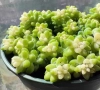
Is That Succulent a Chemically-Induced Variegation? Here Are a Few Ways to Tell
Do you always get drawn to those super-vivid variegated succulents when browsing the succulent market? Don't rush to buy! Many succulents that look absolutely gorgeous may be chemically-induced variegations. Today I'll walk you through, step by step, how to tell whether a succulent is a chemically-induced variegation, so you can avoid falling into the trap! Characteristics of chemically-induced variegated succulents 1. Color The colors of chemically-induced variegations are very strange - the white looks like wall paint, the yellow is bright
-
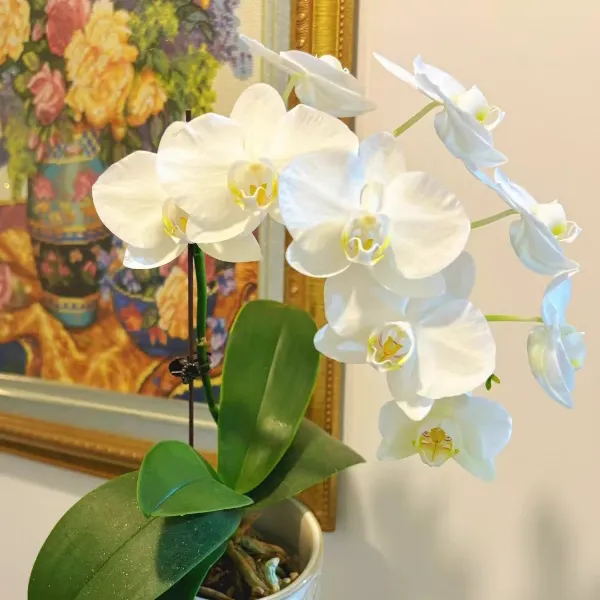
How to induce the flower stalks of Phalaenopsis orchids to bloom
Recently, the temperature has fluctuated sharply, and the temperature difference between day and night has significantly increased. This is the golden season
-
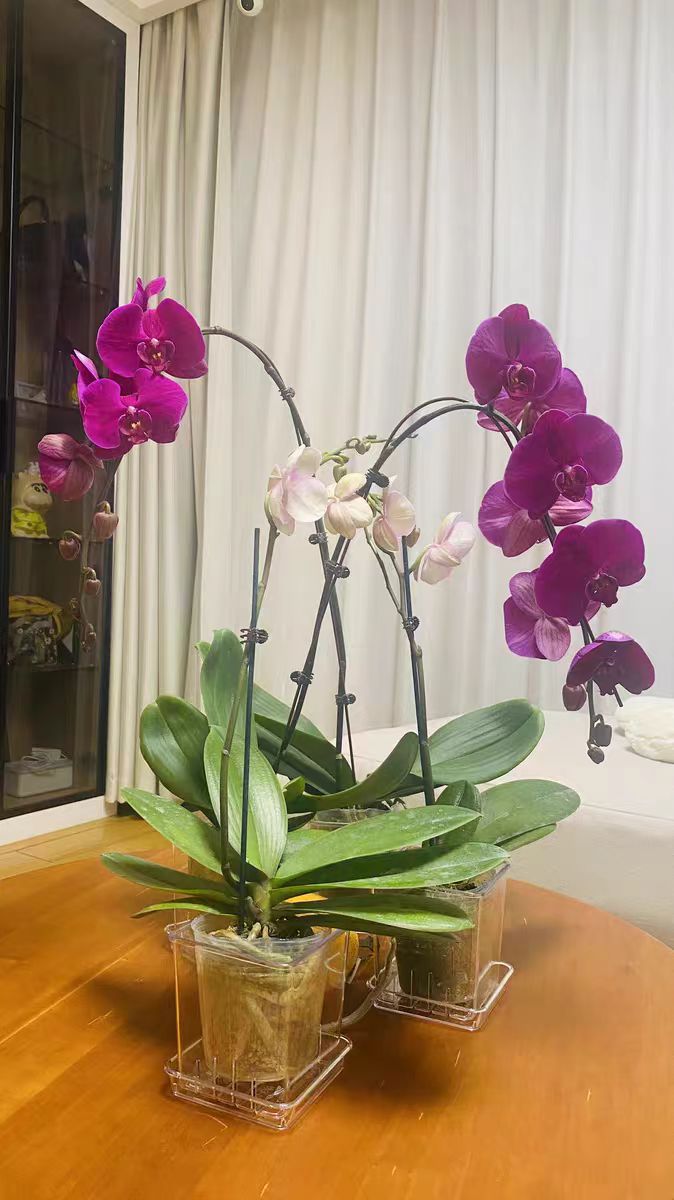
How long should the induced roots of Phalaenopsis be before it can be transplanted?
Phalaenopsis is known as the "Queen of Orchids". With its elegant flower posture and gorgeous flower colors, it is a favorite among many flower lovers. In the
-

How to care for Phalaenopsis orchids during summer heat-induced dormancy?
Summer has arrived, and observatories in many places have issued high-temperature warning signals. At this time, everyone has probably turned on their air conditioners or fans. However, in the passionate summer days, we may neglect our beloved plants. The following article will use the hot weather as an opportunity to discuss how to care for Phalaenopsis orchids that have entered a semi-dormant state. As is well known,
-

Identification of Plant Physiological Disorders: Diagnosis of Diseases Caused by Abiotic Pathogens
Identification of Plant Abiotic Pathogens and the Diseases They Cause (Physiological Disorders) ? During the process of plant growth and development, unsuitable physical factors, chemical factors, air pollution, pesticide toxicity, as well as the plant's own physiological defects or hereditary diseases in the environment, all
-
What is a chemically-induced variegated succulent, and how can you tell it apart?
The leaves of the succulent have been bleached to a beige color, with black spots, and the most likely explanation is that you bought a chemically-induced variegated plant. Because chemically-induced variegated succulents are all artificially dyed fake variegation, using chemical agents such as peracetic acid and herbicides to corrode the surface of the succulent, affecting its chlorophyll
-
Sharing Experience on Artificial Breeding in Koi Culture
1. Artificial induced spawning of koi. The time for artificial induced spawning of koi is generally chosen when the water temperature is around 25°C. The two-injection pectoral fin method can be used; effective drugs for inducing estrus include human chorionic gonadotropin, luteinizing hormone-releasing hormone analogue, and domperidone, etc. 2. Artificial insemination. In the breeding season,
-
Methods of Artificial Induced Spawning and Key Aquaculture Techniques for Snakehead
Artificial induced spawning uses injections of human chorionic gonadotropin and the pituitary glands of carp, bighead carp and bream. In the Pearl River Delta region, pituitary glands of carp, bighead carp and bream are basically used as spawning agents. The dosage per 0.5 kg of body weight is: for female fish, 7 pituitary glands of bighead carp or bream (1 carp pituitary is equivalent to
条件筛选