-

Prevention and Treatment Methods for Feed-Induced Diseases in Dairy Cows
In the process of dairy cow breeding, farmers mostly use various local grasses, vegetables, agricultural by-products and industrial by-products as feed. Occasionally, improper feed handling leads to dairy cow illness, reducing milk yield and quality, and even causing cow death, which affects the development of the cattle industry. The following are the
-
How to Induce Mushroom Fruiting in Oyster Mushrooms? Methods and Techniques Explained
Oyster mushroom (scientific name: Pleurotus ostreatus; also known as the oyster cap, rough-skinned oyster mushroom, oyster mushroom, black peony mushroom, and called Xiuzhen mushroom in Taiwan, China) is a species in the family Pleurotaceae, order Agaricales, under the Basidiomycota, and is a fairly common gray edible mushroom. Traditional Chinese medicine considers the oyster mushroom warm in nature and sweet in taste. It
-
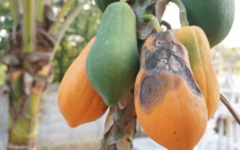
Causes and Control Methods of Anthracnose, the Main Disease of Papaya Fruit
Papaya (Carica papaya) is an attractive tree, prized for its tropical look and delicious edible fruit, a large green berry that ripens to yellow or orange. Some people call both the tree and the fruit papaya. When you see those sunken spots on papaya fruit, you
-
Harbin Veterinary Research Institute discovers cellular molecule that can induce degradation of HIV
Harbin Veterinary Research Institute discovers cellular molecule that induces degradation of HIV
-
Don't Forget to Protect Broodstock During Induced Spawning
Reducing the death of broodstock during induced spawning is an important technical task for fry producers. In production practice we have found that there are two reasons for the death of broodstock during induced spawning: first, the broodstock consumes a great deal of energy during the spawning and reproduction process, and combined with the side effects of the inducing drugs, the body's resistance declines; if the fish is severely injured, various pathogens will seize the opportunity to infect the fish, causing disease and leading to death. Second, the broodstock's constitution is poor, the gonadal development is not good, or the water temperature varies greatly during induced spawning, and the dosage of the inducing drugs is improper
-
Cattle farmers must guard against cold-induced dehydration in cattle in winter
Water can both cool them down and warm them up. 1) Cooling with water: For each adult cow, each time mix 0.3-0.6 kg of baijiu (Chinese liquor) or 0.2 kg of urea into 5 kg of cold water and let the cow drink it on its own. Alternatively, the day before feeding hay, soak the hay in cold water for 3-5 hours, then feed it to the cow. 2) Warming with water: In winter, when the weather is cold, for cows in weak body condition, heat clean water to 40°C and add 30-50 g of table salt or 100 g of soy sauce per kg of water and let them drink it. 2. Feeding nutritional tonics
-
Technical Measures to Reduce the Mortality Rate of Induced Spawning Broodfish
Reducing the death of induced spawning broodfish is an important technical task in fry aquaculture. There are two main factors causing the death of induced spawning broodfish. First, broodfish consume a great deal of physical energy during the spawning and reproduction process, which increases the side effects of the inducing drugs and lowers the body's resistance. If the fish is severely injured, various pathogens will take the opportunity to infect the fish body, causing disease and leading to the death of the broodfish. Second, the broodfish has a poor physique, or the water temperature fluctuates greatly during induction, or the dosage of the inducing drugs is improper (too high or too low), so the broodfish cannot spawn normally or experiences difficult spawning, and this in turn causes its own physiological activities to become disordered and leads to death.
-
Induced biochemical responses in tea plant leaves after infection by the tea blister blight pathogen
The activities of enzymes such as phenylalanine ammonia-lyase, polyphenol oxidase and peroxidase, as well as the levels of proteins, proline and phenolic compounds in the leaves, were studied after tea plant leaves were infected by the tea blister blight pathogen. The study showed that in diseased leaves the activity of phenylalanine ammonia-lyase decreased, while the activities of peroxidase and polyphenol oxidase increased. Analysis of peroxidase isoenzymes by polyacrylamide gel electrophoresis using benzidine as substrate showed that healthy tea plant leaves had 4 isoenzymes, whereas
-
How to Prevent Cold-Induced Diarrhea in Pigs When the Weather Turns Cold? A Detailed Explanation of Prevention and Treatment Points
Every year during the sanjiu cold period, because temperatures are low in rural outdoor pig pens, the pigs' bodies are hit by strong cold air, and on top of that they eat and drink cold water and cold feed, so cold pathogens strike straight into the stomach and intestines. This often causes some pigs to move weakly, with cold-dampness sinking downward and clear and turbid not being separated, resulting in cold intestinal diarrhea. This disease occurs most often during the sijiu to wujiu cold periods. The reasons are, first, that this is the coldest weather of the year; second, that the Spring Festival has arrived, and every household often feeds pigs the meat broth water left from washing and rinsing, which leads to more cases of cold-induced diarrhea in pigs. The folk treatment method is: first strengthen cold protection and warmth retention in the pig pen, then fry white wheat flour until it turns yellow-brown, add warm water and mix into a thin paste
-
How to reduce injuries and deaths of induced-spawning broodstock? Analysis of key techniques
The main factors causing injuries and deaths of induced-spawning broodstock: First, broodstock consume a great deal of physical energy during the spawning and reproduction process, and coupled with the side effects of spawning-inducing drugs, the body's resistance of the broodstock declines; if the fish body is injured and pathogens invade, disease is easily triggered. Second, poor physique of the broodstock, or a large fluctuation in water temperature during induced spawning, or improper dosage of spawning-inducing drugs, etc., can prevent the broodstock from spawning normally, and this in turn causes a disorder of their own physiological activities and leads to death. Therefore, in production, we must not only effectively carry out the pre-spawning rearing of broodstock so that the gonads of the broodstock develop normally and mature and the fish have a robust physique, but also pay attention to induced-spawning operations and post-spawning care.
条件筛选