Causes and Control Methods of Anthracnose, the Main Disease of Papaya Fruit
Papaya (Carica papaya) is an attractive tree, prized for its tropical look and delicious edible fruit, a large green berry that ripens to yellow or orange. Some people call both the tree and the fruit papaya. When you see those sunken spots on papaya fruit, you may be dealing with papaya anthracnose. But with a few cultural practices, papaya anthracnose control in the home orchard is not difficult. Keep reading for tips on treating papaya anthracnose. What is papaya anthracnose?
Papaya anthracnose is a serious fungal disease caused by the pathogen Colletotrichum gloeosporioides. The spores of this disease spread during rainy, humid periods through rain, splash, plant-to-plant contact and unsanitized tools. When temperatures are between 64-77°F (18-25°C), spore growth and spread are most common. The spores infect plant tissue and then lie dormant until harvest time. Gardeners in Hawaii or other tropical to subtropical regions where papaya anthracnose lives often grow tropical fruits such as papaya. In fact, in Hawaii, papaya fruit is grown commercially as a major food and export crop, bringing in about 9.7 million dollars a year.
However, papaya anthracnose is a serious papaya fruit disease that causes devastating crop losses every year. Your orchard may not be in the tropics, so you are more likely to get anthracnose on papaya in certain types of weather. Environmental conditions favorable to the fungus include very high temperatures and high humidity. Under these conditions, papaya anthracnose control is difficult. But the humidity must be truly high to affect papaya. When the relative humidity in your area is below 97%, the fungal spores that cause anthracnose usually do not germinate. They also need plenty of rain. In fact, raindrops splashing on leaves are one of the ways papaya anthracnose spreads. When the weather is dry, the fungus does not spread at all.
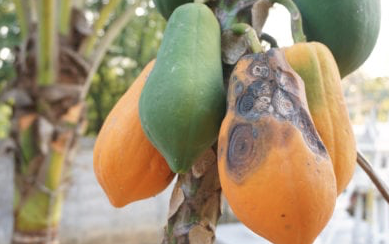
Identifying anthracnose on papaya You can tell whether you have papaya with anthracnose by watching the fruit closely as it ripens. Papaya fruit starts out with smooth green skin. However, as they ripen, the skin turns yellow and the flesh softens. That is when anthracnose appears. If your tree already has anthracnose, you may see small tan to gray spots on papaya fruit or leaves. As these spots grow, they become larger sunken lesions with a water-soaked appearance. These spots are the initial symptoms of papaya anthracnose. Over time, you will see the centers of the spots turn black. When the fungus produces spores, the black spots turn pink and the fruit beneath becomes very soft. The disease can be present on harvested fruit, but it will not appear until the fruit is stored or shipped. In tropical or subtropical regions with high humidity and annual rainfall, papaya anthracnose also causes crop losses in bananas, mangoes, avocados, passion fruit and coffee.
Treating papaya anthracnose Monitoring ripening fruit for spots will help you identify papaya anthracnose early. That means you can also start treating papaya anthracnose early. Once the disease appears, proper sanitation is essential. Early action means you can avoid using chemicals when treating papaya anthracnose. Use cultural controls such as harvesting ripe fruit promptly rather than leaving it on the tree. You should also remove all dead leaves and fruit from the garden. Pay special attention to removing all that fall beneath the papaya tree. Cleaning up weeds or other garden debris can prevent papaya anthracnose from spreading through rain splash and plant-to-plant contact. In addition, always sanitize tools to prevent the spread of the disease. Before papaya flowers appear or emerge, preventive fungicides may help control papaya anthracnose. Use fungicides containing copper hydroxide, mancozeb, azoxystrobin or Bacillus. Spray the orchard with fungicide every two to four weeks. You can also try planting resistant varieties such as Kapoho, Kamiya, Sunrise or Sunset to prevent the disease.