-

Rationalized Layout of Improved Tea Cultivars in Liandu District
Liandu District of Lishui City is located in the heart of southwestern Zhejiang, in the middle reaches of the Ou River. The area is embraced by green mountains and clear waters, with extremely rich ecological resources. It is a national ecological demonstration zone with a forest coverage rate of over 80%, and is known as "Green Liandu." Liandu District has four distinct seasons and a mild climate, belonging to the mid-subtropical monsoon climate zone. The soil is mainly red-yellow soil and lithological soil, with a pH value mostly between 4.5 and 6.5, which is very suitable for tea cultivation, and the tea produced is of excellent quality. 1. Overview of tea production and improved tea cultivar structure in Liandu District
-
What are the improved clonal tea tree varieties? Detailed variety introduction
Yingshuang: small tree type, medium-leaf class, belongs to the early-budding group. The spring tea budding period is generally in early to mid-March, with budding density, etc. It has strong bud-growing ability, abundant downy hair, strong tenderness retention, and high yield. It is suitable for making famous and high-quality green teas; the finished product has fine, tight strips, a tender green and glossy color, a high, fresh and lasting aroma, a strong, fresh and refreshing taste, and a tender green, clear and bright liquor color. When made into Longjing, it has good color and high economic benefit. The Zhejiang Province Improved Variety High-Efficiency Tea Garden Demonstration Base - Yingguiyan five thousand mu large-area per-mu output value reached nearly ten thousand yuan (1999), and what was used was the improved clonal variety "Yingshuang." Longjing 4
-
Detailed Explanation of Key Techniques for Transplanting Improved Clonal Tea Varieties
1. Site selection. For transplanting improved variety seedlings, the site is generally chosen on terraced land, gentle slopes and flat dry land, preferably with deep soil layers, good structure, shelter from wind and facing the sun, and abundant water sources. 2. Land preparation. Complete 10-15 days in advance. Row planting, bed width 1 m; deep furrows with hanging trenches are required, furrow depth 25-30 cm, width 24-30 cm, apply base fertilizer at the bottom of the furrow. The base fertilizer is mostly decomposed cake fertilizer and special tea fertilizer, with a per-mu application rate of 150 kg cake fertilizer and 50 kg special fertilizer; after fertilizing, backfill the furrow with topsoil, keeping the soil
-
Key points of tea cultivation: selecting improved varieties and reasonable close planting
1. Selecting improved varieties Seeds (seedlings) are the basic means of production in tea cultivation, and any cultivation method is built on the improved varieties of a given period. Since the 1980s, tea cultivation has entirely adopted the close-planted, dwarfed, no-tillage method. Because individual space is reduced and population density increased, it is all the more necessary to match this with suitable improved varieties in order to achieve the desired results. For example, Fuding Dabaicha, Qianmei 101, Qianmei 303 and others are all fine tea varieties suitable for close planting. 2. Collection and
-
Key Points of High-Yield Cultivation and Improved Techniques for Lilies
Lily yields are unstable; some plots suffer "disaster," with early seedling death and almost no yield. To achieve high yields in lily cultivation, focus on the "four improvements." 1. Replace poor-quality seed bulbs with high-quality seed bulbs. For lilies, select superior varieties such as Longya lily (Lilium brownii var. viridulum) as seed. The typical features of Longya lily are: bulbs tightly clasped, scales thick and fleshy at the lower part, pointed and curved at the upper part, shaped like dragon claws, colored like ivory. Leaves on the aerial stem are large and sparse, with no bulbils and no daughter bulbs. Lilies need to be purchased from other locations for seed, which is an important measure for rejuvenation. But pay attention to purchasing from sea
-
How can the efficacy of fishery drugs be improved? These five methods must be mastered
Improve the binder The binder must be highly sticky, otherwise the drug is easily lost in the water. Standard wheat flour is a good binder material. For swallowing fish, it is best to make pelleted medicated bait or ball-shaped medicated bait for feeding. Add a feeding attractant Fish have a keen sense of smell; even if 1 gram of alanine is dissolved in 1 million liters of water, fish can still detect it. For example, if strongly aromatic Chinese herbal medicines such as star anise and Angelica dahurica are ground into fine powder as a feeding attractant, and mixed into fishery drugs at a ratio of 10%-20%, or added to roasted soybean powder, wheat flour, etc., all have obvious attractant
-
Key Points on Selecting Improved Tea Varieties and Transplanting Techniques
1. Varieties suitable for making flat-shaped green tea: (1) Longjing 43: sprouts extremely early, strong cold resistance, high yield, but poor tolerance to high temperatures and prone to leaf blight. Best planted in mountainous and high-mountain tea gardens where flat-shaped tea is picked and processed. (2) Wuniu Early: sprouts extremely early, strong tenderness retention, medium sprouting density, excellent quality for making flat-shaped tea. (3) Pingyang Tezao: sprouts extremely early, vigorous growth, does not flower, produces flat-shaped tea with a green and lustrous color, strong aroma, and excellent quality. 2. Varieties suitable for making strip-shaped green tea: (1) Yingshuang: sprouts early, strong tenderness retention, long picking period, yellow-green buds
-
Detailed Explanation of Key Implementation Points for Ecological Cultivation Technology of Improved Tea Varieties
1. Selecting the tea garden site. It is required to choose a location with good environmental conditions, surrounded by forest areas, with mountains and water, fresh air, clear spring water, deep or fertile soil, slightly acidic, suitable soil or earth for tea tree growth, preferably fragrant ash soil. To produce good tea, it should be a uniquely endowed region. 2. Land clearing and preparation. First, clear trees, shrubs and stones from the ground surface; second, remove tree roots, weed roots, bamboo rhizome roots, etc.; the reclamation depth should be over 50 cm, and perennial weed perennial roots and vine root systems must be thoroughly cleared,
-
Key Technical Points and Detailed Methods for the Breeding of Improved Tea Varieties
There are many methods for breeding superior tea varieties, mainly including systematic selection, crossbreeding, artificial mutation breeding, and introduction and acclimatization. (1) Systematic selection: also called single-plant selection. That is, according to the breeding objective, superior single plants are selected from the selection materials, each single plant is separately propagated vegetatively, and compared and identified with the standard variety and the original population variety; the superior ones are cultivated into new varieties for propagation and promotion. Its steps: ① Primary selection: according to the breeding objective and the correlation between tea plant traits, select a number of superior single plants in the tea garden, mark and number them for observation;
-
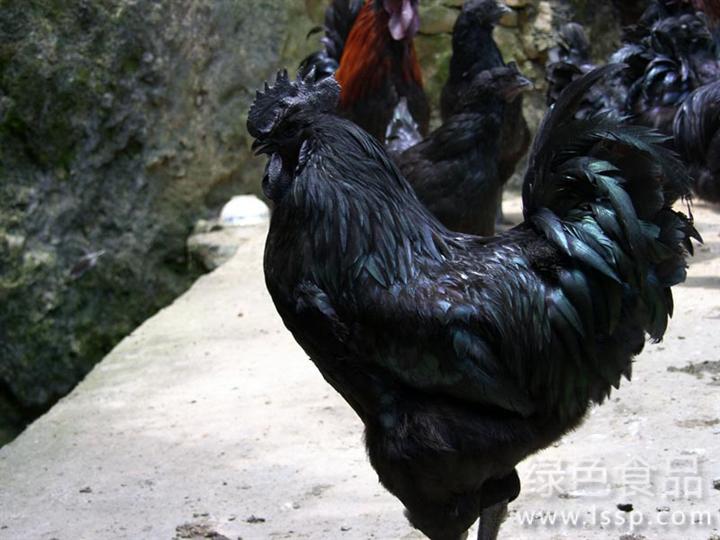
Silkie chickens have poor vitality and disease resistance; how can their survival rate be improved?
Silkie chickens have poor vitality and disease resistance; how can their survival rate be improved?
条件筛选