Silkie chickens have poor vitality and disease resistance; how can their survival rate be improved?
The Silkie chicken, a valuable medicinal chicken breed, is increasingly favored by people. However, the single variety of Silkie chickens , their strong broodiness, poor vitality, low disease resistance, low chick survival rate, and relatively low egg production have greatly affected the development of Silkie chicken farming. So how can the survival rate of Silkie chicks and their egg production rate be improved? Practice has shown that when raising Silkie chickens, attention must be paid to:
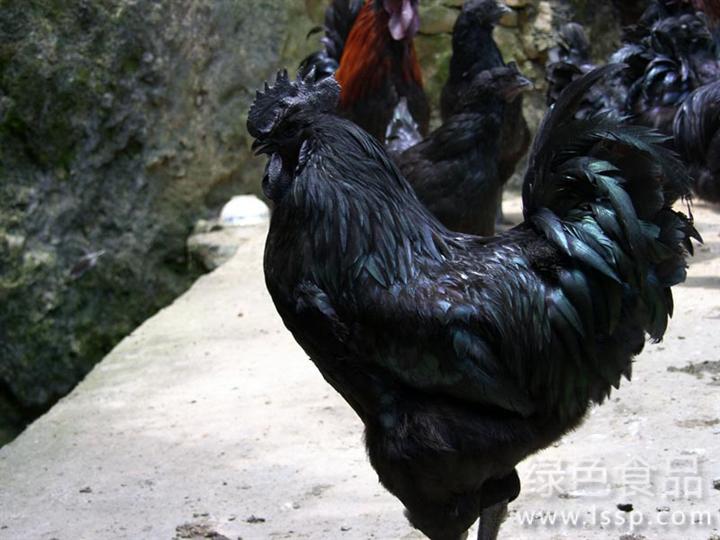
Silkie chicken
1. Silkie chicks have weak digestive function, so they should be fed easily digestible feed, such as half-cooked millet mixed with cooked egg yolk (mix 1 yolk per 18 chicks daily). After 10 days of age, 10-20% cornmeal, 8-10% chopped green feed, 1-1.5% bone meal, 11.5% fish meal, and 0.5% fine sand grains washed clean with water can be added to the feed. After 30 days of age, they can be switched to powdered feed mixed with chopped green vegetables, with bone meal, fish meal , shell powder, etc. added, and at the same time they should also be fed 1-2 times a day with granular feed (such as millet, barley, small millet, etc.).
2. In the first and second weeks after the chicks hatch, add 0.04% furazolidone to the feed every day to control paratyphoid and pullorum disease in Silkie chickens. After 15 days of age, feed them daily with feed containing 0.01% furazolidone, or add sulfadimidine at 0.1% of the feed amount for several days , then stop for 1-2 days before feeding again. After 45 days of age, attention should be paid to preventing and treating chicken roundworm disease. At 8, 25, and 66 days of age, they can be vaccinated against Newcastle disease vaccine. If sick chickens are found, they must be isolated immediately. Those with uneven growth and inconsistent body condition should be raised in separate groups.
3. For chicks, according to their different growth and development stages, attention should be paid to keeping them warm and moisture-proof. The living environment should be kept with fresh air, sufficient light, and dry housing. Drinking water should be clean and hygienic. Feed troughs and waterers should be washed clean every day, and disinfected once every half month with a hot sodium hydroxide solution . Bedding straw should be frequently sun-dried and changed.
4. Hens must receive supplemental light in winter, along with careful feeding and management, in order to lay more eggs. According to experiments, extending the light period to 13-14 hours in winter while supplying nutrient-rich feed can increase the egg production rate by 22%. The specific method is: from November to January of the following year, use 15-60 watt bulbs to provide light and supplemental feeding from 5:00 to 6:30 in the morning, 5:00 to 8:00 in the afternoon, and 11:00 at night to 2:00. When supplementing light , do not suddenly switch between light and dark, so as to avoid causing panic in the flock.
5. Promptly help broody hens “wake from brooding.” Silkie chickens easily become broody, and for a long time, so attention should be paid to timely “waking from brooding.” There are many methods for waking from brooding, and one of the simplest is feeding Rendan, which has a good effect. The specific method is: when a broody chicken is found, promptly feed about 15 Rendan pills each morning and evening , for 3-5 consecutive days. Then, provide sufficient high-quality feed. In this way, they can generally resume laying eggs after 7-12 days .