-

How to grow melons (sweet melons)? The small high-ridge planting method is worth recommending
We have all eaten sweet melons, especially when it is hot in summer, buying a few small sweet melons and cutting them open at home can relieve the heat. Melon and sweet melon are the same variety, just called by different names. As the name suggests, melon is certainly very sweet, and now because of market demand
-
Detailed Explanation of Key Techniques for High-Ridge Cultivation of Chinese Yam
Chinese yam, also known as shuyu (Dioscorea), is a perennial herbaceous vine. It prefers dry conditions and fears waterlogging, and is suitable for growing in environments with ample sunlight, a warm climate, and relatively dry conditions. The optimum temperature for germination is around 15°C, and the optimum temperature for growth is 17-28°C. Generally, a slightly acidic sandy loam soil with deep, loose soil should be selected.
-
Plant trees on the high mountains, plant paulownias on the low ridges; a cattle dealer deep in the mountains lives off the mountain and finds his way to prosperity
Plant trees on the high mountains, plant paulownias on the low ridges; a cattle dealer deep in the mountains lives off the mountain and finds his way to prosperity
-
New Technique for Whole-Seed Potato Cultivation with Plastic Mulch and Double Rows on High Ridges
1. Reasonable crop rotation and stubble reversal To economically and effectively utilize soil fertility and prevent soil-borne diseases, pests, and weeds, avoid continuous potato cropping or planting potatoes on the stubble of other root and tuber crops. Also, do not rotate with other Solanaceous crops such as eggplant and tomato, otherwise yields will be reduced by 15%-20%. Potatoes can be rotated with cereal crops and legume crops for more than 3 years. 2. Land preparation and ridge formation Potatoes are suitable for planting in deep, loose soil, with deep plowing and fine land preparation. After harvesting the previous crop, promptly clear the stubble, plow deeply about 25 cm
-
High-yield Cultivation Techniques for Soybean with Wide Ridge and Narrow Row Close Planting
Wide ridge and narrow row close planting of soybean can increase the canopy leaf area index, make full use of light energy, and achieve the goal of increasing yield. (1) Site selection and land preparation. The best preceding crops are wheat, corn or potato. Ridging is done as sowing proceeds. The ridge spacing is 130 cm, the ridge height is 25 cm, and the ridge top width is 3O cm. (2) Variety selection. For wide ridge and narrow row close planting of soybean, the varieties selected should generally be 168, ZOQI, 9409B, Fengshou 544, Mijiawang, Hefeng 25, Hebing 93-BS, etc. Seed selection should be carried out before sowing.
-
Key Points of High-Ridge Double-Row Potato Cultivation Technology
High-ridge double-row potato cultivation refers to a planting method using wide and narrow rows, where soil from the wide rows is hilled onto the narrow rows, forming raised beds that stand more than 25cm above the ground. Trials have confirmed that potatoes grown on ridges and beds have the advantages of earlier emergence, a higher proportion of large and medium tubers, and higher yields; ridge-bed cultivation increases yield by 19.1% compared with flat-bed cultivation. The specific cultivation techniques are as follows: 1. Fine seedbed preparation. Potato is a shallow-rooted crop. After the tubers are planted and before emergence, the better the root system develops in the soil, the stronger the plant growth after the seedlings emerge.
-
Lily Cultivation Method Part Three: How to Carry Out High-Ridge Cultivation
Lily Cultivation Method Part Three: High-ridge cultivation. It is suitable for places with a relatively high groundwater table and more rainfall. For high-ridge cultivation in the south, plow the land after the previous crop is harvested to a depth of about 30CM, and apply 2500KG per mu as base fertilizer together with plowing. Generally, ridges are used for wide beds, with the base of the ridge 60CM wide, about 30CM wide needed, and 25-30CM high. Between the ridges are water furrows with a bottom width of about 30CM. In high-ridge cultivation, topdressing must be carried out throughout the growing period to promote growth and increase yield.
-
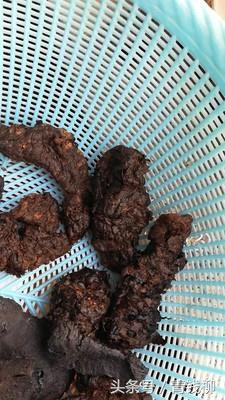
Key Techniques for High-Yield Cultivation of Rehmannia with Full Plastic Film Mulching and Ridge Planting
Key Techniques for High-Yield Cultivation of Rehmannia with Full Plastic Film Mulching and Ridge Planting. Rehmannia (Rehmannia glutinosa), also known as Shengdi, Jiuhuhua, Shanyangen, etc., is a perennial herbaceous medicinal plant of the family Scrophulariaceae, with a plant height of 10-30 cm. The stem and leaf surfaces are densely covered with grayish-white multicellular long villi and glandular hairs. The rhizome is fleshy...
-
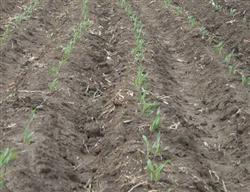
Key Technical Points for High-Ridge, Sparse-Planting, High-Yield Cultivation of Spring Corn
Many excellent spring corn varieties now require high ridges and sparse planting, but farmers generally adopt low ridges and dense planting, so the superior traits of corn cannot be fully expressed, seriously affecting farmers' income growth. This is especially true for excellent varieties such as Dongdan 60, Sanbei No. 6, Dongdan 13, and Zunyan No. 1, whose planting density per mu must not exceed 3000 plants, while...
-
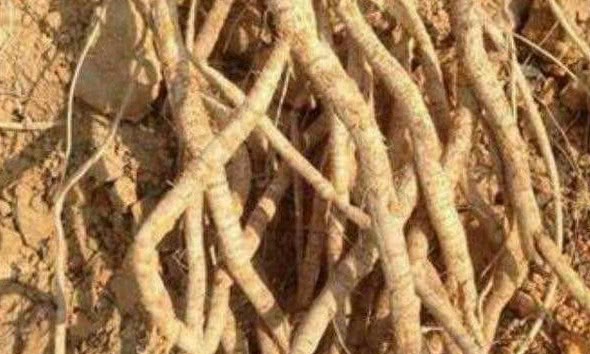
High-Yield Cultivation and Management Techniques for Millettia speciosa with Pulverized Ridge Tillage
Millettia speciosa is an excellent traditional Chinese medicinal herb. In recent years, with the shortage of wild medicinal plant resources, the supply in the traditional Chinese medicinal materials market has fallen far short. Many people have taken the path to prosperity by cultivating medicinal herbs, and Millettia speciosa is one of them. So how do you grow it...
条件筛选