High-Yield Cultivation and Management Techniques for Millettia speciosa with Pulverized Ridge Tillage
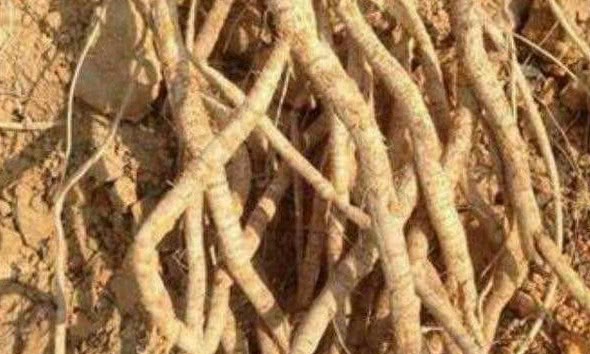
Millettia speciosa is an excellent traditional Chinese medicinal herb. In recent years, with the shortage of wild medicinal plant resources, the supply in the traditional Chinese medicinal materials market has fallen far short. Many people have taken the path to prosperity by cultivating medicinal herbs, and Millettia speciosa is one of them. So how do you grow it to achieve high returns? Below, the editor will explain the high-yield cultivation and management techniques for Millettia speciosa with pulverized ridge tillage.
High-Yield Cultivation Techniques for Millettia speciosa with Pulverized Ridge Tillage
1. Seedling Selection
1.1 Seed-grown seedlings
Normally, seed germination can be used to produce seed-grown seedlings of Millettia speciosa, which have a single main root structure; after cutting it off, the newly developed lateral roots will not form swollen tuberous roots. As for seedling form, the planting results are not very good, and yield cannot be guaranteed. It takes about two years after planting to flower and set fruit.
1.2 Tissue-cultured seedlings
Tissue-cultured seedlings of Millettia speciosa are mainly produced in batches through tissue culture, but at present the cost of tissue-cultured seedlings is high and production volume is relatively small.
1.3 Cutting-propagated seedlings
Among Millettia speciosa seedlings, cutting-propagated seedlings have great advantages in use, helping to improve seed collection results, ensuring simplicity, and enhancing overall use effectiveness. They also produce a large number of fruits, and improving overall yield takes about 3 years.
2. Planting Preparation
2.1 Site selection
Millettia speciosa requires a great deal of water during the seedling stage, so soil moisture must be ensured. Since the plants are not tolerant of waterlogging, drainage work must be done promptly during the rainy season. Water must not accumulate in low-lying areas, so that planting and other work can be carried out suitably.
2.2 Land preparation
After selecting the site for Millettia speciosa, remove weeds and carry out mechanical pulverized ridge tillage according to planting requirements, with a depth of about 80cm, a twin-drill pulverizing and grinding width of 60cm, and a row spacing of 150cm. Then dig drainage ditches according to the terrain. Build ridges 120cm wide and 60cm high along the contour lines. After planting and growing, Millettia speciosa can fully absorb sunlight for photosynthesis and promote growth. The wide rows provide ventilation and air permeability, which can reduce the occurrence of diseases. Ridge planting is relatively well suited to the growth of Millettia speciosa, and tuber formation is relatively directional, growing along the loose soil ridge rows of the pulverized ridges; the tubers form in a concentrated manner and are easy to expand, which facilitates digging during harvest.
2.3 Base fertilizer
During land preparation, the application of base fertilizer should be done well. Apply organic fertilizer mixed with calcium phosphate per mu of land. During actual planting, it is recommended to use plastic film mulching to improve the overall effectiveness of the planting work.
2.4 Seedling hardening
After the plants leave the nursery, they should be acclimatized and then established in the field. The seedlings can be sprayed with a 400-fold carbendazim solution to prevent and control pests and diseases, and watering should be done well after planting to ensure compliance with current seedling management requirements and improve the survival rate of the seedlings.
3. Planting Techniques
3.1 Transplanting management
On the top of the ridges after the black film has been laid, first punch holes at a planting density of 600-700 plants per mu, with a hole diameter of 12-15cm and a plant spacing of 80cm. Choose an afternoon with weaker sunlight for field planting; if it is cloudy, planting can be done all day. When planting, first place the seedlings near the planting holes, dig the holes, tear open the nutrient pot at the edge of the hole, and then place the seedling with its soil ball into the hole to prevent the soil ball from breaking apart. It is best to use non-woven bag nutrient pots. When planting, there is no need to remove the nutrient pot; plant directly, saving time and labor. The planting depth should be about one centimeter above the nutrient pot. After planting, water thoroughly to settle the roots; if conditions permit, drip irrigation can be used for watering. Replenish water in a timely manner according to weather and soil conditions.
3.2 Timely weeding
After the field planting of Millettia speciosa is completed, because its growth rate is relatively slow, herbicides can be used to remove weeds, preventing problems such as weeds competing for fertilizer and promoting good growth of the seedlings. When spraying herbicides, this should be done in windless weather to avoid the spray drifting onto the plants and causing dead or missing seedlings.
3.3 Water and fertilizer management
Millettia speciosa has a certain drought tolerance, but it does not have the ability to withstand waterlogging. During the seedling stage, if rainy weather occurs, drainage work must be done well and drainage ditches set up to prevent problems from excessive rainwater. In dry weather, water in a timely manner to ensure seedling survival. About one month after planting, fertilizer management should be done well: apply 2kg of compound fertilizer per mu, mix with 200kg of water, and pour it at the roots. Three months after field planting, apply 40 jin of compound mixed fertilizer per mu (20 jin of urea mixed with 20 jin of compound fertilizer), applying a small handful per hole. After that, fertilize once each in spring and autumn every year, with the amount of fertilizer gradually increasing.
3.4 Branch pruning
For vine-type or small shrub-type varieties of Millettia speciosa, branch pruning management should be used to effectively control branch growth. For plants that cannot be used for propagation, pruning treatment is needed so that nutrients are fully supplied to root growth, promoting more underground tuber formation, faster growth, and increased yield. For plants kept for seed, in addition to early pruning, use one bottle of Yuhualing No. 2 mixed with 30KG of water per mu for foliar fertilization by spraying, and after 2-3 consecutive sprays, plants established in March-April enter the flowering stage in August-September.
3.5 Flower thinning and fruit promotion
As for the flower buds of Millettia speciosa, they should be pruned as soon as they grow; too many flower spikes must not be retained, and the consistency of the number of branches on the plant should be ensured. Before flowering, rationally spray Yuhualing No. 2 to achieve the goals of flowering and pod formation, ensuring that nutrients are supplied in a concentrated manner to the underground rhizomes and achieving reasonable rhizome growth. Fertilizer can be applied reasonably according to actual growth conditions to ensure an increase in overall yield and quality.
3.6 Pest and disease control
During the growth of Millettia speciosa plants, pest and disease problems usually do not occur, but if a high-temperature environment is encountered, leaf spot disease may appear. Generally, 50% carbendazim wettable powder plus 80% mancozeb 600-fold solution can be used for spray control.
3.7 Harvesting and processing
For Millettia speciosa, autumn is the best harvesting period. After harvesting, the Millettia speciosa tubers can be stored in a cold storage at 0-5°C for half a month. Fresh Millettia speciosa tubers can be sold directly or sliced and dried, and can also be vacuum-packed as fresh slices to make beverages, soups, wine infusions, and so on.
In fact, Millettia speciosa is a very easy traditional Chinese medicinal herb to grow, and its cultivation method is simple. Achieving high returns is not difficult at all. The above are the high-yield cultivation and management techniques for Millettia speciosa with pulverized ridge tillage. Growers, hurry up and learn them.