Key Techniques for High-Yield Cultivation of Rehmannia with Full Plastic Film Mulching and Ridge Planting
Key Techniques for High-Yield Cultivation of Rehmannia with Full Plastic Film Mulching and Ridge Planting
Rehmannia (Rehmannia glutinosa), also known as Shengdi, Jiuhuhua, Shanyangen, etc., is a perennial herbaceous medicinal plant of the family Scrophulariaceae, with a plant height of 10-30 cm. The stem and leaf surfaces are densely covered with grayish-white multicellular long villi and glandular hairs. The rhizome is fleshy, yellow when fresh, 1.5-5.5 cm in diameter, and the stem is purplish-red. The leaves are usually clustered in a rosette at the base of the stem, and strongly reduced to bracts upward, or gradually reduced and alternate on the stem. The tuberous roots are used as medicine, and are divided into fresh rehmannia, raw rehmannia, prepared rehmannia, etc. The tuberous roots contain abundant medicinal components such as catalpol, alkaloids, amino acids, and rehmannin, and have the effects of clearing heat and cooling blood, nourishing yin and promoting body fluid production, nourishing yin and tonifying blood, and replenishing essence and marrow. They can be used for conditions such as yin damage from febrile disease, sore throat and swollen gums, internal heat due to yin deficiency, skin eruptions and rashes, hematemesis, liver-kidney yin deficiency, blood deficiency and sallow complexion, dizziness and tinnitus, high fever and delirium, and dry mouth with a crimson tongue. It is a major ingredient in many traditional Chinese medicines and the main raw material for Chinese patent medicines. Therefore, in recent years, the market price of rehmannia has continued to rise. The average price of fresh rehmannia has stabilized at 2-3 yuan/kg, the average price of raw rehmannia has stabilized at 15-20 yuan/kg, and the average income is 52,500-60,000 yuan/hm2, with promising economic benefits. Huanxian currently has a Chinese medicinal herb cultivation area of about 2,500 hm2, of which rehmannia cultivation area is more than 200 hm2. As a poverty alleviation industry of the county, the Chinese medicinal herb industry has been continuously expanded and strengthened. In order to smoothly advance this poverty alleviation industry, ensure farmers increase production and income, and achieve precise poverty alleviation throughout the county, the key techniques for high-yield cultivation of rehmannia with full plastic film mulching and ridge planting are summarized as follows for the reference of agricultural science and technology workers and farmers.
1 Site selection, land preparation, and fertilization
Rehmannia prefers a warm climate and is relatively cold-tolerant. For cultivating rehmannia, plots of slightly alkaline loam and sandy loam with a mild climate, sufficient sunlight, good drainage, deep soil layers, and fertile and loose soil should be selected. The previous crop should preferably be gramineous crops such as wheat and corn, and crops such as legumes, Solanaceae crops such as potato, and Cucurbitaceae crops such as melons should not be selected.
After the plot is selected, deep plowing and stubble removal should be carried out promptly after the previous crop is harvested, to promote soil maturation, improve soil structure, increase soil fertility, and enhance the soil's water storage and fertilizer retention capacity. After the soil thaws in early spring, rotary tillage and harrowing should be carried out to ensure that the plow layer has no large clods or residual stubble, achieving depth, fineness, levelness, and cleanliness, with a loose top and firm bottom, and a level ground surface, facilitating ridge formation and film mulching.
Rehmannia is planted at a high density, and applying sufficient basal fertilizer is the guarantee for obtaining high yield. Generally, together with spring rotary tillage and land preparation, 25-30 t/hm2 of decomposed farmyard manure, 500-600 kg/hm2 of urea, 700-800 kg/hm2 of phosphate fertilizer, and 300-400 kg/hm2 of potassium sulfate are applied at one time.
2 Ridge formation and film mulching
2.1 Manual ridge formation and film mulching
Spring ridge formation and film mulching before the soil thaws completely is adopted, that is, it is carried out immediately after the soil thaws in early March. On the prepared plot, mark lines according to a belt width of 110 cm, and use a walking plow or ridger to form ridges. Only one ridge is required per belt, with a ridge bottom width of 110 cm, a ridge surface width of 80 cm, and a ridge height of 15 cm. Use a rake to level the ridge surface. Select polyethylene plastic film with a thickness of 0.008-0.010 mm and a width of 120 cm for mulching. Press a soil band on the ridge surface every 2-3 m to prevent the film from being lifted by strong wind. The junction between films should be in the middle of the furrow and compacted with soil.
2.2 Mechanical ridge formation and film mulching
After the soil thaws in early March, on the prepared plot, use a potato ridging and film mulching machine to complete ridge formation and film mulching in one pass. Select polyethylene plastic film with a thickness of 0.008-0.010 mm and a width of 120 cm for mulching, with a ridge bottom width of 110 cm, a ridge surface width of 80 cm, and a ridge height of 15 cm. The junction between films should be in the middle of the furrow and compacted with soil. While the machine forms ridges and applies film, manually press a soil band on the ridge surface every 2-3 m to prevent the film from being lifted by strong wind.
3 Variety selection
Rehmannia varieties suitable for planting in Huanxian include Jinhuanghou, Beijing No. 1, Beijing No. 2, Beijing No. 3, Wen 85-5, Qinhuai No. 1, and Shengjin No. 1, etc. These varieties are drought-resistant and cold-tolerant, with strong stress resistance, wide adaptability, and good commodity properties.
4 Seed treatment
Rehmannia cultivation generally adopts the method of breaking tuberous roots for propagation, that is, asexual reproduction, and the seeds must be virus-free seeds. Because rehmannia is highly susceptible to viral diseases, after infection, the leaves become deformed, shrunken, and curled, the plant becomes smaller, photosynthesis declines, growth vigor declines, quality deteriorates, and the tuberous roots become smaller, deformed, and lower in yield. The use of virus-free seeds can improve quality and greatly increase yield. Therefore, for planting rehmannia, virus-free original seeds or first-grade improved seeds must be purchased from seed departments, and original seeds can be retained for seed after 1 year of planting. For seeds, virus-free tuberous roots with a diameter of 0.8-1.0 cm, fresh and robust, free of pests and diseases, and undamaged should be selected. Before sowing, place them in a warm place to promote sprouting for 20-30 d to break dormancy. At sowing, break them into small sections of 4-5 cm with 3-5 bud eyes, treat the wounds with plant ash, dry them in weak light for 2-3 h, and then plant. Alternatively, spread out the broken seeds, spray the wounds with a 500-600 times dilution of 50% carbendazim wettable powder, dry them in the sun for 3-4 h, and then plant.
5 Sowing at the appropriate time
The sowing time of rehmannia in Huanxian is generally April 15-30. It takes 25-30 d from sowing to emergence, and the lower the soil temperature, the longer the emergence time. If sown too early, the soil temperature is low, and seed rot is likely to occur, causing missing plants and broken rows; if sown too late, the growth period is delayed, affecting yield.
Use a small shovel with a diameter of 5-6 cm to break the film and sow. Use the small shovel to vertically break the plastic film and break the soil to a depth of 6-7 cm, open it, use the small shovel to block the soil, place the seed flat in the hole, withdraw the small shovel, and compact the seed with soil. Take fine soil from under the film at the opening to compact the opening, or use soil from the soil-pressing belt to compact the opening, so as to preserve moisture and increase temperature, prevent the film from being lifted by strong wind, and improve the emergence rate. Generally, 3 rows are sown per ridge, with a sowing depth of 5-6 cm, a plant spacing of 30-35 cm, and a row spacing of 25-30 cm. Sowing is staggered between rows, maintaining 75,000-95,000 plants/hm2.
6 Field management
6.1 Management at the emergence stage
Under full-film ridge cultivation of rehmannia, seedlings emerge about 30 d after sowing. At this time, observe in the field, promptly break the crust, release seedlings, straighten them, and compact soil. If missing plants are found, replant promptly.
6.2 Flower pinching
Some rehmannia varieties bloom earlier and enter the reproductive growth stage ahead of time, consuming nutrients and affecting yield. Therefore, rehmannia flowers and fruits should be pinched off promptly, even with bracts, to promote stem and leaf growth, improve photosynthetic efficiency, and increase yield.
6.3 Topdressing
Rehmannia should be topdressed 2 times during the entire growth period. The first topdressing is during the stem and leaf growth period, that is, from mid-June to mid-July. At this time, nitrogen fertilizer should be the main topdressing to promote stem and leaf growth and increase leaf area. Generally, 150-225 kg/hm2 of urea is applied. The topdressing method is to use a fertilizer injection gun to apply urea or urea aqueous solution between rows and among 3 plants.
The second topdressing is during the tuberous root expansion period, that is, from mid-August to mid-September. At this time, nitrogen-phosphorus-potassium compound fertilizer or potassium dihydrogen phosphate should be the main topdressing to promote tuberous root expansion and increase yield. Generally, 150-225 kg/hm2 of diammonium phosphate is applied (the topdressing method is the same as above), or potassium dihydrogen phosphate aqueous solution is sprayed on the leaves.
7 Control of diseases, insect pests, and weeds
7.1 Diseases
Common diseases of rehmannia include leaf spot disease, ring spot disease, fusarium wilt, and viral disease. Rehmannia leaf spot disease mainly damages leaves and is a fungal disease. When it occurs, there are round irregular yellow-brown spots on the leaf surface with small black dots, and in severe cases, entire leaves or entire plants die. At the early stage of the disease, remove diseased leaves and spray the leaf surface with a 600 times dilution of 50% carbendazim wettable powder or a 400-500 times dilution of 60% zineb, spraying once every 10-15 d for 3-4 consecutive sprays.
The peak occurrence period of rehmannia ring spot disease is from June to August, and it mainly damages leaves. The lesions are round or nearly round, and some are semicircular or irregular due to the restriction of leaf veins. They are light brown in the early stage, and later the center is slightly brown or purplish-brown with concentric rings. In severe cases, the diseased leaves die. Spray Bordeaux mixture at the early stage of the disease, and at the peak stage spray a 500 times dilution of 70% mancozeb wettable powder or a 600-700 times dilution of 75% chlorothalonil wettable powder for control, spraying once every 10-15 d for 2-3 consecutive sprays.
Rehmannia fusarium wilt, also known as root rot, begins to occur in May and is severe from June to July, damaging the roots and aboveground stems. At the early stage of the disease, the petioles show water-soaked brown spots, the petioles rot, and the aboveground parts wilt and droop. Soaking seeds in a 1,000 times dilution of 50% carbendazim can be used for prevention; at the early stage of the disease, use a 1,000-1,500 times dilution of 50% tuijunte or a 1,000 times dilution of 50% carbendazim to irrigate the roots, once every 7-10 d for 2-3 consecutive irrigations; after July, a 600-800 times dilution of 58% redomil or 50% carbendazim, etc. can be used for foliar spraying for control, spraying once every 7-10 d for 2-3 consecutive sprays.
7.2 Insect pests
The main insect pests of rehmannia include red spider mites, cutworms, and white grubs. For red spider mites, a 2,000-3,000 times dilution of 0.9% chongmanke, or a 1,500 times dilution of Weilite can be selected for spray control. For cutworms and white grubs, 100 g of 80% trichlorfon wettable powder plus a small amount of water can be mixed with 5 kg of roasted wheat bran or soybean cake and scattered between ridges at dusk for trapping and killing; or a 1,500-2,000 times dilution of 2.5% kungfu or a 1,500-2,000 times dilution of 4.5% beta-cypermethrin can be used for ground spraying at dusk for control.
7.3 Weeding
Rehmannia plants are short, and weed infestation in the field is relatively serious. Manual weeding should be carried out more than 3 times during the entire growth period. Promptly remove weeds between rows and under the film to reduce competition between weeds and rehmannia for fertilizer, water, and light, so as not to affect yield.
8 Harvesting and processing
8.1 Manual harvesting
Entering November, after the Frost's Descent solar term, when most rehmannia leaves turn yellow and die, harvesting can begin. First remove the plastic film, use a hoe or shovel to dig a deep ditch of about 35 cm at the end or side of the field, dig out plants one by one, remove the reed head, stems, and leaves, shake off the soil, collect and handle gently, and transport back for processing.
8.2 Mechanical harvesting
Mechanical harvesting saves time and labor and causes less damage. When harvesting, first remove the plastic film, cut off or pull out the aboveground stems and leaves, and use a potato harvester for one-pass harvesting. Manually pick up and bag, and transport back for processing.
8.3 Processing
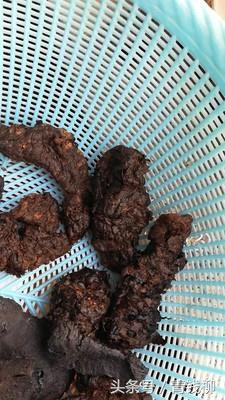
The dug-out rehmannia, after removing the reed head, stems, leaves, and fibrous roots and clearing away soil and impurities, is fresh rehmannia. Grade according to size, and place on a heated brick bed to bake slowly over low heat for 3 d, turning once each day to make it "sweat." Then bake over high heat for 1-2 d until the interior gradually dries, the color turns black, the whole body becomes soft, and the outer skin becomes hard, then take it out, pile it for 1-2 d to regain moisture, then spread it out to dry in the sun to obtain raw rehmannia. Put raw rehmannia into a jar or other container, add 50% yellow rice wine (enough to cover the raw rehmannia), place the jar in a water bath and heat until the wine is fully absorbed, take out the rehmannia from the jar and sun-dry until the outer skin is slightly dry to obtain prepared rehmannia.