-

Key Techniques for High-Efficiency Cultivation of Soybean Intercropped with Melon
Soybean intercropped with melon at a 4:2 ratio, with Chinese cabbage replanted as the following crop after melon harvest, achieves three harvests from one field and an income of more than 15,000 yuan per hectare, making it a new high-yield and high-efficiency planting model. 1. Selecting new varieties 1.1 For the soybean variety, select Jinta soybean, which has strong branching and super-high yield. Jinta soybean has 6 outstanding characteristics: 1) Strong growth vigor. Jinta soybean has a plant height of 70-80 cm, thick and sturdy stems, and high resistance to lodging; 2) Strong branching ability. A single plant has 8-10 branches, with a maximum of 16 branches. The branches grow upward, and the plant takes on a fan shape without breaking branches, overcoming the tendency of strongly branching soybeans to break branches, resulting in an ideal plant type; 3) Dense pod setting. A single plant sets 200-250 pods, with a maximum of 400 pods. The pods are so dense that the stems are hidden, 2-3 times that of other soybeans. Most pods are 3-seeded, with a yield of 75-100 g per plant and a maximum of 400 g; 4) Excellent quality. The beans are golden yellow, large and uniform, with a 100-seed weight of 22-25 g and high oil and protein content; 5) Strong stress resistance. The growth period is 120 days and requires an effective accumulated temperature of 2450°C. It is drought-resistant, moisture-tolerant, and salt-alkali tolerant, and prefers fertilizer and water. It is suitable for planting in Jilin, Liaoning, Heilongjiang, and Inner Mongolia in areas with an effective accumulated temperature above 2450°C; 6) High and stable yield. The yield per hectare is 4000-5000 kg, making it a high-yielding, high-quality soybean variety.
-
High-yield cultivation techniques for plastic-mulched garlic, plastic-mulched watermelon, and cotton
Suwan Town in Chaohu City is a major cotton-growing town. In order to adjust the cropping structure of cotton fields and increase the multiple cropping index and economic returns, after several years of practice, an efficient intercropping and relay cropping model of plastic-mulched garlic, plastic-mulched watermelon, and cotton has been developed. It not only gives good economic returns, but can also build soil fertility and realize the combination of using the land and maintaining the land; at the same time, it can change the ecological environment and reduce the occurrence of pests, diseases, and weeds. 1. Variety selection. For garlic, use the early-maturing variety Ershui Zao; for watermelon, choose early-maturing superior varieties such as Beimi No. 3, Huami No. 8, and Zhengza No. 7; for cotton, choose Guokangmian No. 1 supplied by the Cotton Research Institute of CAAS,
-

Detailed Explanation of Key Techniques for High-Yield Watermelon Cultivation
High-Yield Watermelon Cultivation Techniques
-
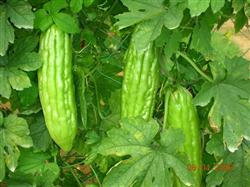
Remember these four key points for high-yield spring bitter melon cultivation
Bitter melon fruit is rich in vitamin C, higher than tomatoes, and contains a glycoside that gives it a distinctive bitter taste, making it one of the popular health vegetables. Growing spring bitter melon means mild diseases, low costs, high yields, and good returns. The high-yield cultivation techniques for spring bitter melon mainly include the following four key points: select good varieties, raise seedlings at the right time. Spring planting...
-
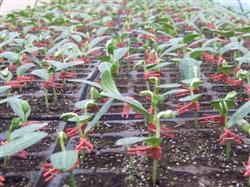
Key Technical Points for Pollution-Free High-Efficiency Cultivation of Bitter Melon in Greenhouses
I. Grafting Seedling Cultivation 1. Seedling Raising Methods The rootstock is raised in nutrient pots, and the scion is raised in sterile soil to strictly prevent soil-borne disease infection. Soak bitter melon seeds in a 75% thiophanate-methyl 800-fold solution for 12 hours, then soak in clean water for 16 hours, remove and air-dry, bury in sand for 2 days of warm germination; disinfect the nutrient soil with quintozene...
-
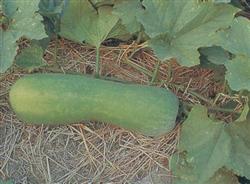
Key Points of Fertilization Management Techniques for High-Quality and High-Yield Winter Melon
In Dongxia Town, Qingzhou City, the overwintering summer melons grown by vegetable farmers are mainly cultivated in a creeping manner, similar to watermelon cultivation, which results in the melon body touching the ground, uneven light exposure on the top and bottom of the winter melon, the part touching the ground turning white or developing yellow-brown necrotic spots, or even rotting, while the upper part of the melon exposed to direct sunlight is prone to sunburn...
-
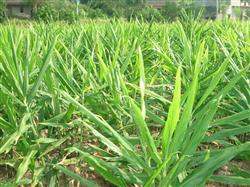
Key Techniques for High-Yield Cultivation of Ginger Intercropped with Watermelon
When planting ginger, apply heavy base fertilizer and increase phosphorus and potassium fertilizer; avoid applying too much nitrogen fertilizer. Apply sufficient base fertilizer, mainly organic fertilizer, with a combination of slow-release and quick-release chemical fertilizers. Base fertilizer generally accounts for 40% of the total fertilizer application. Before sowing, apply 15 kg of imported compound fertilizer plus 50 kg of calcium magnesium phosphate fertilizer per mu as deep-layer base fertilizer. After sowing, use high-quality farmyard manure...
-
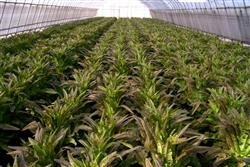
High-Efficiency Multiple Cropping Technology for Greenhouse Lettuce, Thick-Skinned Melon, and Green Garlic
In the multiple cropping model of greenhouse lettuce, thick-skinned melon, and green garlic, lettuce is sown and raised as seedlings in mid-to-late September, transplanted in late October, and harvested in mid-March; thick-skinned melon is sown and raised as seedlings in late February, planted out in late March, and harvested at the end of June and the beginning of July; green garlic is sown in late July and harvested in mid-to-late October. Per mu, the yield can reach 4500-500...
-
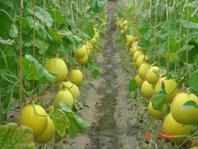
Key Technical Points for High-Yield and High-Efficiency Cultivation of Thin-Skinned Melons in Cold Greenhouses
Thin-skinned melons have traditionally been cultivated by letting the vines trail on the ground, with the vines growing in a tangled and crisscrossing manner that is very difficult to manage, and the yield is also low. When thin-skinned melons are cultivated in cold greenhouses, using the trellising method just like growing cucumbers in large greenhouses, higher yields and economic benefits have been achieved, with an average of 667 sq m producing over 5,000 kg of melons, and a net benefit of...
-
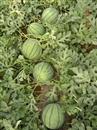
Key Technical Points for High-Yield Open-Field Watermelon Cultivation in Spring
It is currently the season for sowing and raising seedlings of open-field watermelons. To do a good job of watermelon cultivation and increase farmers' income, the key technical points for spring open-field watermelon cultivation are introduced as follows: 1. Variety selection. Varieties should be chosen according to market demand, selecting those that are well-suited to the market, with good quality, high yield and strong disease resistance, such as Qinghong...
条件筛选