-

How a "bellwether" hatched 7 hundred-million-yuan industries
The "bellwether" hatches 7 hundred-million-yuan industries
-
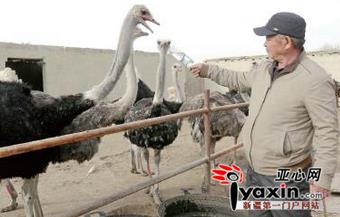
Ostrich Breeding and Hatching Base Helps Farmers in Bazhou Get Rich
Bazhou Ostrich Breeding and Hatching Base Helps Farmers Get Rich
-
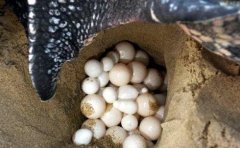
How long does it take for turtle eggs to hatch? An introduction to turtle egg incubation methods
It is well known that turtles have strong vitality, rarely suffer from disease, and are easy to raise and manage, but this applies to adult turtles. Throughout the entire process from hatchling to juvenile, carelessness in certain steps and details is unacceptable. Turtle egg incubation is a highly technical step, and if it is not done well
-
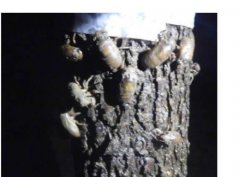
Cicada Farming Methods: How to Collect and Hatch Egg Branches
Do you have good-looking cicadas? How do you hatch cicadas? Then the first thing we need to do is obtain a seed source, and then talk about hatching. Let's take a look together below. Obtaining the seed source, collecting the eggs. Choose a place with dense trees and many cicadas, and use a long pole with a high-branch pruner at the top
-
What to Do About Low Hatch Rates in Female Turtles? Cause Analysis and Solutions
Artificial turtle farming has sprung up in many places in recent years, especially as the soft-shelled turtle market has flattened while the turtle market has held firm, prompting many soft-shelled turtle farmers to switch to turtles. But farmers have found that although some female turtles lay a good number of eggs, the fertilization rate is not high and the hatch rate is low, especially with eggs from turtles at their first laying age, where the fertilization rate is even lower. Many people assume the female turtle is the problem, little realizing that the cause does not lie with the female turtle at all, but is mainly related to factors in the male turtle itself. Through practice, people have found that in nature many animals show differences in the timing of sexual development
-
How to hatch chicks with biogas? Hatching methods and key technical points
Biogas hatching has the advantages of simple operation, safety and reliability, a high hatching rate and lower costs. Because household biogas digesters have a small capacity, this technique is extremely suitable for small-scale farmers (within 1000 birds). The relevant technical parameters are listed below for reference: 1 cubic meter of biogas can hatch 475 eggs, a biogas incubator consumes 30-40 liters of gas per hour, the hatching rate of fertilized eggs is above 90%, biogas hatching raises the hatching rate by 5%-15% compared with electric or oil hatching, and there is no worry about power outages; every 100 eggs hatched saves 3 kilograms of fuel oil
-
What are the key measures to improve the hatching rate of turtle eggs?
1. Selection of parent turtles: Parent turtles should be selected from individuals aged over 5 years, robust, free of disease and injury, active in movement, and with strong limbs. 2. Male-to-female ratio: Generally, a female-to-male ratio of 2-3:1 is appropriate. If the proportion of male turtles is too low, it will be detrimental to normal fertilization of the females. 3. Egg collection time: Generally, collecting eggs within 10-30 hours after laying is appropriate; if conditions permit, collecting eggs within 3-5 days after laying is even better. Generally, eggs should be collected in the afternoon to avoid human interference with daytime egg-laying. Fertilized
-
What are the three key factors for turtle egg incubation? Master the key points to improve the hatch rate
The key to turtle breeding is doing a good job of turtle egg incubation. No matter which incubation method is used, the three key factors of incubation temperature, humidity and ventilation must be well controlled. According to our farm's incubation experiments in recent years on the eggs of different turtle species such as the three-striped box turtle, alligator snapping turtle, yellow pond turtle and hawk turtle, as long as temperature, humidity and ventilation reach the optimal state, the hatch rate of turtle eggs can reach 93%-98%. 1. Incubation temperature The suitable temperature for turtle egg incubation should be controlled at 28°C-35°C, with about 30°C being best. It must not be too high or too
-
What to do when turtle egg hatching rates are low? Technical measures to improve the hatching rate
It is well known that turtles are highly resilient, rarely suffer from disease, and are easy to raise and manage, but this applies to adult turtles. Throughout the entire process of raising turtles, carelessness in certain steps and details is unacceptable; turtle egg incubation is a highly technical step, and if done poorly it will fail. 1. Scientifically breed parent turtles. Selecting good stock is the primary condition for improving the hatching rate of turtle eggs. Parent turtles should be large, robust, free of injuries or deformities, and of suitable age. Female turtles should be at least 6 years old, with wrinkled and slightly hard leathery skin along the rear edge; male turtles should be 3 to 4 years old. The stocking density should be 7 turtles per sq m,
-
Scientific feeding is essential in soft-shelled turtle hatchling rearing, and mastering the method is key
affects the farming of adult soft-shelled turtles. Whether scientific feeding can be carried out is the technical key affecting the growth and quality of soft-shelled turtle hatchlings. For this reason, here is an introduction to scientific feeding in soft-shelled turtle hatchling rearing, for reference and application. As with farming other aquatic animals, feeding can follow the four-fixed principle, namely fixed quality, fixed quantity, fixed time and fixed location. However, the four-fixed contents of feeding in soft-shelled turtle hatchling rearing have their own characteristics. Because soft-shelled turtle hatchlings, during their growth process, not only need to accumulate energy and increase body weight, but also need to provide various nutrients and
条件筛选