How long does it take for turtle eggs to hatch? An introduction to turtle egg incubation methods
It is well known that turtles have strong vitality, rarely suffer from disease, and are easy to raise and manage, but this applies to adult turtles. Throughout the entire process from hatchling to juvenile, carelessness in certain steps and details is unacceptable. Turtle egg incubation is a highly technical step, and if it is not done well it will fail. So how should turtle eggs be incubated correctly? Here we introduce six key points.
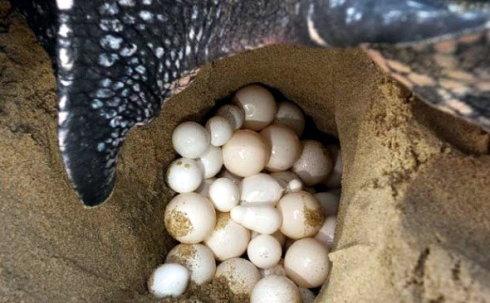
1. Scientifically breed the parent turtles: selecting good stock is the primary condition for improving the hatching rate of turtle eggs. Parent turtles should be large, robust, free of injuries, and of suitable age. Female turtles should be at least 6 years old, with wrinkled and slightly hard leathery skin along the rear edge; male turtles should be 3 to 4 years old, with a stocking density of 7 per sq m, and a female-to-male ratio of 3:1.
2. Use pine wood for the incubation box: there are many materials for making an incubation box, but pine wood is best, and poplar or willow wood must absolutely not be used. The sand bed in the incubation box must maintain a certain humidity; poplar and willow wood easily grow white mold mycelium after absorbing moisture, and this mycelium penetrates among the sand grains, causing the sand grains to harden and become impermeable, so the eggs will suffocate and die.
3. Use river sand for incubation: river sand has good aeration and water retention, so the hatching rate is high.
4. Pay attention to the egg collection time: only 8 to 30 hours after the turtle lays the eggs is the embryo fixed, so egg collection is best done after 3 p.m. During hot seasons with heavy rainstorms, collect them in advance.
5. Carefully check the fertilized eggs: a well-fertilized and developing egg has a white spot on top of the shell, with a clear and smooth edge, and the egg is bright pink or white. If no white spot can be seen on top of the shell and the color is basically uniform, it is an unfertilized egg. If the white spot on top of the shell appears as a large, irregular white patch, it is a poorly developed egg. Neither of these two types of eggs can be placed in the box for incubation.