-

Methods for Introducing Turtle Hatchlings in Autumn and Rearing Methods
Because turtle hatchlings go through an adaptation process when moving from one environment to a new one, with a cycle of 1 month to 2 months before they gradually become normal, and moreover turtles are ectothermic animals, after entering autumn, as the temperature gradually drops, turtles also gradually grow more slowly. The advantage of introducing stock in autumn lies in seizing the opportunity when turtles grow slowly at this time, letting them adapt to the new environment. After spring begins, the temperature rises, and the turtles immediately enter a growth state without needing to adapt to the new environment again. Under normal circumstances, turtle hatchlings introduced in autumn enter the growth period 1 month to 2 months earlier than
-
Detailed Guide to Autumn Turtle Hatchling Introduction Techniques and Rearing Methods
Because turtle hatchlings go through an adaptation process when moving from one environment to a new one, with a cycle of 1 month to 2 months before they gradually become normal, and since turtles are ectothermic animals, after autumn arrives, as the temperature gradually drops, turtles also gradually grow more slowly. The advantage of autumn introduction lies in seizing the opportunity when turtles are growing slowly at this time, letting them enter the new environment to adapt. After spring begins, as the temperature rises, the turtles immediately enter a growth state without needing to adapt to the new environment again. Under normal circumstances, turtle hatchlings introduced in autumn enter the growth period 1 month to 2 months earlier than those introduced in spring.
-
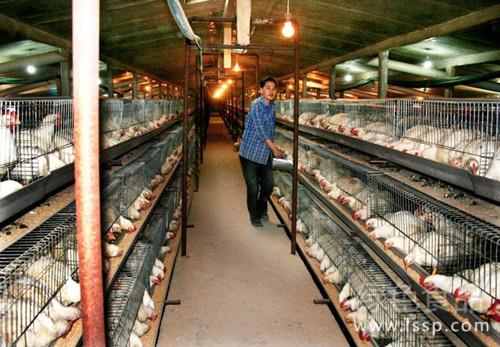
How to prevent and control broken eggs in caged broiler breeders? Reduce hatching egg breakage and protect poultry farming profits
Hatching egg breakage affects poultry farming profits: how to prevent and control broken eggs in caged broiler breeders
-
How to Select Stone Turtle Hatchlings? Detailed Guide to Selection Methods and Tips
I. Try to select stone turtle hatchlings with relatively good constitutions. Hatchlings with good constitutions and strong disease resistance have a lower probability of falling ill; hatchlings with poor constitutions and weak disease resistance have a higher probability of falling ill. The constitution of a hatchling depends on the quality of the turtle breed. Analyzing from the perspective of turtle breeds, hatchlings hatched from wild and semi-wild stone turtle breeds have the best constitutions, with very strong growth and development ability and disease resistance, and a relatively low probability of falling ill. Therefore, try to select hatchlings hatched from wild or semi-wild stone turtle breeds. In reality, wild
-
How to hatch chicks? Detailed explanation of incubation methods and technical key points
The 5 conditions required for incubation: (1) Temperature: Temperature is an important condition for embryonic development. Embryos can still develop at temperatures of 32-40 degrees. The principle of temperature application is high in the early stage, level in the middle stage, and low in the late stage. For all-in-all-out incubation, 1-7 days is the early stage, using a temperature of 38-38.5 degrees; 8-14 days is the middle stage, using a temperature of 37.5-38 degrees; 15-21 days is the late stage, using a temperature of 37-37.5 degrees. If multiple batches of hatching eggs are incubated simultaneously in the machine, a constant temperature of 37.8 degrees can be used; 15-21 days is the late stage, using a temperature of
-
How to increase the hatching rate of turtle eggs? Six key points to master
It is well known that turtles are highly resilient, rarely suffer from disease, and are easy to keep and manage, but this applies to adult turtles. Throughout the entire process of keeping turtles, carelessness in certain steps and details is not acceptable, and the incubation of turtle eggs is a highly technical step that will fail if not done properly. The following 6 methods for increasing the hatching rate of turtle eggs are introduced below. 1. Scientifically breed the parent turtles. Selecting good breeds is the primary condition for increasing the hatching rate of turtle eggs. Parent turtles should be large, robust, free of injuries or deformities, and of appropriate age. Female turtles should be 6 years old or older,
-
Application of Artificially Hatched Artemia in Industrialized Cultivation of Yellow Catfish Fry
1. Wide-ridge double-row planting method: This method transplants rice seedlings in a sequence of 6 cun, 12 cun, 6 cun. Its advantages: First, the total number of hills per mu (16,000 hills) is slightly less than that of monoculture rice, but yield increases through ventilation and light penetration; Second, it provides more than 7 hours of light daily, raises water temperature, and allows plankton to reproduce and grow rapidly, creating good conditions for providing natural food organisms for yellow catfish; Third, it broadens the activity space for yellow catfish, enables large-scale pest elimination, and fish feces serve as fertilizer, increasing rice yield. 2. Rice management: Rice cultivation management strictly follows
-

-
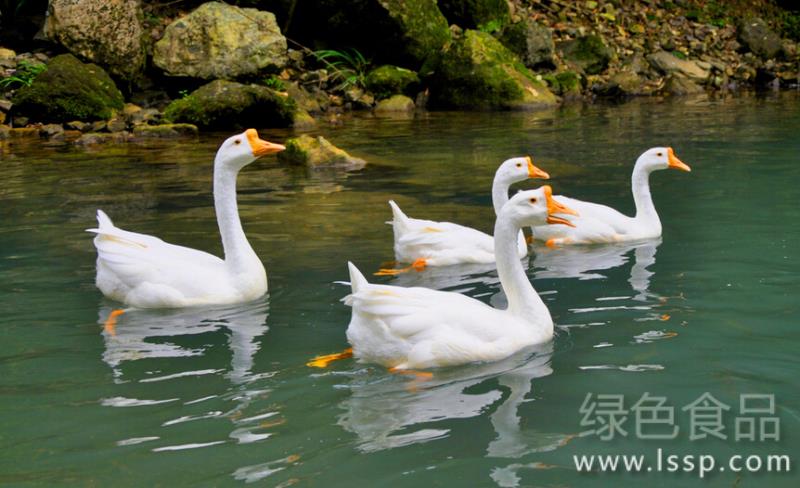
Low goose egg hatching rate affects the profitability of goose farming; how should it be addressed?
Low hatching rate affects goose farming profitability; how to address low goose egg hatching rate
-
条件筛选