-
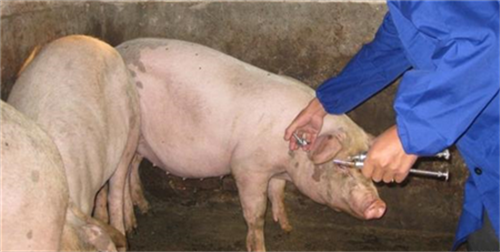
Pig diarrhea is not always caused by concentrated feed; these causes should also be investigated
Pig diarrhea is not entirely the fault of concentrated feed
-

Forage grass is the best way to mitigate cost risks in livestock farming
Livestock farming has three major risks: cost risk, market risk, and epidemic prevention risk. Whether raising cattle, pigs, chickens, ducks, or geese, all face these three major risks...
-

Bamboo rat farming, have you been to Guangxi to investigate?
These past few days, an old friend who farms bamboo rats in Hunan - why do I call him an old friend? He first contacted me back in 2016, called me up. He has been farming bamboo rats for...
-
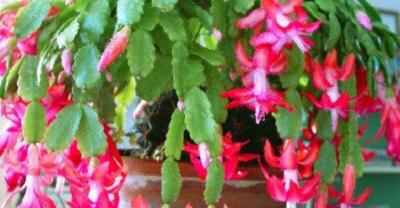
Four-season begonia cultivation methods: easy to grow well and propagate in large numbers
Four-season begonia is a plant with many varieties and many colors, and because its flowering period is relatively long, it is deeply loved by flower growers. Although many people like to grow it, ...
-

Surrogate sow gives birth to 9 cloned pigs in a single litter, setting a world record
On New Year's Day, January 1, keepers at the breeding pig farm of Harbin Sanyuan Livestock Industry Co., Ltd. carefully fed 6 small cloned pigs. The photo with the nursing bottle shows the careful feeding of the two weaker cloned piglets to ensure their healthy growth. On the evening of December 23, 2006, surrogate sow k09, studied by the research group led by Dr. Liu Zhonghua, professor at Northeast Agricultural University, gave birth naturally to 9 cloned Northeast Min pigs, setting a world record for the number of cloned piglets born in a single litter. All 9 cloned pigs were Northeast Min pigs, and 6 of them were in good health
-
How to propagate the flame tree by sowing? Master these key points
The flame tree, also known as the phoenix flower, is an ornamental flowering plant in the legume family, genus Delonix, and mature plants can reach up to 20 m tall. The flame tree is native to Madagascar and is commonly planted throughout the world's tropical regions, mainly cultivated in China's Yunnan, Guangxi, Guangdong, Fujian, Taiwan, China and other provinces.
-
How to Propagate Carnations? A Detailed Guide to Common Propagation Methods
The original name of the carnation is fragrant pink (Dianthus caryophyllus), and the carnations we commonly see today are all cut flowers. Many readers may be curious about how carnations are actually propagated. Let me introduce the propagation methods of carnations to you; flower lovers who like carnations can also learn about them.
-
How to propagate Anisodontea capensis? A comprehensive analysis of common propagation methods
When Anisodontea capensis reaches its flowering season, it shows people flower branches swaying in the wind, a light and graceful posture, and bright and gorgeous flower colors. Most importantly, its flowering period is relatively long, allowing more flower viewers to see its most beautiful side. In recent years, it has entered thousands of households and become the best choice for indoor potted plants
-
How to propagate Boston ivy? Methods and precautions
Boston ivy is a plant with very strong adaptability; it is not afraid of strong light, and is cold-resistant, drought-resistant and even tolerant of poor soil, but Boston ivy is afraid of waterlogging. This plant is very easy to grow, and Boston ivy also has strong resistance to harmful gases such as sulfur dioxide. But do you know about the propagation of Boston ivy?
-
How to Propagate Hibiscus? Introduction to Two Propagation Methods
The scientific name of hibiscus is actually Zhu Jin, also known as Chinese rose. As the name suggests, hibiscus originates from China. Because it has the advantages of diverse flower colors and a long flowering period, many people are willing to propagate it for viewing in their courtyards. So what are the propagation methods for hibiscus?
条件筛选