-
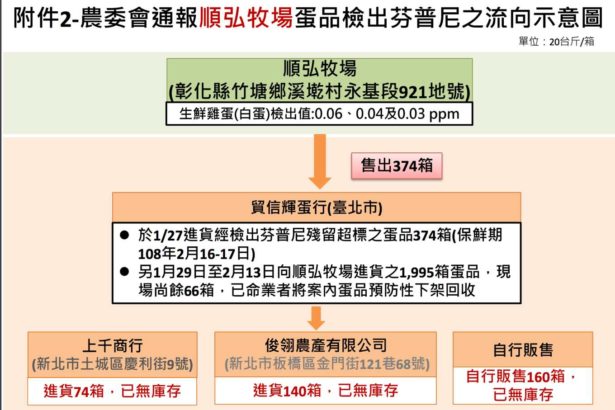
Fipronil Pesticide Egg Contamination Strikes Again! Changhua Shunhong Farm Found with 3 Non-Compliant Samples, Products Sold to Taipei and New Taipei, Affecting Breakfast Vendors
Fipronil Pesticide Egg Contamination Strikes Again! Changhua Shunhong Farm Found with 3 Non-Compliant Samples, Products Sold to Taipei and New Taipei, Affecting Breakfast Vendors
-
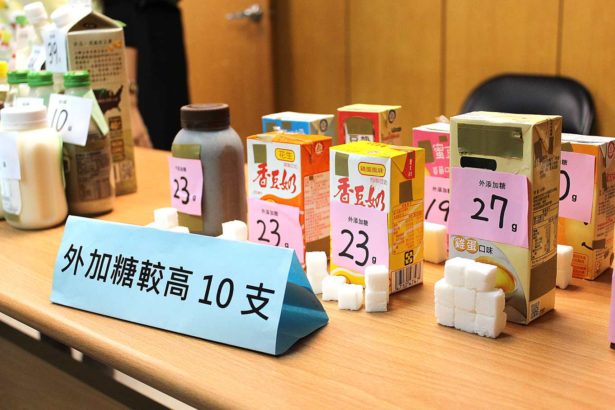
Dong Foundation Survey: Top 11 unsweetened soy milks on the market by concentration revealed! Some soy drinks are high in sugar, so consume with caution
Dong Foundation Survey: Top 11 unsweetened soy milks on the market by concentration revealed! Some soy drinks are high in sugar, so consume with caution
-

Grow Clivias Well by Building a Strong Foundation: Seedling Cultivation Methods for Clivias
When doing anything, you should lay a solid foundation, and the same goes for growing flowers. Take the clivia as an example: if you want it to bloom and look beautiful, you must put in some effort, and you should start cultivating it properly from the seedling stage.
-
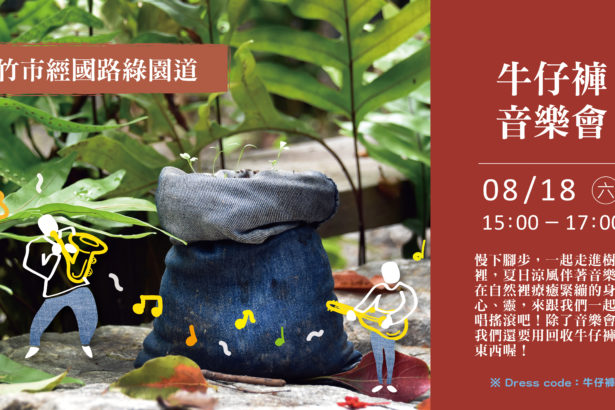
Where is forest food found and how do you get it? A roundup of common edible plants
8/18 [Jeans Concert]? - Hsinchu City Food Forest Series
-
What should be noted when cultivating fish fingerlings in summer? Good-quality fingerlings are the foundation of successful fish farming
Good-quality fingerlings are the foundation of successful fish farming: precautions for cultivating fish fingerlings in summer
-

Fine Management Techniques for Cotton at the Seedling Stage to Build a Solid Foundation for High Yield
Cotton seedling-stage management is crucial, as it directly determines whether the cotton can build a good framework for high yield and whether the reasonable transition from vegetative growth to reproductive growth can be properly adjusted. The principles of seedling-stage management are: first ensure a full stand, and on this basis cultivate strong seedlings and promote early seedling development. The key points of seedling-stage management are: check the seedlings promptly after sowing, and if rotten sprouts or rotten seeds are found, reseed in time. Thinning and final thinning: thinning can be done in two rounds. The first is after the seedlings emerge evenly, keeping strong seedlings and pulling out weak and diseased ones. The second is at the 1-2 true leaf stage, and final thinning is at the three-leaf stage, when the base of the stem has already become lignified and its ability to resist adverse environments has increased. Intertillage: through intertillage, soil temperature can be raised, water evaporation reduced, root growth promoted, strong seedlings cultivated, and early development encouraged. At the seedling stage, intertillage is generally carried out 3 times. The first is at the cotyledon stage, together with thinning. Early intertillage can raise the soil temperature around the seedling roots, promote early root development and increase absorptive capacity, so that true leaves emerge earlier and seedling stress resistance is enhanced. It can also break up soil compaction and help preserve soil moisture. The depth of this intertillage is 4-5 cm. At this time it is already June, the temperature is rising, the root system is already relatively strong, and aboveground growth is accelerating. Deep intertillage can disperse surface soil moisture, promote roots to go deeper, and control internode length, which is even more important in relatively fertile cotton fields. Fertilization: growth at the seedling stage is relatively slow, and topdressing should be based on seedling condition, applied early, lightly, or not at all. Irrigation and drainage: in single-crop cotton fields in northern cotton regions, if enough pre-sowing moisture irrigation has been applied, do not water at the seedling stage; do a good job of intertillage and moisture conservation. If watering is truly needed, then water lightly with a small amount, irrigating every other furrow, and after watering carry out intertillage to conserve moisture, improve aeration, and raise soil temperature. At the seedling stage, the suitable field capacity of the soil is 55%-70%. Disease and pest control: the main diseases and pests of cotton at this stage are cotton Fusarium and Verticillium wilt, cotton aphids, cotton bugs, cotton bollworms, cotton red spiders, and so on.
-
What is the box tree pyralid, an insect found beside vegetable fields?
As spring warms and flowers bloom, insects begin to become active. During a recent science-and-technology outreach activity in the countryside, it was found that a pest called the box tree pyralid had begun to occur and cause damage on boxwood along the roadsides of the park. The box tree pyralid is one of the common pests on plants such as boxwood, small-leaved box, large-leaved box, littleleaf box, Chinese box, spoonleaf box, Korean box, and holly, and it occurs in Shanghai and other provinces and cities. In Shanghai it has 3 to 4 generations per year, with severe overlapping of generations. It usually becomes active in March in spring, begins pupating in mid-April, begins emerging in late April, and the first-generation lar
-
How can the feeding efficiency of growing-finishing pigs be improved? Laying a solid foundation is key
Pig production is a competitive industry in China's agriculture. Pork accounts for about 67% of total meat production and is an indispensable source of nutrition for people; pig manure and urine will play an even greater role in increasing agricultural output and developing organic agriculture. Raising pigs is conducive to rural economic development and increasing farmers' income. The comprehensive utilization of pigs has great development potential and awaits further development, and the international and domestic markets for pig products still need further expansion. Therefore, great attention should be paid to the genetic foundation, material foundation and survival foundation of pig production, promoting pig production toward high yield
-
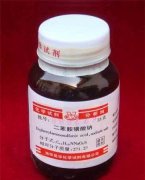
Organic Bacillus thuringiensis subsp. kurstaki found with diphenylamine pesticide contamination, traced to lubricating oil accidentally mixed into the manufacturing process
Investigation into the detection of diphenylamine pesticide contamination in the organic Bacillus thuringiensis subsp. kurstaki product Sulibao finds that lubricating oil accidentally entered the manufacturing process. What is going on here? How could lubricating oil appear in manufacturing? Let's take a look together. The Fushou Bacillus thuringiensis subsp. kurstaki product "Sulibao" was detected with the chemical agent "diphenylamine"
-
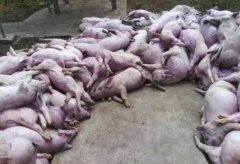
Latest news on African swine fever: carcass of a pot-bellied pig found in Taipei city today
The Taipei City Government already set up a "city-level inter-agency prevention and response task force" on the 4th. As the African swine fever epidemic has drawn intense public attention, the Animal Protection Office urged that people should not panic if they find a sick pig, and that once a pig owner is found to have arbitrarily dumped a carcass, they will instead be fined in accordance with the law, with the result being even more of a loss than a gain.
条件筛选