-
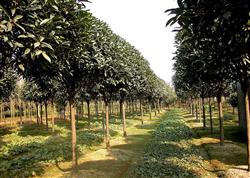
What are the precautions for transplanting osmanthus?
What should be noted when transplanting osmanthus? Experienced netizens are asked to help explain. If the transplanting method of osmanthus trees is improper, the survival rate of osmanthus trees will be low, thereby causing unnecessary losses. Zhongdi Network has compiled the key points to note when transplanting osmanthus, listed below for netizens to reference and learn from. First, the choice of transplanting season...
-
What harm does peony powdery mildew cause? Essential knowledge for peony planting
What harm does peony powdery mildew cause? How do you prevent and control peony powdery mildew? Please advise. The harm of peony powdery mildew: white powdery mold spots appear on the leaves, often expanding and joining together into patches, and can even cover the entire plant's leaves and stems, causing premature aging or death of the plant. Prevention and control methods for peony powdery mildew: 1. Strengthen...
-
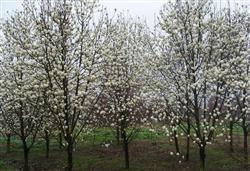
What are the uses of magnolia, and in which regions is it suitable for planting?
What is magnolia used for, and where is it suitable for planting? Please give an introduction. Magnolia is mainly used for landscaping: it is a famous early-spring flowering tree species, blooming before the leaves emerge. The flowers are large and fragrant, with thousands of buds on the branches; the flowers are bright but not gaudy, elegant but not flirtatious, pure and beautifully clear, just like a jade tree. In classical gardens, it is often planted in front of halls and behind courtyards, and named Wulan Hall or Yulan Garden...
-

What is the price of Forsythia seeds? Detailed planting method
Forsythia seed prices and planting methods
-

How to Grow Clivia? Key Points and Management Measures for Planting and Cultivation
Key Points and Management Measures for Planting and Cultivating Clivia
-

Key Technical Points for Planting and Care Management of Money Tree
Money Tree Planting and Care Management Techniques
-

Where is it suitable to plant cherry blossoms? Key points for choosing a planting site
Where is it suitable to plant cherry blossoms? Please explain that cherry blossoms prefer a warm, moist-leaning environment. They require plenty of sunlight, are not tolerant of shade and dampness, are not tolerant of saline-alkaline soil, and dislike waterlogging; they are cold-hardy and drought-tolerant, but during the flowering period they fear strong winds and smoke and dust. They are suited to growing in loose, fertile, well-drained slightly acidic or neutral sandy loam. Light...
-

Key Technical Points for Interplanting Small Shrubs in Southern Magnolia Fields
In the first 3 years of southern magnolia (Magnolia grandiflora) seedling growth, to offset the drawbacks of large initial investment and no profitable output from field-planted trees in the early stage, small shrubs such as Japanese boxwood (Buxus microphylla), golden privet (Ligustrum sinense 'Variegatum'), and red-leaf barberry (Berberis thunbergii) can be interplanted. During the first 3 years of interplanting small seedlings, at 6000-7000 plants per mu, averaging 0.5 yuan per plant, a return of over 3000 yuan can be obtained. After the 4th year, the southern magnolia has grown to 5-6 cm, and can then be sold selectively at about 80 yuan per plant. From then on, annual sales all generate income. Cultivation points: when planting 1-year-old southern magnolia seedlings, plant spacing 1.
-
Detailed Guide to Cosmos Cultivation: Key Points for Planting and Care
Perennial herb, often grown as an annual, sown year-round in a greenhouse: sown in mid-November, blooms in mid-April; sown in early January, blooms in mid-May; sown in early April, blooms in early July; sown in early July, blooms in early September; sown in late September, blooms in April to May, do not cover with soil, water by the soaking method, optimum germination temperature 20-25°C, growing temperature 10-30°C, transplant when there are 3-4 true leaves, pinch once after planting out, early autumn sowing gives the longest flowering period, flowering period April to October. Can be used for potted plants, flower beds, balconies, ground
-
Methods and Technical Key Points for Trunk-Cutting Planting of Black Locust in Autumn and Winter
Late autumn and early winter is the best time for trunk-cutting planting of black locust (Robinia pseudoacacia). Its characteristics are as follows: First, it avoids the spring tree-planting peak period and the busy farming season, makes full use of the winter slack period, and fully guarantees the timing and quality of planting. Second, according to the physiological characteristics of black locust, the daily average temperature required for root growth is relatively low; after leaf fall in autumn the aboveground part stops growing while the underground part still grows for a period, and when the leaves fall the mobile nutrients in the branches and leaves return to the trunk and roots, so the roots are rich in stored nutrients at that time, which exactly gives the root system a growth stage. Third, the planting
条件筛选