-
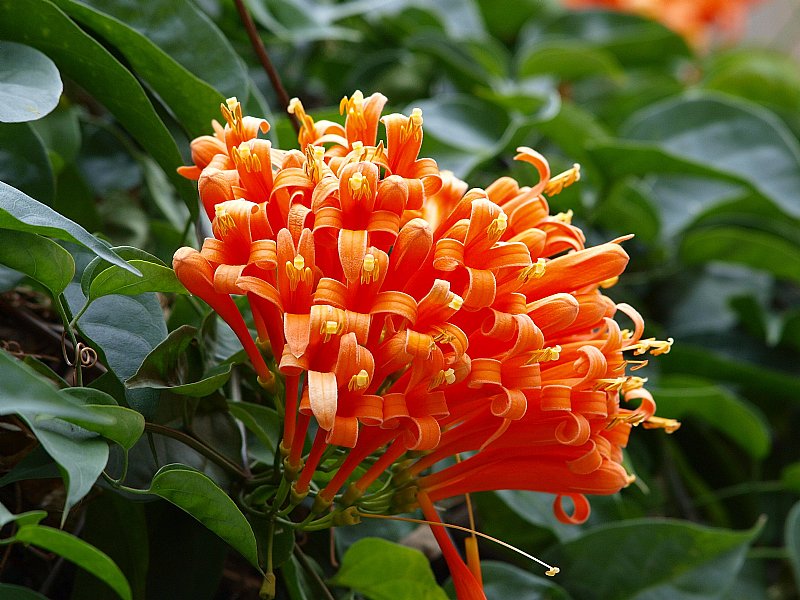
How to grow flame vine? Detailed guide to cultivation methods and precautions
Layering propagation or cutting propagation. Layering propagation can be done in spring or summer; roots begin to form in about 1 month, and in about 3 months it can be separated from the mother plant and transplanted. Cutting propagation is also carried out in spring and summer. For the cultivation site, choose a spot with ample sunlight and cool, breezy ventilation. Flame vine is not demanding about soil
-

Key Cultivation and Management Techniques for Crocosmia (Flame Lily)
Crocosmia (Flame Lily) Scientific name: Crocosmia crocosmiflora. Alias: Xionghuang Orchid. Family and genus: Iridaceae, Crocosmia. Morphological characteristics: The corm is flat and round, resembling a water chestnut; the plant height is about 50 cm; the leaves are linear and sword-shaped, with leaf sheaths at the base that clasp the stem.
-

Introduction and Characteristics of the Goldflame Honeysuckle Variety
Goldflame honeysuckle Lonicera x heckrottii, Caprifoliaceae, Lonicera. Habit: evergreen vine, stems over 10 m long, twining to the right; simple leaves opposite, ovate-elliptic, glaucous green beneath, the bases of 1-2 pairs of leaves below the inflorescence fused into a rounded or nearly rounded disc; inflorescence terminal, flowers orange-red; flowering period March to October. Adaptability: sun-loving but slightly shade-tolerant, cold-tolerant, drought-tolerant, not demanding about soil, with a well-developed root system and strong suckering ability. Application: Goldflame hon
-
Gloriosa lily, also known as flame lily and climbing lily
English name: LovelyGloriosa Family: Liliaceae, genus Gloriosa Aliases: Gloriosa lily, flame lily, climbing lily Origin: Southern Yunnan, Hainan Province of China, and tropical Asia and Africa. In China, wild scattered distribution occurs below 1200 m altitude in Xishuangbanna, Yunnan. Plant type: perennial climbing herbaceous flower. Biological characteristics and ecological habits: Gloriosa has horizontal rhizomes, about 2 cm in diameter, pale yellowish-brown, usually sprouting from the terminal bud. The aboveground stem is slender and supple, climbing, up to 3 m tall, green
-
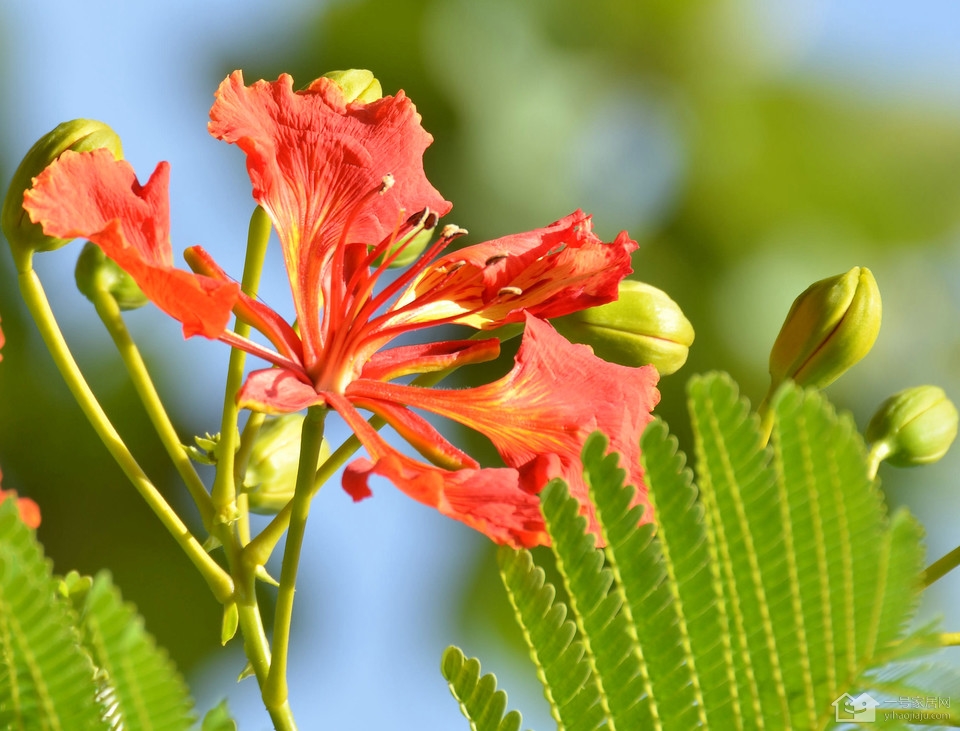
How to grow the Flame Tree? A detailed guide to its cultivation methods
The Flame Tree is native to the tropics and by nature loves hot and humid environments. The temperature range most suitable for its growth is 20-30°C, which is why late spring to early summer and autumn are its most vigorous growing seasons in China. The Flame Tree is not cold-tolerant, so plants grown in the open need to be protected from the cold in winter.
-
How to Grow the Flame Tree (Delonix regia)? A Detailed Guide to Its Cultivation Methods
The flame tree (Delonix regia) is native to the tropics and naturally loves hot, humid environments. The temperature range best suited to its growth is 20-30°C, which is why late spring to early summer and autumn are its most vigorous growing seasons in China. The flame tree is not cold-tolerant, so plants grown in the open need to be protected from the cold in winter.
-
Former village Party secretary Zhang Xiudai: burned out the flame of his life for the villagers' escape from poverty
Former village Party secretary Zhang Xiudai: burned out the flame of his life for the villagers' escape from poverty
-
When is the blooming period of the goldflame spirea?
The blooming period of the goldflame spirea. The flowering time of the goldflame spirea.
-
The flame flowers in the badlands soil are the roots that carry local regeneration
"Through the South Wind. Seasonal Flavors" The flame flowers in the badlands soil carry the roots of local regeneration
-
Firecracker is a succulent plant in the Crassulaceae family
Firecracker is a succulent of the genus Crassula in the Crassulaceae family. Its bright red fleshy leaves are where its unique charm lies, giving a sense of vigorous, upward-reaching passion and vitality like a burning flame, with a very strong infectious appeal.
条件筛选