When is the blooming period of the goldflame spirea?
The goldflame spirea is a beautiful shrub species used in various greening plantings and has extremely strong ecological benefits. Next, let us take a look at the blooming period of the goldflame spirea.
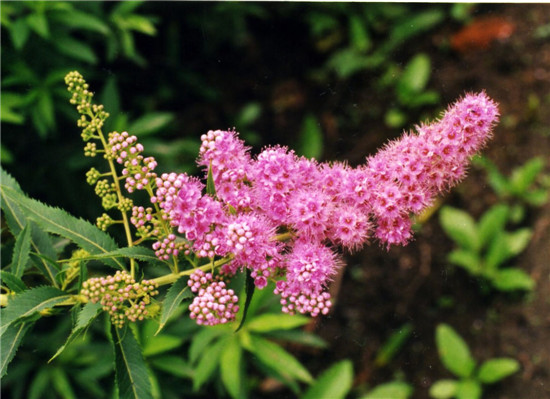
The goldflame spirea (Spiraea x bumalda 'Goldflame'), a deciduous small shrub native to the United States, generally has a plant height of 60-110 cm, a crown width of 90-120 cm, leaves 0.8-3.0 cm long and 0.5-1.6 cm wide, and petioles 0.2-0.4 cm. Its old branches are dark brown, new branches are yellowish brown, and the branches are mostly zigzag, soft but not straight.
The goldflame spirea has loose, spherical foliage. The leaf color changes with the seasons and is bright and eye-catching: yellow and red mixed in spring, green in summer, and purplish red in autumn. The flowers are rose red, and the inflorescences are relatively large, with 10-35 flowers clustered into a compound umbel, 10-20 cm in diameter.
The goldflame spirea likes moisture, sunlight and cold tolerance, and is relatively shade-tolerant. It grows well in a moist but warm and sunny growing environment. It can also tolerate a high temperature of 37.7°C and a low temperature of -30°C, with extremely strong adaptability. The goldflame spirea is drought-tolerant and barren-tolerant. It still grows well in an environment with annual rainfall of about 266.9 mm and annual evaporation of about 2731 mm.
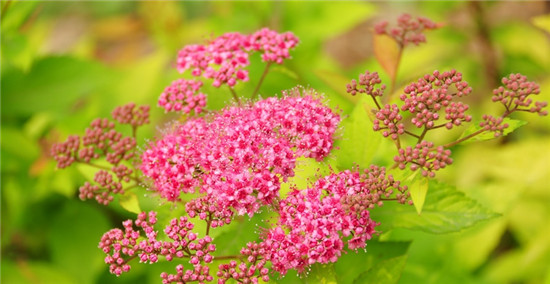
The goldflame spirea has an extremely strong sprouting ability. It has luxuriant branches and leaves, red leaves and bright flowers, and a neat crown shape, and is relatively tolerant of pruning and shaping. It is native to the United States and is relatively tolerant of dryness and salinity-alkalinity. It prefers neutral and slightly alkaline soil for growth and is barren-tolerant, but if in an environment with good drainage and fertile soil, it will grow more luxuriantly.
The goldflame spirea is a deciduous shrub, relatively shade-tolerant, fond of a humid climate, and grows well in warm, sunny and humid places. It can tolerate a high temperature of 37.7°C and a low temperature of -30°C.
It grows well in an environment with annual rainfall of about 266.9 mm and annual evaporation of about 2731 mm. It has strong root-suckering ability and is relatively tolerant of pruning and shaping. It is drought-tolerant and salinity-alkalinity-tolerant, prefers neutral and slightly alkaline soil, and is barren-tolerant, but grows more luxuriantly in places with good drainage and fertile soil.
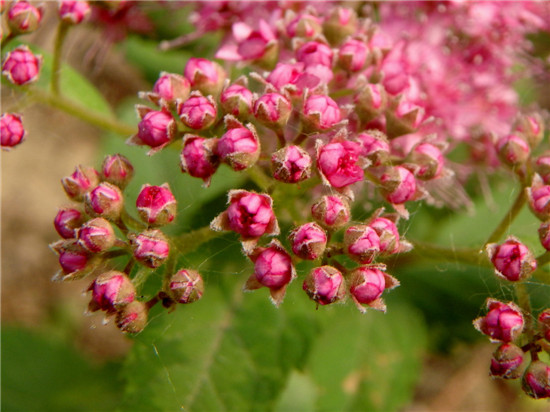
The goldflame spirea has corymbose inflorescences and a bell-shaped calyx tube. The leaf color is bright and eye-catching: yellow and red mixed in spring, green in summer, and purplish red in autumn. The flowers are rose red, and the inflorescences are relatively large, with 10-35 flowers clustered into a compound umbel 10-20 cm in diameter. The blooming period is relatively long, generally from May to October, and the flower-viewing time is also very long.
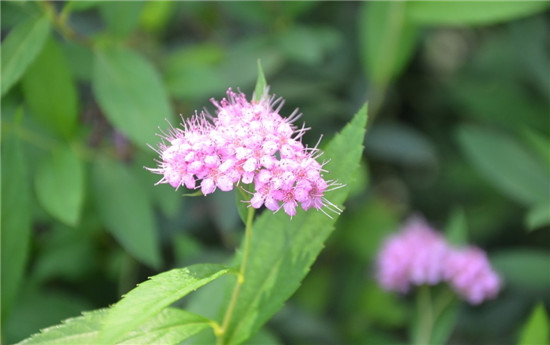
The goldflame spirea has advantages such as strong adaptability, sunlight preference and cold tolerance, drought tolerance and barren tolerance, no pests or diseases, strong sprouting ability, luxuriant branches and leaves, red leaves and bright flowers, a neat crown shape, no need for pruning, and a long ornamental period.
The goldflame spirea is an excellent flowering shrub species with high ornamental value, broad development prospects, and comprehensive application functions. The price of the goldflame spirea is also very cheap. Generally, for saplings with plants of 30 cm-40 cm, the wholesale price is around one yuan. Of course, if buying a single plant, it will probably be more expensive.
The goldflame spirea can be propagated by several methods such as sowing, cuttings, and division. Among them, cutting propagation is the fastest and has a high propagation coefficient, so the cutting method is generally used in actual production. Cuttings are generally taken in early July after the full blooming period, choosing a windless early morning, evening, or cloudy day, and carried out in combination with shaping and pruning.
For cuttings, it is advisable to choose a place that is sheltered from the wind and sunny, clean and tidy, and convenient for water use, use clean river sand as the substrate, make a seedbed of an appropriate size, and cover it above with a shade net with a light transmittance of 10%-30%. For cuttings, it is advisable to choose robust branches of the current year that are semi-lignified and free of pests and diseases, with a base thickness of more than 0.2 cm, and cut them into cuttings of about 10 cm.
The above is all of the content I have summarized for you on the blooming period of the goldflame spirea and the flowering time of the goldflame spirea. I hope this article can help everyone. Please also continue to follow us.