-

How to Raise Earthworms for High Yield? Five Advanced Breeding Points
I. Staged Feeding. Giving earthworms different breeding management according to their individual developmental stages is the key to whether artificial earthworm breeding can succeed and further achieve high yield....
-

Five points to note when introducing spring potatoes
At present, it is exactly the season for planting potatoes. When transferring and purchasing seed potatoes, be sure to understand in detail the latitude, altitude, climatic conditions and other circumstances of the production area of the potato seed tubers, and correctly choose the production area and variety according to the rules of potato introduction. Specifically, pay attention to the following five aspects: 1. Latitude and altitude. Trials show that introduction from high altitude to low altitude and from high latitude to low latitude is likely to succeed. The reason is that during the growth period of potatoes at high altitude and high latitude, the temperature is relatively low, the seed tubers are less infected by viruses and degenerate slowly, and when introduced to low altitude and low latitude for planting, they generally perform well
-
How to prevent diseases in oyster mushroom wall cultivation? Remember these five points
Disinfection treatment of the fill soil When cultivating oyster mushrooms in walls, the fill soil must be clean soil and must be disinfected before use. Two kinds of fill soil should be prepared: one for sealing the edges, for which soil with greater stickiness should be chosen to prevent the mushroom wall from leaking water; the other for internal filling, for which fertile garden soil should be chosen. Whichever kind of soil is used, it must be dug from more than 10 cm below the ground surface and sun-dried for 3-4 days, then mixed evenly with 1% lime and 0.1% carbendazim for disinfection; for the nutrient soil used as internal filling, add an additional 0.5% phosphate fertilizer
-
Five key points to remember when spraying foliar fertilizer on cotton
Cotton leaves are the most important nutritional organs of the cotton plant, possessing four functions: photosynthesis, respiration, transpiration and absorption. By making use of their absorption and photosynthesis, targeted foliar spraying of fertilizer can promote steady plant growth, strengthen resistance to disease, pests, drought and premature aging, regulate vegetative and reproductive growth, and greatly increase yield and quality. 1. Spray type: scientifically choose the foliar fertilizer according to the cotton's growth vigor; for excessively vigorous cotton seedlings, spray a 0.3%-0.4% potassium dihydrogen phosphate solution or a 2% borax solution
-
What are the taboos of growing bonsai in summer? Keep these five points firmly in mind
1. Avoid fertilizing. In the high temperatures of midsummer, the leaves lose water quickly. Fertilizing at this time will make the solute concentration of the trunk's cells lower than that of the surrounding environment, causing water in the plant cells to flow back into the soil, and the trunk will die of dehydration due to fertilizer damage. 2. Avoid drought. Watering when you remember and not watering when you forget, sometimes leaving it alone for several days in a row, and only quickly replenishing water once the leaves are found to be wilting, after which the leaves return to normal - this is a response of the trunk to adapt to the environment, but if this goes on for a long time, the excessively strong transpiration will eventually make the trunk difficult to recover from serious damage and die of dehydration. 3. Avoid water
-
How to fertilize rhododendrons? Five key points to note
Rhododendron roots are delicate, so fertilizer must be fully composted before use. Generally, fertilizer that has been composted for more than one year and fully fermented is most suitable. When fertilizing, pay attention to the following five key points: Feed according to the seedling. Seedlings cannot be fertilized; after 4 months, a well-composted, extremely dilute liquid manure may be applied. After the plants are set out and transplanted separately in the following spring, more nitrogen and potassium fertilizer should be applied to speed up vegetative growth. At 2 to 3 years, during the mature stage, more phosphorus fertilizer should be added to achieve a high flowering rate and large, brightly colored flowers. In the old stage, more nitrogen fertilizer may be applied to promote renewal of branches and leaves and rejuvenate the tree
-
Five key points for autumn fingerling management, farmers need to pay attention
Autumn water temperatures are suitable, making it the peak season for fish growth. Fingerling management should focus on the following 5 tasks. 1. Pond clearing. Transfer the fingerlings to a pond that has been cleared and disinfected for rearing. Where water sources and pond rotation are difficult, all fingerlings can be transferred out temporarily for holding, then the original pond disinfected with quicklime at 75-100 kg per 667 sq m of water surface, and the water fertilized by conventional methods. Wait until the drug effect has dissipated before transferring the fingerlings back. 2. Grading. Since larger fingerlings have a big appetite and strong ability to compete for food, if large and small fingerlings are mixed, the small fish will
-
Five observation points when feeding rabbits
One, look at the rabbit's size. Generally, an adult rabbit weighing about 3.5 kg needs 150-200 g of feed per day; a young rabbit weighing about 1.75 kg needs 100-150 g of feed per day. The ideal moisture level of the feed is when it lightly holds together when squeezed and falls apart when the hand is released. Two, look at whether the rabbit is fat or thin. For fat rabbits, appropriately reduce the amount of concentrated feed and increase green fodder or roughage; for thin rabbits, supplement nutrition and feed more concentrated feed. You can also feed some soaked soybeans, or mash bean dregs, mix them with boiling water, and stir them into the feed for the rabbits. Three, look at whether the feces are dry or wet. If the rabbit's
-
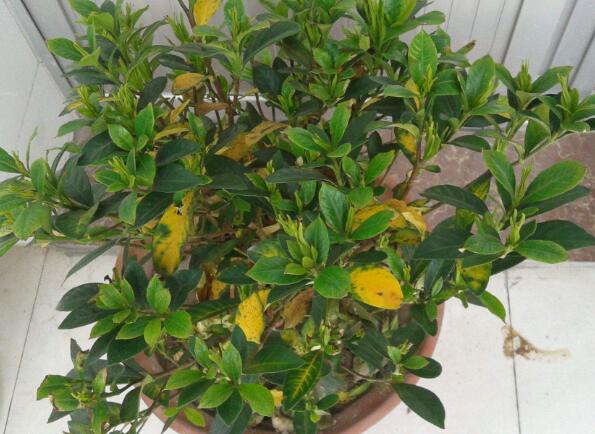
What to Do When Plum Blossom Leaves Turn Yellow? These Five Points Help You Solve It Easily
The plum blossom is a fairly well-known plant in China, with extremely high ornamental value, and together with the orchid, bamboo, and chrysanthemum, it is collectively known as one of the Four Gentlemen of Flowers. However, no matter how beautiful the flowers are, yellowing leaves will affect their beauty, and the plum blossom is no exception. Regarding what to do when plum blossom leaves turn yellow
-
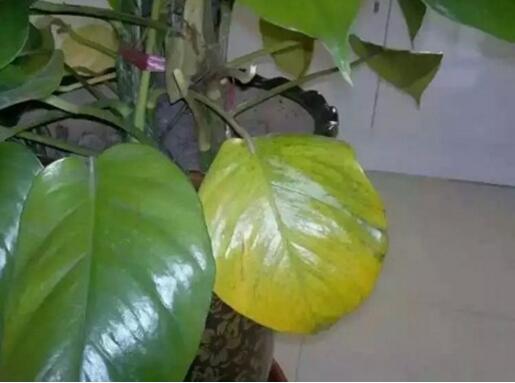
What to do when Eustoma leaves turn yellow? These five points help you solve it easily
Eustoma is a flower well known all over the world and has high ornamental value, but even the most beautiful flower will have its overall beauty affected if yellowing occurs. What should you do when Eustoma leaves turn yellow? Below, the editor takes everyone to learn about it
条件筛选