How to Raise Earthworms for High Yield? Five Advanced Breeding Points
I. Staged Feeding
Giving earthworms different breeding management according to their individual developmental stages is the key to whether artificial earthworm breeding can succeed and further achieve high yield. The traditional "several generations under one roof" mixed-culture method makes it impossible to separate large from small at harvest: adult worms past their optimal harvest period cannot be collected in time, wasting feed and breeding equipment; immature worms not yet at their optimal harvest period will reduce yield if harvested, and manual sorting also increases labor intensity. In artificial breeding, dedicated breeder worm beds and production worm beds must be established.
Mixed Culture: Snail and Earthworm Mixed Culture Guide, with Obvious Efficiency Gains
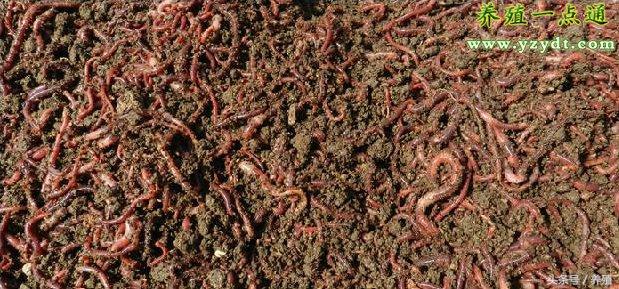
Staged feeding of earthworms is the only way to improve benefits
II. Thin Feeding and Frequent Removal
For adult worms, feed twice a month, remove worm castings, collect cocoons or turn over the breeding bed 3 or 4 times, with each feeding at a thickness of 15-20 cm, always keeping the feed fresh and aerated to create the optimal ecological environment for earthworms. Timely Harvesting. In past materials, 3-5 earthworm harvests per year were introduced. However, in production it has been found that, when feed is sufficient, using the advantageous period of earthworm growth and reproduction (around sexual maturity, marked by the appearance of the clitellum on the worm body) to carry out short-term (generally 1 month is suitable) high-density breeding, while increasing the number of harvests, timely regulating and reducing population density, and maintaining a dynamic balance between growth and harvest, is the key to achieving high earthworm yield.
Earthworm Breeding: Site Selection for Earthworm Breeding and 12 Breeding Methods
III. Rotation and Renewal
Through the continuous renewal of breeder worms and the periodic rotation of breeding beds, not only is the vigor of the population ensured, but the natural decline of the population caused by long-term breeding of the same worm group in the same bed is also avoided. Breeder worms should preferably be renewed once every year in March and April.
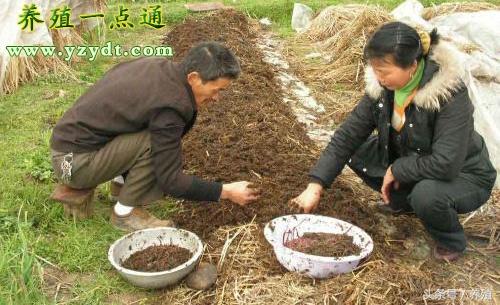
Breeder worms must be continuously renewed to avoid natural decline
IV. Breeding Management
Earthworm breeding is divided into several periods: breeder worms, cocoon incubation, early-stage young worms, late-stage young worms, and adult worms. The management requirements for different periods are as follows:
1. Breeder Worm Management
The breeding density should preferably be controlled at 2 kg to 2.5 kg per sq m or 10,000 to 15,000 worms per sq m. Remove worm castings once every 6 or 7 days, put the collected cocoons into the incubation bed for moisture-retaining incubation, and at the same time turn over the breeder worm bed, using the side-feeding method to supplement feed, so as to improve the ecological conditions of the breeding bed and facilitate reproduction.
2. Management of the Incubation Bed
The thickness of the incubation substrate should preferably be 10-15 cm. The incubation substrate should be kept fine and moist. Each sq m can incubate 50,000-60,000 cocoons. Loosen the incubation substrate with a pitchfork 1 or 2 times a month to facilitate aeration and the survival of young worms.
EM stock solution, 12 bottles/box, improves feed utilization and immunity, deodorizes, environmentally friendly, for raising pigs, cattle, sheep, dogs, donkeys, rabbits
3. Management of Early-Stage Young Worms
When most of the incubation substrate has turned into castings, remove the castings in time, supplement feed using the bottom-feeding method and expand the bed in time to reduce the density of young worms.
4. Management of Late-Stage Young Worms and Adult Worms
Late-stage young worms grow rapidly, so the frequency of removing castings and supplementing feed should be increased, feed should be supplemented using the bottom-feeding method, and the bed should be expanded in time for breeding; when they reach sexual maturity and enter the reproduction period, give play to the earthworms' advantages in production and cocoon production, seize the opportunity to reduce breeding density or harvest and use them in time, or replace the old breeder worms.
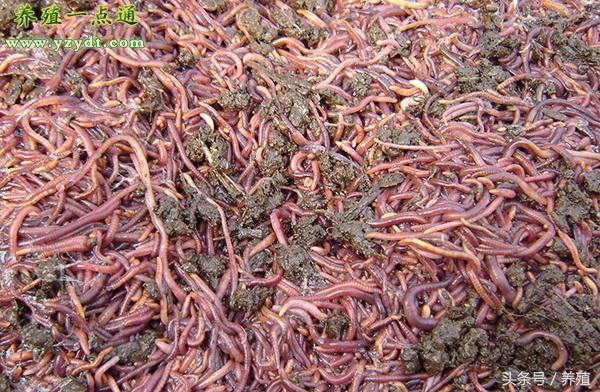
Staged Feeding of Earthworms
V. Control of Breeding Density
The optimal density for earthworm breeding is 2.8-3.1 kg per sq m or 20,000 worms per sq m. Within this range, less seed stock is used and yield is high. The breeding density of early-stage young worms can be slightly greater than 30,000 worms per sq m or 2.5 kg per sq m; the breeding density from late-stage young worms to adult worms can gradually be reduced to about 20,000 worms per sq m. Density control should be combined with rotation and renewal: build the breeder worm bed, incubation bed, early-stage young worm bed, and late-stage young worm bed in an area ratio of 1:1:2:4, and combine this with expanded-bed breeding to meet the density control requirements.