-

Farmer Academician Zhao Zhendong: Write your thesis in the fields, leave the results in the farmhouses
"Farmer Academician" Zhao Zhendong: thesis written in the fields, results left in the farmhouses
-
How do small plots get merged into big fields? The farmers have the final say
Small plots merged into big fields: the farmers have the final say
-
Clever Income Boost from Raising Crayfish in Lotus Root Fields, Farmers on the Road to Prosperity
Cleverly Playing the "Prosperity Card" with Crayfish Farming in Lotus Root Fields
-
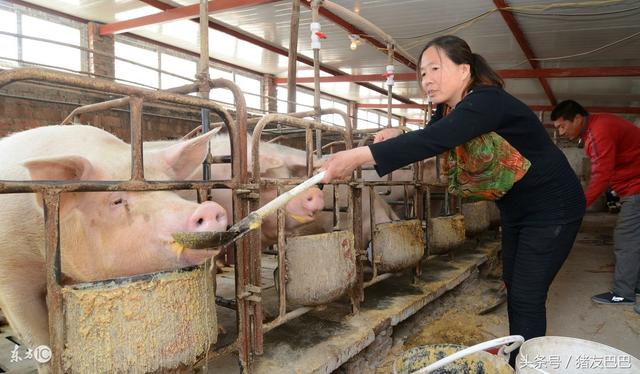
Pig farming doesn't make money, so look back at the fields - what insight does this rural proverb offer?
What insight does the rural proverb "Pig farming doesn't make money, so look back at the fields" offer?
-

Yinjiang's barren slopes become terraced fields, growing fruit that brings prosperity
Yinjiang: barren slopes become terraced fields, growing "fruit that brings prosperity"
-
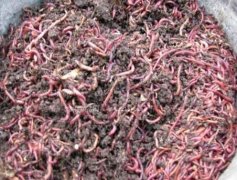
Key Management Techniques for Raising Earthworms in Open Fields in Winter
Earthworm farming now brings high economic returns, which has led many people to raise earthworms, so what are the key management points for earthworms, do you know? 1. Daily management should be done carefully, including checking temperature and humidity, egg laying and hatching, feeding conditions, pest intrusion and abnormal phenomena
-
How to control field bindweed in sesame fields? Oxadiazon can control it
Liu Bengui from Shou County, Anhui Province, called to say that in recent years field bindweed has been severe in local sesame fields, and common herbicides cannot control it; he does not know which herbicide should be used to control this weed. According to relevant information, for chemical weed control in sesame fields, before sowing sesame, use 80-100 ml of 48% trifluralin emulsifiable concentrate per mu, or 50-70 g of 70% prometryn wettable powder, add water and spray evenly on the soil surface, then immediately incorporate into the soil to a depth of 3-5 cm; this can control annual grass weeds and some broadleaf
-
Chemical weed control in summer sesame fields should be carried out at the right time
The seedling stage of summer sesame coincides with the hot, rainy season. The roots are few and the growth is weak, while weeds emerge quickly, are dense, and grow vigorously, easily shading the sesame seedlings and causing a weed infestation. Corresponding herbicides should be selected for chemical control at different stages. 1. Soil closure treatment after sowing but before emergence. After sowing sesame, use 100 ml of 50% acetochlor emulsifiable concentrate or 200 ml of Dual (72% metolachlor emulsifiable concentrate) per mu, add 50 kg of water, and spray evenly. This can control foxtail grass, crabgrass, shortawn foxtail, goosegrass, and many other annual grass weeds, and also has a certain control effect on many broadleaf weeds propagated by small seeds.
-
Characteristics and Application of the Herbicide Nabu in Sesame Fields
[Trade name] Nabu [Common name] sethoxydim [Formulations] 12.5% oil-miscible emulsion, 20% emulsifiable concentrate [Application rate] To control annual grass weeds with 12.5% Nabu oil-miscible emulsion or 20% Nabu emulsifiable concentrate, use 1.0 L per hectare at the 2-3 leaf stage; 1.5 L at the 4-5 leaf stage; 2.0 L at the 6-7 leaf stage. Under drought conditions, the application rate of 12.5% Nabu is the same as above; 2
-
Product Introduction to the Herbicide Saturn for Sesame Fields
[Trade name] Saturn [Common name] thiobencarb [Formulation] 50% Saturn emulsifiable concentrate, 90% high-strength Saturn emulsifiable concentrate [Application rate] 2.25-3.0 L of 50% Saturn per hectare, or 1.2-1.5 L of 90% high-strength Saturn. [Timing of use] Apply after sowing sesame but before seedling emergence. [Target weeds] Barnyardgrass, crabgrass, foxtail, bluegrass, goosegrass, rice flatsedge, purslane, etc. [Application technique] Spray volume
条件筛选