-
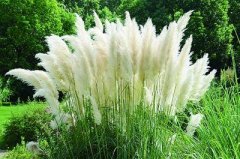
Physical Characteristics of Feather Reed Grass and Soil Requirements of Its Growing Regions
What is feather reed grass? Feather grass is a clump-forming ornamental grass with many varieties. It is a deciduous plant, but it is the first among the family to show foliage in early spring. Feather reed plants may grow to 3 to 5 feet tall and in June produce an inflorescence that starts green and slowly
-

Is chicken-feather greens the same as baby bok choy? The differences explained clearly in one go
Chicken-feather greens are simply seedling greens, edible as soon as a few true leaves have grown, rich in vitamins and effective at relieving nervous stress, and very popular in the market, so is chicken-feather greens the same as baby bok choy? 1. Is chicken-feather greens the same as baby bok choy? Chicken-feather greens are baby bok choy
-
Key Technical Points and Rearing Management Methods for Yellow Feather Chicken Farming
Abstract The construction of a chicken house for Yellow Feather Chickens requires a good site selection, and a dedicated brooding room needs to be set up for brooding to improve the survival rate. Daily feeding requires balanced nutrition, improved cleanliness, and strengthened work on heat prevention and cold protection and warmth. Strengthen daily epidemic prevention and disinfection work to avoid
-
At What Age Do Young Pigeons Begin to Molt? A Detailed Guide to Raising Young Pigeons
The pigeon is a fairly common bird in daily life, and it has high food value, so it is deeply loved by consumers. Young pigeons refer to pigeons that have just hatched, and in the process of raising them there are certain differences from adult pigeons, so what are the specific
-
What to Do When Goslings Peck Each Other's Feathers? Solutions for Back-Feather Pecking
Those who raise geese know that at a certain stage of growth, geese will peck each other's feathers, and the weaker ones may even be pecked to death by their companions. So why does this happen? Is it because the geese have some disease? Is it because they lack something in their bodies? When this happens
-
How to Raise Black-Feathered Green-Shelled Laying Hens? A Detailed Guide to Breeding Techniques
The difference between black-feathered green-shelled laying hens and ordinary green-shelled laying hens is that the feathers of black-feathered green-shelled laying hens are black, and they are mainly concentrated in Yichang, Hubei. Because of their different feathers, they are quite attractive to consumers during the sales process. Today, let us briefly
-
Prevention and Control Methods and Technical Key Points for Feather-Pecking Disorder in Captive Hwamei Birds
The so-called hwamei feather-pecking disorder refers to a small number of hwamei birds during ordinary keeping that, due to various causes, bite off their own tail feathers, wing feathers, back feathers and so on, one by one (sometimes called self-biting disease), so that the tail feathers are sometimes pulled until they are bare and sparse, curled
-
Methods for Preventing and Treating Self-Biting Feather Disorder in Hwamei Breeding
(1) Causes of self-biting feather disorder in hwamei: The main causes of self-biting feather disorder in hwamei birds: ① The hwamei is a bird that loves cleanliness very much, and the vast majority love bathing (also called washing). If the hwamei is not bathed on time or regularly, if the cage is not cleaned frequently, if the sand grains in the sand tray are not replaced, if the birdcage and cover cloth are not cleaned frequently, and if there are prolonged rainy days and other such reasons, then lice or mites will breed on the hwamei. Lice and mites parasitize the surface of the hwamei's body, and the entire skin will be affected, causing the bird's skin to itch and bleed. The hwamei is “helpless” against the lice and mites breeding on its body, so it has no choice but to bite its feathers to stop the itching and bite its feathers to “vent its anger.” ② Because the hwamei has long been imprisoned in a cage, or has long been ignored and neglected by people, it is lonely all day and has no choice but to protest to its owner by biting its own feathers. Keeping a hwamei is not only for appreciating its fighting, but also for appreciating its beautiful feathers. Bald or messy feathers are really not beautiful, so how can its ornamental value even be discussed? ③ Some hwamei develop self-biting feather behavior because the bird keeper fed them feed ingredients such as caoguo and star anise. ④ Some hwamei develop self-biting feather behavior because their food lacks a certain trace element for a long time.</p><p></p><p>(2) Symptoms of self-biting feather disorder in hwamei: Tail feathers and wing feathers are incomplete and falling off, curled and uneven, or of uneven length, or the feathers have already been pulled off and bitten to pieces. The tail is bald or there are no wing feathers, and the exposed areas are red, swollen, and inflamed.</p><p>(3) Methods for preventing and treating self-biting feather disorder in hwamei: Once a hwamei develops self-biting feather disorder, carefully and thoroughly analyze the cause and treat it according to the symptoms. For example: ① Bathe the hwamei on time, and regularly clean the birdcage, sand tray, and cover cloth. Once lice or mites are found on the bird, immediately adopt a method of treating both internally and externally to eliminate them. Insecticides such as Baichongling can be sprayed on the birdcage, sand tray, and cover cloth to eliminate external mites; use disinfectant diluted with water or water boiled with local tobacco stems to bathe the hwamei and eliminate the lice and mites on its body. Adjust the concentration of the local tobacco stem water as appropriate, and bathing 2 to 3 times is enough. If the hwamei's skin is already red, swollen, and inflamed, grind Zailin or Yinqiao tablets (powder) into powder, put it into the water cup, and let the bird drink it for 3 days, which can reduce inflammation and relieve pain. ② If the self-biting feather disorder is caused by the hwamei being neglected, immediately set aside time to play with the bird, persist in walking the bird every day, and give the bird the opportunity to move outdoors or in nature to relieve its loneliness. ③ Analyze the feed the hwamei has eaten recently to see whether it may be lacking a certain trace element or whether it has been fed foods such as caoguo. If no lice or mites have bred and walking the bird has been maintained, then it must be a feed problem, and the feed formula should be revised promptly or another feed should be substituted.</p>
-
What are the prevention and control methods for feather pecking in meat ducks?
Feather pecking in meat ducks refers to the undesirable behavior during the rearing process in which one or more ducks in a flock peck their own feathers or peck at the feathers of other individuals. The pecked areas are mostly the back and wing tips, often causing sparse and broken feathers, bleeding hair follicles, and even torn skin; feathers are often eaten after being pecked out by the root.
-
Causes and Prevention and Treatment Methods of Infectious Laryngotracheitis in White-Feathered Broiler Chickens
Infectious laryngotracheitis in chickens is an acute respiratory infectious disease caused by a herpesvirus. Infectious laryngotracheitis in chickens is characterized by difficulty breathing, coughing, and expectoration of exudate containing blood. On necropsy, swelling, hemorrhage, and erosion of the laryngeal and tracheal mucosa can be seen
条件筛选