-

Use of facility agricultural land will be further regulated
In order to support the healthy development of facility agriculture, the Ministry of Land and Resources and the Ministry of Agriculture will increase policy support, guarantee the reasonable land needs of facility agriculture, and at the same time further strengthen law enforcement and supervision to regulate the use of facility agricultural land. The Ministry of Land and Resources and the Ministry of Agriculture jointly issued the "Notice on
-
High-Yield Facility Cultivation Techniques for Moving Pomelo (Citrus maxima) from the South to the North
I. Field Establishment and Orchard Construction The cultivation technique for moving pomelo from the south to the north is carried out by combining open-field management with plastic-film-covered greenhouse management. The entire growth period is divided into open-field cultivation management and protected cultivation management, that is, from early October each year to early May of the following year, local conventional winter-warm
-
Indoor Artificial Snake Farming Techniques and Facility Construction Plan
Many people are very afraid when they hear about snakes, yet quite a few people happen to enjoy raising them. Snake farming has been a relatively popular entrepreneurial model in recent years; as long as the snakes are raised well, the prospects are quite good. Indoor farming is generally the most common approach.
-
Facility Requirements and Key Feeding Management Points for Laying Duck Farms
What exactly are the facility requirements for a laying duck farm? How should feeding and management be carried out? Below we provide a systematic and comprehensive analysis. I. Requirements for the Duck Farm and Facilities (I) Site Requirements 1. Within 500 m around the duck farm there should be no other poultry farms or slaughter and processing plants;
-
Anhui Province Facility Vegetable Development Plan for the 13th Five-Year Plan Period
In accordance with the overall spirit and requirements of the "National Facility Vegetable Key Region Development Plan (2015-2020)" issued by the General Office of the Ministry of Agriculture, and in light of the current status of industry development, the "Anhui Province Facility Vegetable Development Plan for the 13th Five-Year Plan Period" is formulated. I. Production Status. Our province is one of the
-
What are the application conditions for the facility livestock and poultry subsidy project in Fujian Province?
Fujian Province attaches great importance to the development of modern animal husbandry and has introduced a series of policies and measures to strengthen, benefit and enrich the livestock industry, laying a solid foundation for the stable development of the industry. The following are the application conditions for the facility livestock and poultry subsidy project in Fujian Province: Application conditions for the livestock and poultry subsidy project 1. Declaration items
-
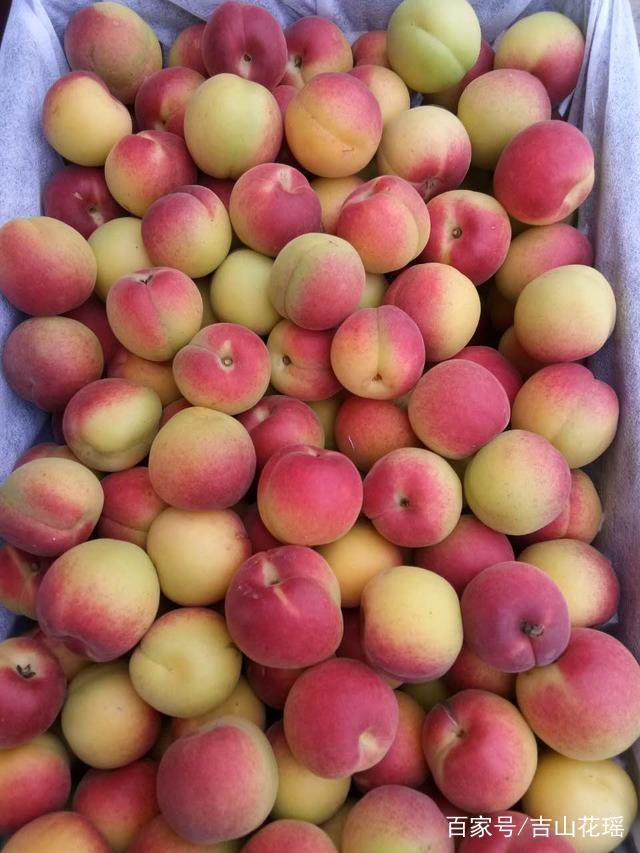
Key Technical Points for Facility Close Planting and Shaping-Pruning of Dwarfed Potted Red Plum Apricot
Dwarfing, Potted Facility Close Planting and Dwarf Shaping-Pruning Techniques for Red Plum Apricot. Red plum apricot, also known as Xinjiang apricot, has a 30-year history of introduction, cultivation and propagation in Yuanzhou District. Because its fresh fruit tastes sweet and fragrant, with thick and crisp flesh and an attractive color, it is widely loved by people...
-
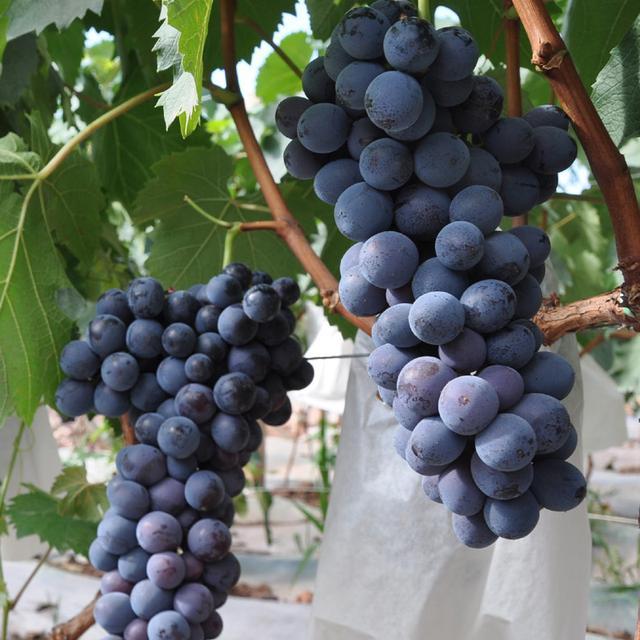
Facility Rain-Shelter Cultivation Techniques for Hutai No. 8 Grape in Guangdong
Facility Rain-Shelter Cultivation Techniques for Hutai No. 8 Grape in Guangdong. Hutai No. 8 is a cultivar bred from a bud sport of Olympia, a Euro-American hybrid grape, and is currently one of the outstanding table grape cultivars in China [1], highly favored by the market [2]. In 2014...
-
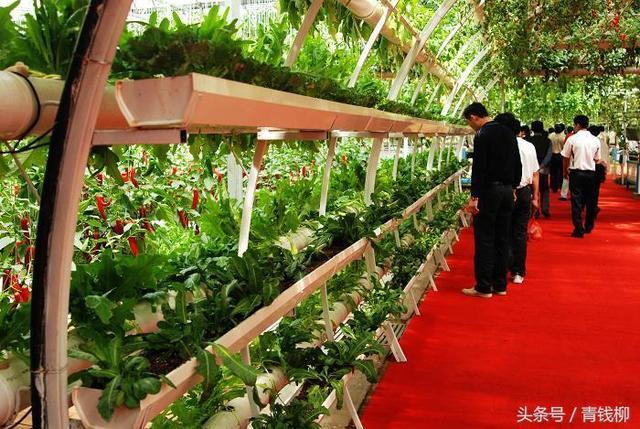
Facility System Construction and Nutrient Management Techniques for Organic Ecological Soilless Cultivation
Facility System Construction and Nutrient Management for Organic Ecological Soilless Cultivation 1 Facility System Construction The organic ecological soilless cultivation system adopts the form of substrate trough cultivation. When finished troughs of standard specifications are not available, locally available materials can be used to build the troughs, such as wooden boards, wooden strips, bamboo poles, or even bricks. In practice, only the frame of the trough without a bottom is built, so it does not need to be particularly sturdy, as long as it can keep the substrate from scattering onto the walkway. After the trough frame is built, lay a layer of 0.1 mm thick polyethylene plastic film at the bottom of the trough to prevent soil-borne diseases and pests from spreading. The trough frame is 15-20 cm high, and the trough width depends on the different cultivated crops. For vining crops such as cucumber and melon, or tall crops like tomato that require support stakes, the standard trough width is set at 48 cm, which can accommodate two rows of crops, with a trough spacing of 0.6-1 m. For shorter crops such as lettuce, bok choy, and strawberry, the trough width can be set at 72 or 96 cm, with a trough spacing of 0.5-0.8 m. The trough length should be determined according to the structural conditions of the protected greenhouse, generally 5-30 m. Under conditions where there is tap water infrastructure or a storage tank with a water level difference of more than 1 m, an independent water supply system can be built for a single greenhouse. For a trough width of 48 cm, 1-2 drip irrigation tapes can be laid; for a trough width of 72-96 cm, 2-4 drip irrigation tapes can be laid.
-

Facility agriculture production technology training course held in our county
Our county holds facility agriculture production technology training course
条件筛选