Facility System Construction and Nutrient Management Techniques for Organic Ecological Soilless Cultivation
Facility System Construction and Nutrient Management for Organic Ecological Soilless Cultivation
1 Facility System Construction
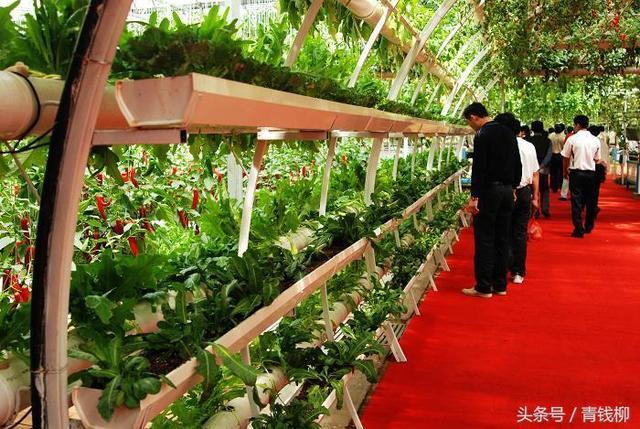
The organic ecological soilless cultivation system adopts the form of substrate trough cultivation. When finished troughs of standard specifications are not available, locally available materials can be used to build the troughs, such as wooden boards, wooden strips, bamboo poles, or even bricks. In practice, only the frame of the trough without a bottom is built, so it does not need to be particularly sturdy, as long as it can keep the substrate from scattering onto the walkway. After the trough frame is built, lay a layer of 0.1 mm thick polyethylene plastic film at the bottom of the trough to prevent soil-borne diseases and pests from spreading. The trough frame is 15-20 cm high, and the trough width depends on the different cultivated crops. For vining crops such as cucumber and melon, or tall crops like tomato that require support stakes, the standard trough width is set at 48 cm, which can accommodate two rows of crops, with a trough spacing of 0.6-1 m. For shorter crops such as lettuce, bok choy, and strawberry, the trough width can be set at 72 or 96 cm, with a trough spacing of 0.5-0.8 m. The trough length should be determined according to the structural conditions of the protected greenhouse, generally 5-30 m. Under conditions where there is tap water infrastructure or a storage tank with a water level difference of more than 1 m, an independent water supply system can be built for a single greenhouse. For a trough width of 48 cm, 1-2 drip irrigation tapes can be laid; for a trough width of 72-96 cm, 2-4 drip irrigation tapes can be laid.
2 Nutrient Management
In organic ecological soilless cultivation, the fertilizer supply is mainly indexed by the three elements N, P, and K. The fertilizer applied per cubic meter of substrate should contain: total nitrogen (N) at 1.5-2.0 kg, total phosphorus (P2O5) at 0.5-0.8 kg, and total potassium (K2O) at 0.8-2.4 kg. This fertilizer supply level is sufficient to meet the nutrient requirements for a tomato yield of 8,000-10,000 kg per mu in one season. In order to maintain the optimal fertilizer supply status throughout the entire growth period of the crop, fertilizers are usually applied in stages according to the crop type and the fertilizers used. Before filling the cultivation trough with substrate, or after harvesting the previous crop and before planting the next crop, a certain amount of fertilizer should first be mixed into the substrate as base fertilizer, so that fruit vegetables such as tomato and cucumber do not need topdressing within 20 days after planting and only need to be watered with clean water; after 20 days, topdress once every 10-15 days, evenly scattered around the plants at a distance of more than 5 cm from the roots. The ratio of base fertilizer to topdressing is 25:75 to 60:40. Each topdressing per cubic meter of substrate: total nitrogen (N) 80-150 g, total phosphorus (P2O5) 30-50 g, total potassium (K2O) 50-180 g. The number of topdressings depends on the length of the crop's growth period. [Jishan Huayao]