Key Technical Points for Facility Close Planting and Shaping-Pruning of Dwarfed Potted Red Plum Apricot
Dwarfing, Potted Facility Close Planting and Dwarf Shaping-Pruning Techniques for Red Plum Apricot
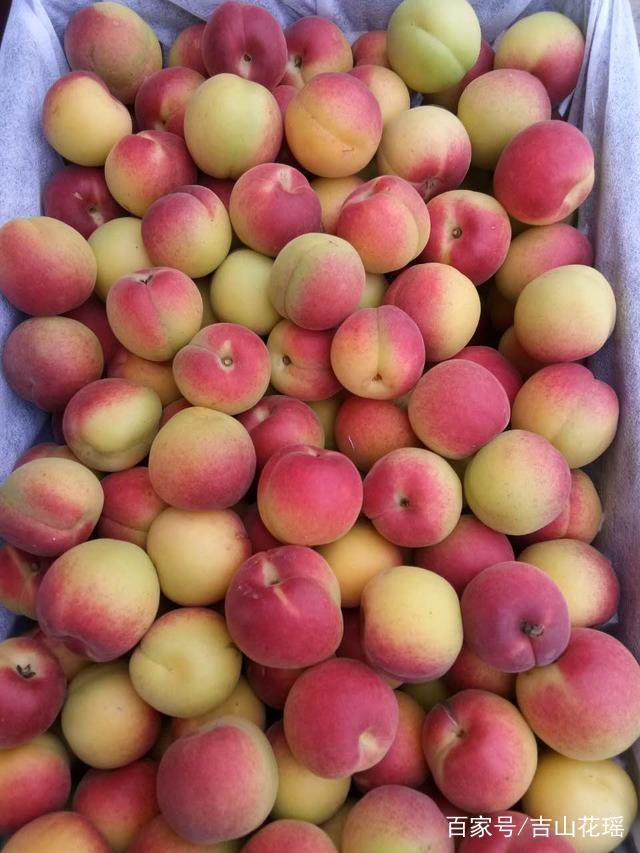
Red plum apricot, also known as Xinjiang apricot, has a 30-year history of introduction, cultivation and propagation in Yuanzhou District. Because its fresh fruit tastes sweet and fragrant, with thick and crisp flesh and an attractive color, it is widely loved by people and has good market development prospects. For many years, affected by the natural climate of late spring frost, Yuanzhou District has suffered "frost in nine out of ten years," which has severely restricted the development of open-field cultivation of red plum apricot. Therefore, exploring technical measures for dwarfed potted facility close planting cultivation of red plum apricot has important practical significance.
1 Potted dwarfing technique
Select pots with a mouth diameter of 35-40cm, a height of 40-45cm, a thickness of about 0.3cm, and mesh holes on the side and bottom. Place a little furnace slag at the bottom of the pot, then fill it with nutrient soil. The nutrient soil is mixed from fine sand, cultivation substrate and organic fertilizer in a ratio of 10:10:1. Move the seedlings in and fill soil to a depth of about 5cm from the upper rim of the pot. Place 600-800 pots per mu in the facility. Adopt pruning and branch pressing; depending on growth vigor, spray 600-700 times diluted paclobutrazol solution 2-3 times at an interval of 10d to control tree height below 1.5m and crown width at 60-80cm.
2 Technique for promoting dormancy
① Growth management. Adopt management measures combining promotion and control. In the early stage (before mid-June), apply farmyard manure to promote vegetative growth of the tree. In the later stage (after early July), control vegetative growth. Through water and fertilizer control measures, promote seedling hardening, increase the application of phosphorus and potassium fertilizer, control nitrogen fertilizer, accelerate reproductive growth, and form plump flower buds before leaf fall. At the same time, adopt shading or artificial leaf removal measures. From mid-July, begin covering with mats, shade nets or non-woven fabric, gradually weakening and shortening the amount of light exposure, controlling growth and promoting leaf fall, or appropriately remove leaves under the premise of artificial cooling. ② Spray growth regulators: after mid-June, spray the leaves with 300-600 times diluted paclobutrazol at 1000ppm and daminozide at 1500-2500ppm twice, at an interval of 15d, to control the sprouting and growth of autumn shoots and promote early maturity of branches and buds. For those planned to be placed in cold storage, one week before being placed in cold storage in late August, spray abscisic acid at a concentration of 1000ppm. ③ Low-temperature induced dormancy. Adopt a gradual temperature change to low temperature, create a low-temperature environment for dormancy, and induce early entry into dormancy. In early September, cover the solar greenhouse. During the day, lower the thermal insulation quilt to prevent hot air from entering; at night, raise the thermal insulation quilt to let cold air in. Continue this for one week, while adjusting the temperature in the cold storage to 12°C. In mid-September, move the potted red plum apricot trees into the cold storage to force them into a dormant state. Temperature control in the cold storage is divided into two stages. The first stage lasts 5d. Use the temperature control facilities of the cold storage to gradually reduce the temperature in the cold storage from about 12°C to 7.2°C, and finally stabilize it at 5°C-6°C, so that the potted red plum apricot trees enter the dormancy temperature. The second stage lasts 40-60d to satisfy the chilling requirement for dormancy of red plum apricot. During dormancy, the humidity in the cold storage is maintained at about 50%.
3 Technique for breaking dormancy
After the potted red plum apricot has been placed in cold storage long enough to satisfy the chilling requirement for dormancy, in order to shorten the dormancy time, move them from the cold storage to the solar greenhouse in three batches from mid-October to November 15. Cover the greenhouse and begin to gradually raise the temperature to break dormancy and prompt the potted red plum apricot to enter the growth period earlier. Make it bloom and bear fruit in December of the same year, and the fruit mature in late March of the following year.
4 Technique for prolonging dormancy
For dwarfed potted red plum apricot seedlings that have overwintered in the open field, cover the greenhouse in March of spring when the temperature exceeds 7°C. During the day, lower the thermal insulation quilt to prevent hot air from entering; at night, raise the thermal insulation quilt to let cold air in, so that the temperature does not exceed 7°C, prolonging the dormancy time. Continue this until after mid-to-late April, then remove the greenhouse covering and allow natural growth, delaying flowering and fruit ripening time until they are marketed in August.
5 Dwarf shaping-pruning technique
Summer pruning: pruning measures include bud removal, branch thinning, branch pulling and angle opening. When branches grow to 3-5cm, many latent buds and buds on upright branches sprout and should be removed in time to reduce nutrient consumption. For vigorous branches that grow upright and show obvious apical dominance, when new shoots grow to 20cm, pinch them back leaving 5-8cm to control excessive branch growth and make the crown compact. For branches with small branching angles, pull branches and open the angle. Winter pruning: tree forms adopt Y-shape, columnar shape, slender spindle shape, etc. Determine branches by yield, determine fruit by branches, and determine buds by fruit. During pruning, follow the principle of thinning more on vigorous trees with numerous branches and thinning less on weak trees with sparse branches. Thin out and shorten pest-damaged branches, dense branches and water sprouts. For one-year-old moderately vigorous branches with good growth and development, shorten them from the middle-lower part of the branch to control the outward movement of fruiting positions.
6 Benefit analysis
6.1 Economic benefits
The implementation of this project will effectively solve problems such as low fruit setting rate, unstable yield, low rate of high-quality fruit and low economic benefits caused by late spring frost in red plum apricot. In the third year of facility close planting cultivation of dwarfed potted red plum apricot, the yield per plant reaches 3.5kg. Calculated at 40 yuan/kg, the total output value of the project reaches 630,000 yuan. It promotes the transformation of facility fruit tree cultivation from traditional agriculture to modern agriculture, improves the technical and quality level of facility fruit tree cultivation, increases economic benefits per unit area, and raises farmers' income.
6.2 Ecological benefits
After the project is completed and benefits are brought into play, with the continuous promotion of the project, it can not only bring about adjustment of the local planting industry structure, rapidly expand the planting area of the facility apricot industry, and increase farmers' income, but also improve forest coverage, play a role in windbreak and sand fixation, prevent land desertification, improve the ecological environment, and enhance resistance to natural disasters.
6.3 Social benefits
The research, demonstration and promotion of forced cultivation techniques for dwarfed potted facility close planting of red plum apricot provide technical support for scientific open-field and facility cultivation of red plum apricot, and meet people's demand for off-season fresh red plum apricot. The establishment of the demonstration site of this project has played a demonstration and driving role for high-yield and high-quality cultivation of red plum apricot in our district and surrounding areas, and promoted the healthy development of the apricot industry.