-

Detailed Explanation of High-Efficiency Cultivation Techniques for Potatoes with Three-Layer Film Mulching
In early spring in the Lunan region, potatoes are cultivated with three-layer film mulching - a large arch shed with small arch sheds inside and plastic film covering the cultivation ridges. The harvest period is around late April, about 40 days earlier than open-field potatoes reaching market, with a price of up to 4 yuan per kilogram; generally, 667 sq m yields 2000-2500 kg of tubers, with an income of 8000-10000 yuan. The main cultivation techniques are introduced as follows: 1. Select good varieties. For three-layer film mulched potatoes, early-maturing varieties with a short dormancy period, early tuber formation and resistance to rot should be selected, such as Luyin No. 1, Jinshu No. 8 and Zaodabai, etc.
-
Key Techniques for High-Efficiency Cultivation of Soybean Intercropped with Melon
Soybean intercropped with melon at a 4:2 ratio, with Chinese cabbage replanted as the following crop after melon harvest, achieves three harvests from one field and an income of more than 15,000 yuan per hectare, making it a new high-yield and high-efficiency planting model. 1. Selecting new varieties 1.1 For the soybean variety, select Jinta soybean, which has strong branching and super-high yield. Jinta soybean has 6 outstanding characteristics: 1) Strong growth vigor. Jinta soybean has a plant height of 70-80 cm, thick and sturdy stems, and high resistance to lodging; 2) Strong branching ability. A single plant has 8-10 branches, with a maximum of 16 branches. The branches grow upward, and the plant takes on a fan shape without breaking branches, overcoming the tendency of strongly branching soybeans to break branches, resulting in an ideal plant type; 3) Dense pod setting. A single plant sets 200-250 pods, with a maximum of 400 pods. The pods are so dense that the stems are hidden, 2-3 times that of other soybeans. Most pods are 3-seeded, with a yield of 75-100 g per plant and a maximum of 400 g; 4) Excellent quality. The beans are golden yellow, large and uniform, with a 100-seed weight of 22-25 g and high oil and protein content; 5) Strong stress resistance. The growth period is 120 days and requires an effective accumulated temperature of 2450°C. It is drought-resistant, moisture-tolerant, and salt-alkali tolerant, and prefers fertilizer and water. It is suitable for planting in Jilin, Liaoning, Heilongjiang, and Inner Mongolia in areas with an effective accumulated temperature above 2450°C; 6) High and stable yield. The yield per hectare is 4000-5000 kg, making it a high-yielding, high-quality soybean variety.
-
Huizhou promotes 31 high-efficiency rice varieties for farmers to select for planting
On July 10, experts from the National Agricultural Technology Extension and Service Center of the Ministry of Agriculture, accompanied by the person in charge of the Seed Station of the Provincial Department of Agriculture, visited the Municipal Institute of Agricultural Sciences, the unit undertaking the national rice regional trials in our city, to inspect the national rice regional trial work. It is reported that our city has successively completed the regional trial tasks for more than 400 rice varieties assigned by the state. The experts inspected the implementation of the national rice regional trial field experiments undertaken by the Municipal Institute of Agricultural Sciences and highly praised the institute for its solid completion of the national rice regional trial work. According to reports, the Municipal Institute of Agricultural Sciences since
-
Applying enzyme bacterial fertilizer to rice can improve planting efficiency
Enzyme bacterial fertilizer is a fertilizer that can improve the economic benefits of rice, as shown by its trial report. (1) Fertilizers tested: enzyme bacterial fertilizer, other compound fertilizer I, other compound fertilizer II, ordinary mixed fertilizer. (2) Trial situation: The trial site was set up at the trial base of Guangdong Sanren Company. The trial land area was 80 sq m, divided into 4 plots, each with an area of 20 sq m. The soil texture was newly reclaimed red soil, with low fertility. (3) Trial method: All four tested fertilizers were used as base fertilizer. The four
-
Early-maturing soybean Chaofeng No. 3: an excellent variety with super-high yield, high resistance and high efficiency
Chaofeng No. 3 soybean is an early-maturing variety with super-high yield, multiple resistance and high efficiency, bred over 8 years by researchers at the Research Institute of Jilin Province Northern Seed Industry Company. This variety overcomes the prominent problems of the past, when large-scale production applications were not high-yielding, had poor internal quality, failed to meet national quality standards, and were prone to pod shattering in dry years, resulting in high but unstable yields and high yields without high returns. In March 2007, it successfully passed provincial certification. Chaofeng No. 3 has a growth period of 110 days, and from sowing to harvest requires an active accumulated temperature of 2300°C
-
Detailed Explanation of High-Efficiency Cultivation Techniques for Spring Potatoes
Spring potato tubers can begin to grow when the soil temperature at a depth of 10 cm reaches 7-8°C, grow vigorously at 10-12°C, and quickly break through the soil. This is the temperature indicator for sowing in various regions. Potatoes have wide adaptability. Generally, choose fields with loose texture and easy irrigation and drainage, and plow deeply 20-25 cm; make high beds with a bed width of 95 cm, a ditch width of 25 cm, and a depth of 25 cm. Before sowing, apply sufficient base fertilizer all at once, and apply the fertilizer in the center of the bed while preparing the land. Apply 1500-2000 kg of decomposed organic fertilizer, three
-
High-efficiency cultivation technique for oyster mushrooms without spraying water for humidification
The narrow-shed no-spray high-efficiency cultivation method for oyster mushrooms combines the advantages of the soil-burial cultivation method and the mushroom-wall cultivation method, making the cultivation and management of oyster mushrooms simpler, with excellent quality and high yield. The method is: after harvesting the first flush of mushrooms, remove the mushroom blocks from their bags and build a mushroom wall around the four earthen walls of the shed. The outer ends of the wall are bonded block-to-block with sealing mud, the interior of the wall is entirely filled with nutrient soil, and a water trough is built on top of the wall for replenishing water and nutrients. The advantages of this method are mainly five: (1) Before building the mushroom wall, first let the blocks produce one flush of mushrooms; the wall built from already-shrunk blocks does not deform, does not dry-crack,
-
Which rice fungicide is good? Recommendations for low-cost, high-efficiency pesticides
Spend 20 yuan, get back 50 yuan. Would you take such a good deal? Last year, large grain growers in Shaoxing, Anji and other places tasted this sweet success after using "Aimiao" when growing rice, with rice yields generally increasing by about 10%. Right now is the pesticide application season for early rice, and they are busy selecting this high-return new pesticide to apply to rice. It is understood that 30% Aimiao emulsifiable concentrate is a new type of fungicide launched by Syngenta Crop Protection of Switzerland that can both prevent and control rice diseases and regulate rice growth. This pesticide works against rice sheath
-
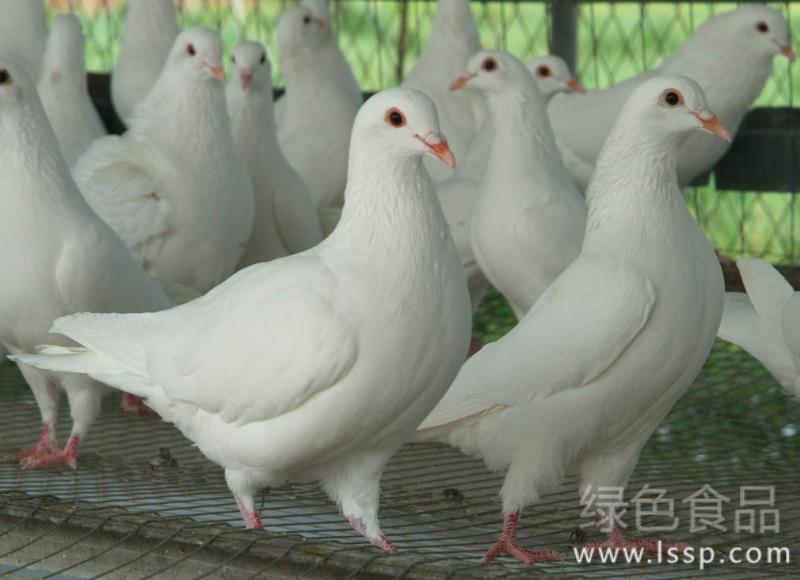
Meat pigeon farming has a long cycle; four synchronizations help you improve farming efficiency
Meat pigeon farming has a long cycle; "four synchronizations" improve meat pigeon farming efficiency
-
How to Grow Six-Clove White Garlic? A Detailed Guide to High-Efficiency Cultivation Techniques
Garlic is a traditional export vegetable in China and has now become the vegetable product with the highest single-item foreign exchange earnings. With the rapid development of production, processing, and export, the international market has increasingly high requirements for the appearance and quality of garlic. In 2001, Laiyang City, Shandong Province, introduced Japanese six-clove white garlic and successively conducted trial plantings and promotion in multiple locations within the province, including Yantai, Qingdao, Jinan, and Liaocheng. In 2002, the planting area exceeded 15 hm2. Comparative introduction trials and promotion efforts over several years have shown that six-clove white garlic is an excellent variety mainly grown for garlic bulbs, with good marketability, great potential in domestic and international markets, and high planting returns.
条件筛选