-
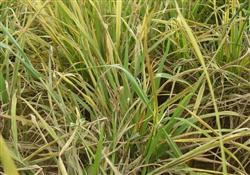
How can premature senescence be effectively prevented in rice cultivation?
What causes premature senescence in rice? How can premature senescence be prevented when growing rice? Is there any fellow gardener who knows about this and can help explain? Premature senescence in rice can lead to a major reduction in yield. Farming Network has compiled the causes of premature senescence in rice and the control methods, listed below for fellow gardeners' reference. Causes of premature senescence in rice: premature senescence...
-
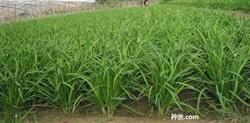
How can herbicides be used effectively in chive fields?
How should herbicides be used in chive fields? When is the best time to apply herbicides when growing chives? We invite experienced netizens to help explain. Chives are a perennial root vegetable with strong adaptability, cold and heat tolerance, and are cultivated everywhere across China. In many areas of the south they can be produced year-round, but weed control in chives is a common headache for growers...
-

How can hollow celery be effectively prevented and controlled?
What causes hollow celery? How is hollow celery prevented and controlled? We ask experienced readers to help explain. Hollow celery is mainly caused by the parenchyma tissue of the leaf stalk near the pith rupturing and shrinking, which enlarges the pith cavity and forms the hollow. Once hollow, celery has more fiber, poorer quality and lower yield, and its market...
-
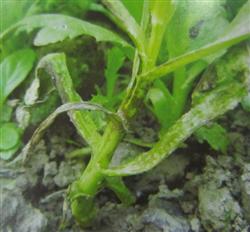
How to effectively prevent and control anthracnose in garland chrysanthemum cultivation?
What harm does garland chrysanthemum anthracnose cause? How do you prevent and control anthracnose when growing garland chrysanthemum? We also ask netizens to help share. Zhongdi Web has compiled the harm and control methods of garland chrysanthemum anthracnose, listed below for netizens' reference. Harm of garland chrysanthemum anthracnose: Anthracnose in garland chrysanthemum mainly harms the leaves and stems. When leaves are infected...
-
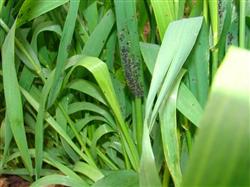
How to effectively control aphids in sorghum cultivation?
What is the best way to control sorghum aphids? Please provide an introduction to effective control methods. Sorghum aphids are a major pest on sorghum, mostly pale yellow in body color, with a few purplish red; they gather on the undersides of leaves to cause damage, gradually spreading from the lower leaves to the middle and upper leaves, sucking sap and seriously harming the growth and development of sorghum....
-
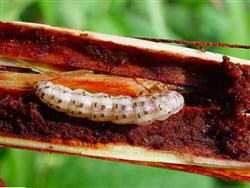
How can sorghum stem borers be controlled effectively?
How can sorghum stem borers be controlled well? Please provide guidance on methods to control sorghum stem borers. They are the main pests damaging sorghum and corn. Sorghum stem borers overwinter as mature larvae inside sorghum and corn stalks, and a few also overwinter in corn cobs. Adults are phototactic; in spring they mostly lay eggs during the whorl stage, while in summer they lay eggs during the corn tasseling...
-
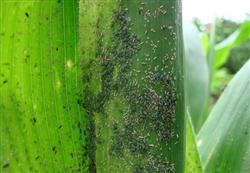
How can aphids in cornfields be controlled effectively?
How to control aphids in cornfields? Please explain the methods. Corn aphids, commonly known as "greasy bugs" or "honey bugs", harm not only corn but also crops such as sorghum and barley. They pierce and suck plant sap. Aphid numbers are very low at the seedling stage, but surge during the ear stage, secreting large amounts of "honeydew", which forms a black mold-like layer on the leaves, affecting photo...
-
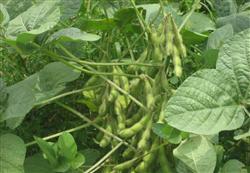
Applying Topdressing to Crops This Way Can Effectively Increase Yield
How can crops be topdressed to increase yield? Please introduce the methods. Topdressing crops is an important means of achieving increased production and income, but topdressing must be done scientifically to achieve a bumper harvest. Three considerations: determine the type of chemical fertilizer to apply based on differences in soil pH. In general...
-
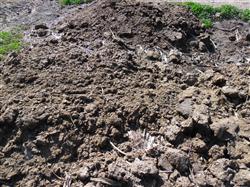
How to effectively eliminate pests in farmyard manure?
How do you get rid of pests in farmyard manure? Please give an introduction. Farmyard manure contains quite a few pests, such as white grubs and maggots. If it is not treated or is treated improperly, the pests will multiply in large numbers and harm crops after application. Spread chicken and duck manure flat, sun-dry it, crush it fine, and mix in 1 kg of phoxim per cubic meter. After mixing evenly, pile it into a truncated cone shape, seal it with mud, and it can be applied after 15-20 days.
-
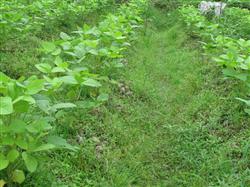
How can weeds be effectively controlled during soybean cultivation?
How do you control weeds when growing soybeans? The main weeds in soybean cultivation include monocotyledonous weeds such as crabgrass, barnyardgrass, goosegrass, lambsquarters, and foxtail; broadleaf weeds include redroot pigweed, eclipta, copperleaf, and velvetleaf. Summer soybeans are usually sown in June, during the hot and rainy season, when weeds emerge aggressively, at high density, grow vigorously, and are diverse in species, easily forming a weed infestation. Generally, weeds begin to emerge 5 days after soybean sowing, and the entire weed emergence period lasts about 60 days, which is extremely unfavorable for high soybean yields. For this reason, accurately mastering chemical weed control techniques is crucial.
条件筛选