-

Foliar feeding of cotton at the late stage is highly effective, and growers should pay attention to it
In the late growth stage of cotton, the root system's ability to absorb nutrients declines markedly. At this time, spraying foliar fertilizer to supplement nutrition has the effects of preventing premature senescence, preventing diseases, promoting large bolls, promoting early maturity and pursuing high quality, with remarkable effects in increasing yield and income. 1. Spray nitrogen fertilizer to prevent premature senescence: In the late stage of cotton, foliar spraying of nitrogen nutrition can keep cotton leaves green, enhance photosynthesis, and prevent nitrogen-loss premature senescence. Mixing nitrogen fertilizer with "regulator 802" makes the effect of enhancing cotton's late growth vigor more obvious and the yield-increasing effect better. From late August to early September
-
How to treat mushroom flies? These effective control tips really work
Black fungus gnats, eye fungus gnats and other Diptera insects are collectively called "mushroom flies". The damage caused by mushroom flies can reduce shiitake mushroom yields by about 30%. Therefore, effective control of "mushroom flies" can increase shiitake cultivation yields by about 30%. 1. Living habits and outbreak patterns of mushroom flies. Mushroom flies like to reproduce in damp, dirty environments, and fungal mycelium is one of the best food sources for these insects. Their main mode of damage is biting and eating the mycelium, disrupting normal mycelium growth, causing the mycelium to weaken or die, while also creating conditions for contamination by foreign microorganisms, allowing some competitive foreign microorganisms to grow on the mushroom fly
-
Success in Extracting Highly Effective Anti-Cancer Substance from Cloned Yew
Sichuan University professor demonstrates unique plant transgenic cloning technology, with the next step focused on anti-cancer plants. "We have already used transgenic cloning technology to successfully clone two plants with different genes, and the next step is to apply this technology to cloning the anti-cancer drug paclitaxel." Recently, Professor Wang Li from the Plant Research Laboratory of the College of Life Sciences at Sichuan University showed reporters a transgenic cloning technology little known to outsiders. A plant cloned from a leaf. In the laboratory, Professor Wang pointed to a green plant about 20 cm tall and said: "
-
What are the highly effective pesticides for controlling rice skipper?
1. Optimal control period: This should be strictly timed to the peak egg-hatching stage and young larval stage of the rice skipper in the field, that is, July 29 to August 6 is the best period for pesticide application. 2. Targets for control: Rice fields with tender green growth, late transplanting and late development, late development after sitting, and seed-production maternal rice fields are all key target fields for control. 3. Protect natural enemy resources, prohibit the application of highly toxic pesticides, increase the parasitism rate of eggs, larvae, and pupae, and achieve pest control through beneficial organisms. 4. Chemical control: For rice skipper, use Qiansheng 8000 at 50 grams per mu, 90%
-
Detailed Explanation of Effective Methods for Chemical Castration of Pigs
For young male pigs raised for fattening, once they reach a certain weight, their testicles must be surgically removed. Below is an introduction to a chemical castration method. This method is very simple: inject a mixture of sodium chloride and formaldehyde solution into male piglets within 10 days of age, and their testicles will begin to swell, then subside on their own after 5 days. After about half a month, the testicles shrink significantly and lose sexual function. The specific method is: dissolve 10 grams of sodium chloride in 100 milliliters of distilled water, then add 1 milliliter of formaldehyde solution, shake well and filter. This makes the chemical castration solution, which can be stored in a sterilized bottle for later use. Injection
-
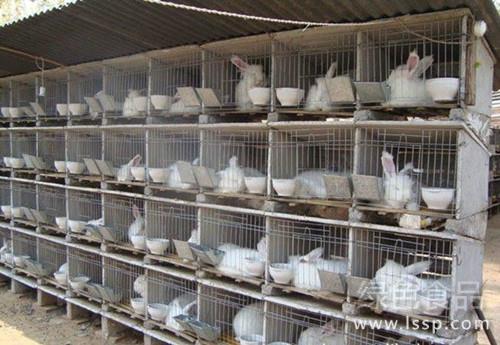
Seven key elements of fattening domestic rabbits, which can effectively improve meat quality and increase output
Fattening can improve meat quality and increase output: the seven key elements of fattening domestic rabbits
-
How to effectively prevent and control cotton angular leaf spot
Cotton angular leaf spot is a bacterial disease. Cotton can be affected from the cotyledon stage to the mature plant stage. After infection, dark green small spots first appear on the underside of the leaves, and later the spots gradually expand, restricted by the leaf veins to form polygonal oil-soaked lesions. When the bacterial fluid is moist, it is a yellowish-brown sticky substance, and after drying it becomes a white scab-like substance. In severe cases, it can cause the leaves to dry up and fall off. If diseased leaves are held up to the light, the lesion areas look like oiled paper. The causes are, first, continuous cropping on the same land, with the disease developing from bacteria carried by diseased residues in the soil; second, poor light, high humidity and high temperature, with damaged cotton branches and leaves, which favors
-
How to effectively control the Schisandra leaf-rolling worm
It occurs from July to August. The larvae are initially white, later turning green. Young larvae bite and feed on the leaf mesophyll; after the 3rd instar they roll leaves and feed, affecting fruit development. Control methods: (1) Before the larvae roll the leaves, spray with 80% trichlorfon at 1000-1500 times dilution. (2) After the leaves are rolled, spray with 40% dimethoate emulsifiable concentrate at 1000-1500 times dilution. (3) Spray with 50% phoxim at 1500 times dilution. (4) Spray with 50% phosphamidon emulsifiable concentrate at 2000 times dilution. (5) Before and after the larvae roll the leaves, they can also be caught by hand.
-
Sulfur Liniment Is Effective in Treating Rabbit Mange
Rabbit mange is a common and frequently occurring disease. It is an ectoparasitic disease caused by the rabbit itch mite (Sarcoptes scabiei var. cuniculi) parasitizing the skin of domestic rabbits, and it is highly contagious. If feeding and management are poor, it is easily overlooked, and it tends to break out during the rainy seasons of winter and spring, causing significant economic losses. In previous years, the author treated it with turpentine, camphor oil, 2% trichlorfon and other drugs. Although somewhat effective, multiple treatments were needed for a cure, and there were certain side effects. In recent years, by consulting elderly folk traditional Chinese veterinary practitioners and through repeated practice, the author has used compound sulfur to treat rabbit mange, with very good results.
-
Rice midge harms rice, how can it be controlled effectively?
Rice midge, commonly known as red worm or red thread worm, damages the young roots and young shoots of rice with its larvae, causing floating seedlings, and feeds on the embryo and endosperm of ungerminated seeds, preventing the seeds from germinating. Rice seedling fields and direct-seeded fields suffer severe damage. The adult is a small moth, with wings shorter than the body; when resting, the front legs are raised and swing up and down. The larvae are red or pale yellow, with a limb-like protrusion on the ventral side of the prothorax. It occurs 2-3 generations per year, and the first generation damages rice. It overwinters as nymphs and adults in weeds. Adults appear in early May of the second year, and lay eggs in late May.
条件筛选