-

Detailed Explanation of Various Reproductive Organ Diseases in Cattle (Part One)
I. Endometritis is an important cause of infertility in cattle, and is divided into acute and chronic types. Causes and symptoms: It is caused by the invasion of bacteria and other microorganisms after calving (including abortion, management of dystocia, and mating). Brucellosis, trichomoniasis, improper handling, and drug stimulation can all serve as triggering factors. During acute attacks, body temperature rises, appetite decreases, the animal is listless, arches its back, strains, and urinates frequently. Mucous and purulent exudate flows from the vulva, with more discharge when lying down, and there is a fishy odor. On
-
How do you identify sheep diseases? Remember these eight points to observe
With the adjustment of the structure of livestock breeds, Boer goat farming has become the first choice for farmers to get rich and reach a moderately prosperous life. Boer goats are an introduced breed, few in number and expensive. In addition to strengthening feeding management, the growth and activity of Boer goats should be observed frequently to ensure timely treatment in the early stage of illness and reduce losses. Generally, the following aspects are carefully observed and comprehensively judged to determine whether they are sick. 1. Look at the demeanor. Healthy Boer goats are full of energy, move agilely, and have bright eyes. Sick goats are sluggish, prefer to lie down, hang their heads, shed tears, and are afraid of light. 2. Look at feed
-
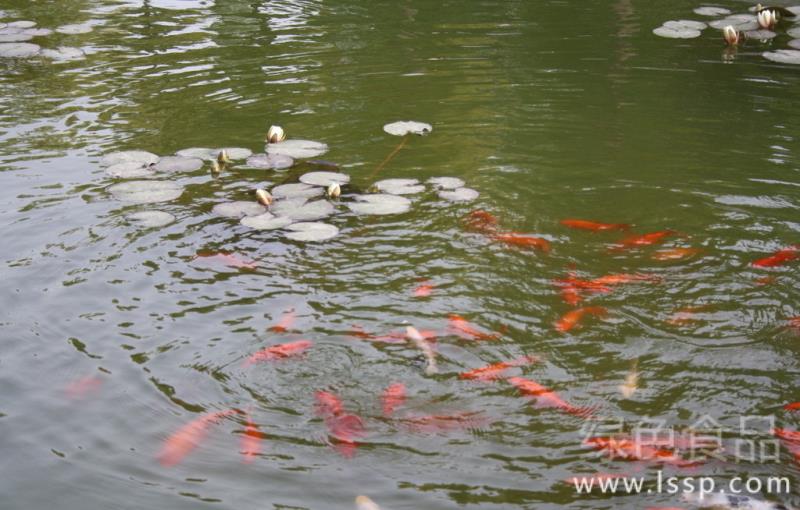
How to scientifically manage fish ponds when diseases break out frequently under high summer temperatures
How to manage fish ponds well in summer when diseases break out frequently under high temperatures
-
How to prevent and control cotton seedling-stage diseases? Detailed prevention and control measures for Binzhou City
There are many types of cotton seedling-stage diseases, and the most serious ones at the cotton seedling stage in our city are damping-off, anthracnose and red rot. In recent years, the first two diseases in particular have been more severe than in previous years. Doing a good job in preventing and controlling cotton seedling-stage diseases is the key to whether our city's cotton can increase both yield and income. At present, the key to preventing and controlling cotton seedling-stage diseases is to implement the plant protection policy of "prevention first, integrated control." 1 Symptoms of cotton seedling-stage diseases 1.1 Damping-off The obvious symptom of field infection is the appearance of elongated
-
How to prevent and control cotton seedling diseases? Detailed spring prevention and control methods
In recent years, due to low temperatures in spring, seedling diseases in direct-seeded cotton fields have occurred severely, causing large numbers of dead seedlings in cotton fields. In order to improve the economic benefits of cotton farmers and reduce the losses caused by diseases, the symptoms and prevention and control methods of several cotton seedling diseases are introduced as follows: 1. Symptoms of damaged cotton seedlings 1. Anthracnose: Both leaves and stems can be affected. After the seedlings are damaged, reddish-brown spindle-shaped streaks appear at the base of the stem, with longitudinal cracking. In severe cases, the lesions expand, turn brown, blacken, and rot, leading to seedling death. When the weather is humid, the lesions produce orange-red sticky substances.
-
A Detailed Guide to the Control Strategies and Methods for Lily Diseases
Control of Phytophthora blight (1) Adopt high-ridge, deep-furrow cultivation or ridge planting, and keep the bed surface level to facilitate drainage. When diseased plants are found, dig them out early and burn them in a centralized manner or bury them deep. (2) Adopt a balanced fertilization technique, appropriately increase the application of potassium fertilizer, and improve disease resistance. (3) At the early stage of the disease, spray 40% fosetyl-aluminum wettable powder at 250 times dilution, or 58% metalaxyl and mancozeb wettable powder, 64% oxadixyl and folpet wettable powder at 500 times dilution, 72% DuPont Curzate wettable powder at 800 times dilution.
-
Symptom Identification and Control Methods of Lily Viral Diseases
Common lily viral diseases include the yellowing-wilt type and the mosaic type. In the yellowing-wilt type, no special lesions appear on the leaves; the entire plant takes on a yellow color, and the internodes shorten. The plant becomes dwarfed, and the leaves yellow and shrivel. In the mosaic type, irregular pale green mottling appears on the leaves, then the small pale green areas join and expand, forming slender yellow streaks along the veins, which later become slightly sunken and turn pale yellowish-brown to reddish-brown. The virus mainly overwinters in the bulbs and becomes the source of primary infection the following year; secondary infection in the field is mainly caused by transmission by aphids. When there are many diseased bulbs, the weather is dry, and aphid populations are
-
How to prevent and control lily pests and diseases? A detailed guide to practical methods
1. Damping-off mainly causes damage at the seedling stage, causing plants to wilt. The disease is severe when ventilation is poor and water accumulates in the field. Control methods: (1) Practice reasonable crop rotation, and choose plots with good drainage and loose soil for planting; (2) Strengthen field management, open drainage ditches in time, and improve ventilation and light conditions; (3) Before sowing, soak the seed bulbs in a 1:500 thiram solution or 2% formalin for 15 minutes; (4) When the disease occurs, promptly remove diseased plants, and disinfect the affected area with 5% lime milk.
-
What are the control methods for lily pests and diseases?
1. In the middle and late growth stages, the bulb and stem roots are prone to root rot, showing bright dark-brown rot spots. Basal rot easily occurs at the stem base of the plant, causing leaves to droop and turn yellow; leaf spot disease can also infect the leaves, causing the plant to stop growing. Bulb and scale rot disease shows brown to dark-brown spots on the underground stem, gradually expanding into the interior of the stem and causing the bulb to rot. There is also a damping-off disease, in which the young leaves of diseased plants show yellow-green or white spots, and in severe cases the leaves turn brown and curl. Control: damping-off is a physiological disease, while other diseases are all caused by fungi
-
Are there drug incompatibilities in treating snake diseases?
There are many types of veterinary drugs on the market today. If drug incompatibilities are not taken into account when treating snake diseases, not only will the proper preventive and therapeutic effect not be achieved, but the sick snake may also be poisoned and die. For example, tetracyclines and penicillin, sulfonamides and oxytetracycline, and streptomycin and chloramphenicol have incompatibilities, that is, they have obvious antagonistic effects; if two or more antibiotics are used, they need to be diluted separately and injected separately, and must not be mixed blindly. At the same time, pay attention to drug storage; expired and ineffective drugs must not be used on sick snakes.
条件筛选