How to scientifically manage fish ponds when diseases break out frequently under high summer temperatures
During the summer harvest season, a critical period for aquaculture, as air and water temperatures rise, fish, shrimp and other aquatic animals develop stronger appetites, consume more feed, and enter their peak growth period. In summer, water quality changes easily and diseases occur frequently, and emergencies such as oxygen depletion and fish kills from suffocation, or shrimp deaths from pollution, are common. Therefore, farmers should carry out the "five preventions" for fish ponds to boost aquatic production and efficiency.
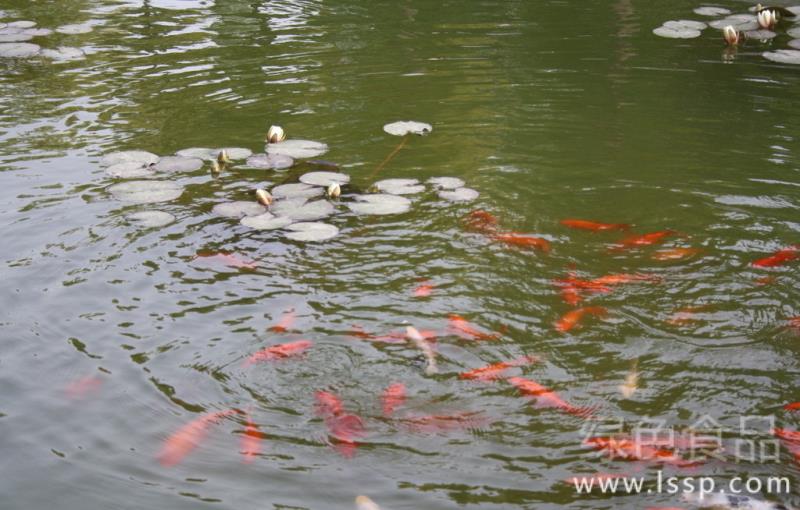
Fish pond
1. Preventing oxygen depletion and fish kills from suffocation
A large temperature difference between the upper and lower layers of the water, massive reproduction of plankton, overstocking of cultured species, and sudden weather changes can easily cause oxygen depletion and fish kills from suffocation. Therefore, the best way to prevent fish from gasping at the surface and dying from oxygen depletion is to equip and use aerators rationally. Generally, a 4-mu fish pond should be equipped with a 1-kilowatt aerator; turn it on at noon on sunny days, in the early morning on cloudy days, in the middle of the night during continuous rainy weather, not in the evening, and ahead of time when fish gasp at the surface.
2. Preventing water quality deterioration
At present, water temperatures are high, water quality changes quickly, and with increased feeding, fish excrete heavily, so water quality easily deteriorates and must be properly regulated. Common methods include: (1) Regularly add fresh water: add fresh water once every 7-10 days, 15-20 cm each time. When the situation is more serious, water exchange measures should be adopted to maintain good water quality. Throughout the summer, the fish pond should be kept at the highest possible water level. (2) Regularly stir the bottom mud: stirring the bottom mud can promote decomposition of the substrate; stir once every 10-15 days, each time over an area greater than one third of the water body area, and stirring at noon on sunny days gives the best effect, but do not stir during muggy weather with low air pressure. (3) Apply microbial preparations: apply preparations such as EM6 Qiangsheng stock solution, nitrifying bacteria, Duotai Huojun Wang, Gongdi Yaxiao Jing, ecological live-water essence, Yijun-80, and Digai Xianfeng once every 10-15 days to maintain water body balance and stabilize the algal phase.
3. Preventing disease outbreaks
In the high-temperature season, the water environment is poor and pathogenic organisms multiply, which easily causes disease. The principle of "prevention first, prevention more important than treatment" must be carried out, with targeted prevention and control. Besides regulating water quality and feeding scientifically, water body disinfection and oral preventive medication should be carried out regularly. Generally, every 20-25 days, environmentally friendly and safe drugs such as Youlimie, Tiaoshui Xianfeng, and Sumie Quan should be used alternately for disinfection. In addition, appropriate amounts of oral products such as emulsified garlic treasure, Kaiwei Jiedu San, immune polysaccharides, Sibei Jing, Zhengchang Shu, and Yikang Yuan should be mixed into the feed, for a cycle of 5-7 days, 1-2 times per month.
4. Preventing feed deterioration
This is the peak growth season for fish, shrimp, and crabs, and the bait amount accounts for about 70% of the annual feed amount. Scientific feeding and the selection of nutritionally complete pellet feed can promote healthy and rapid fish growth, while poor-quality, moldy feed and improper feeding can lead to disease outbreaks, water quality deterioration, and increased production costs. Therefore, choose high-quality feed, store it in small amounts, keep it properly, and prevent mold. At the same time, adhere to the four fixed points (fixed time, fixed place, fixed quality, fixed quantity) in feeding, promptly remove leftover bait, and prevent spoilage from polluting the water quality.
5. Preventing pollution invasion
At present, during the summer harvest, phenomena such as wheat straw being thrown into fish ponds or, after straw is returned to the field, being washed by rainwater and fermented into rivers occur frequently, causing pollution of fish pond water and incidents of dead fish and shrimp. Therefore, awareness of prevention should be strengthened, pollution sources should be closely monitored, and observation of the water source and water quality environment should be intensified. If abnormalities are found, stop the water supply immediately, and at the same time carry out publicity work with nearby farmers in advance.