-
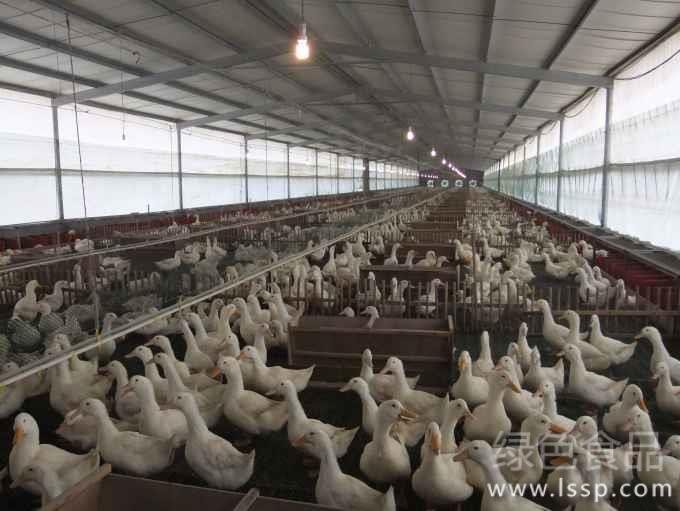
Raising Ducks on Greenhouse Frames: Fewer Diseases, Higher Profits, and a Detailed Guide to the Farming Method
Raising Ducks on Frames in Greenhouses: Fewer Diseases, Higher Profits - How to Raise Ducks on Greenhouse Frames
-

What are the control methods for several tea plant diseases?
I. Tea leaf blight (tea gray blight) Tea gray blight is a common and serious leaf disease of tea plants. The disease is widely distributed throughout tea-growing areas. Affected plants often grow poorly, with weak new growth, thin and weak buds, and premature aging, seriously affecting yield. Control methods for this disease: 1. Strengthen management and cultivate healthy tea plants. Use pesticides rationally to avoid phytotoxicity; carry out timely intertillage and weeding to loosen the soil; do a good job of tea garden drainage or drought and cold resistance work, create an environment favorable to tea plant growth, promote tea plant vigor, and improve resistance.
-
Control Methods for Major Diseases of Tea Plant Young Shoots and Stems
To effectively control tea plant pests and diseases, reduce pesticide residues in tea, and improve tea quality, the major diseases of tea plants and their control are described below. I. Damage Symptoms 1. Tea bud blight: After the tea plant is infected, the growth of buds and shoots is obviously inhibited, affecting the yield and quality of spring tea. It mainly damages the first 1 to 3 leaves of the spring tea flush, first producing pale yellow or yellow-brown lesions at the leaf tip or leaf margin, which after expansion become irregular in shape, with the boundary between diseased and healthy tissue distinct or indistinct; the bud tip is damaged and becomes dark brown and scorched, shriveled and unable to extend; later
-
Symptom Identification of Several Major Diseases of Oyster Mushrooms
(1) White rot: The pathogen is Mycogone perniciosa, which harms the fruiting bodies. After the mushroom bodies are contaminated, it causes rot and produces a putrid odor. (2) Brown spot disease: The pathogen is Verticillium fungicola. After its spores infect the fruiting bodies of oyster mushrooms, brown spots first form on the caps, gradually expand, and produce grayish-white depressions. After the mushroom bodies are damaged, they become deformed, and the stipes become swollen or curved, but they do not rot, and finally dry up and die. (3) Mucor soft rot: The pathogen is Mucor. It generally occurs when the fruiting bodies are fully mature
-
How to prevent diseases in oyster mushroom wall cultivation? Remember these five points
Disinfection treatment of the fill soil When cultivating oyster mushrooms in walls, the fill soil must be clean soil and must be disinfected before use. Two kinds of fill soil should be prepared: one for sealing the edges, for which soil with greater stickiness should be chosen to prevent the mushroom wall from leaking water; the other for internal filling, for which fertile garden soil should be chosen. Whichever kind of soil is used, it must be dug from more than 10 cm below the ground surface and sun-dried for 3-4 days, then mixed evenly with 1% lime and 0.1% carbendazim for disinfection; for the nutrient soil used as internal filling, add an additional 0.5% phosphate fertilizer
-
How is pollution-free prevention and control of pests and diseases in oyster mushrooms carried out?
During oyster mushroom cultivation, infections by various contaminant fungi such as green mold, blue mold, Mucor and Neurospora can occur, as well as damage by various pests such as mushroom mites, mushroom flies and mushroom gnats, sometimes even causing total loss of yield. Oyster mushrooms are a fast-growing, fresh and tender food, so pesticides with long residual effects and highly toxic pesticides are not suitable for use. Adopting pollution-free prevention and control techniques to manage pests and diseases is of great significance for producing safe and healthy edible mushroom products. 1. Environmental hygiene The utensils and materials used for edible mushroom cultivation can be moved into the mushroom shed and fumigated in a sealed environment with formaldehyde to sterilize and kill insects, eliminating harmful fungal and insect sources. 2. Raw
-
Identification and Control Methods of Common Oyster Mushroom Diseases
Why do some oyster mushrooms grow small white lumps in the later stage of growth? This occurs more in black varieties and rarely in grayish-white varieties. The same cultivation method and substrate were used. Why does this happen? How should this contaminant be controlled? Every stage of oyster mushroom production can suffer from contaminant contamination, and it must be controlled promptly. The common contaminants are mainly the following: (1) Bacteria mostly occur on the slant of mother cultures, while the harm to stock cultures and cultivation cultures is relatively mild. Bacterial contamination is characterized by rapid reproduction, generally becoming visible 10 to 24 hours after inoculation.
-
Methods and Technical Key Points for Controlling Pests and Diseases of Oyster Mushrooms
In oyster mushroom cultivation, pests and diseases are a stumbling block. Recognizing and promptly controlling them is of great significance for normal production. Once pests and diseases are discovered, if measures are not taken in time, they will seriously affect oyster mushroom yields and sometimes cause total crop failure. Therefore, superior and highly resistant strains should be selected, scientific management should be strengthened, and environmental conditions that favor the growth of the mushroom fungus while disfavoring the reproduction of pests and diseases should be created, so as to prevent trouble before it happens. The following are introductions to the control methods for some common pests and diseases: 1. Diseases. Diseases commonly fall into the following two categories: (1) During the cultivation process,
-
What are the control methods for common lily diseases?
Several common diseases of lilies: lily mosaic virus, bulb rot, leaf spot, leaf blight, etc. Mosaic virus is also called lily latent mosaic virus. When the disease breaks out, chlorotic spots or necrotic spots of uneven depth appear on the leaves, the affected plants are stunted, the leaf margins curl, and the leaves become smaller. Sometimes spindle-shaped light brown lesions appear on the petals, the flowers are deformed, and they do not open easily. Control methods: 1. Select virus-free bulbs for propagation; 2. Strengthen the control of aphids and leafhoppers; 3. Promptly pull out and destroy diseased plants. Leaf spot disease: when this disease first appears, the leaves
-
What are the control methods for parasitic diseases of silkworms?
I. Polyvoltine flesh fly maggot disease 1 Symptoms: A black triangular diseased spot appears at the parasitic site on the silkworm, with a pale yellow fly eggshell adhering to it. 2 Control: ① Capture and kill fly pupae. ② Use "Miecanying" (silkworm fly killer) to kill maggots. For body spraying use a 300-fold dilution; for spraying on mulberry leaves to feed silkworms use a 500-fold solution. For 5th instar silkworms, apply once every other day; for the 4th instar, use 1 to 2 times; do not use before the 3rd instar. II. Acariasis (mite disease) 1 Symptoms: Young silkworms die quickly after being affected, most with head and thorax protruding, body color dull and dark; those affected during molting cannot shed their skin and die; affected large silkworms pass string-of-bead feces or irregular feces, with prolapsed anus, small hairy-legged silkworms, and various symptoms such as protruding head and thorax, curved body, and water vomiting appearing simultaneously. 2 Control: Use sulfur fumigation or spray with 300-fold "Miecanying". When disease occurs during the silkworm rearing period, find the source of mites and cut it off. Quickly change the trays, spray the silkworm bodies with "Miecanying" to repel mites. The concentration of "Miecanying" is: 1000-fold for the 1st instar, 500-fold for the 2nd instar, 300-fold for the 3rd to 5th instars, and do not pile up cotton, wheat straw, rice straw, rice grain, etc. in the silkworm rearing room.
条件筛选