-
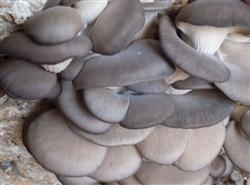
How can oyster mushrooms be cultivated in summer to increase yield?
How can oyster mushroom yield be increased in summer? Please describe the methods. In summer, the following methods are used to increase oyster mushroom yield: 1. Stop watering and dry out. When the temperature stays above 30°C for 7-8 consecutive days, the already formed fruiting bodies stop growing, and the mycelium no longer knots or differentiates. At this point, watering should be stopped immediately so that the bed surface dries out and may even crack, after which clear water should be sprayed once every...
-
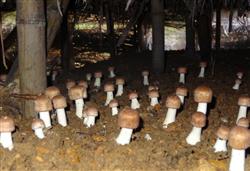
A detailed guide to Agaricus blazei cultivation techniques, teaching you how to grow it with ease
How do you grow Agaricus blazei? Here is the method. You can refer to the following cultivation methods for growing Agaricus blazei: (1) Cultivation materials. The most suitable cultivation material for Agaricus blazei is sugarcane bagasse. Rice straw, wheat straw, cottonseed hulls, corn stalks, thatch, sawdust and the like can also be used as raw materials for cultivation. In one or a mixture of several of the above raw...
-
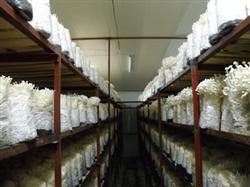
What is enoki mushroom branching disease? A detailed guide to its cultivation techniques
What is enoki mushroom branching disease? An introduction and control methods. Enoki mushrooms that only grow stipes without growing caps, commonly known as enoki mushroom branching disease, or needle-tip mushrooms, is a non-infectious physiological disorder. When cultivation bags or mushroom bottles shift from the mycelium growth stage to the fruiting body formation stage, mushroom buds appear in clusters, growing only stipes without forming...
-
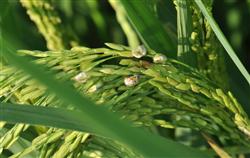
Rice pests and diseases: What pests and diseases affect rice in August?
What pests and diseases affect rice in August? Please explain and guide how to prevent and control them. The key targets for prevention and control of rice pests and diseases in August are rice false smut, neck blast, and bacterial leaf streak, while also controlling rice planthoppers and rice leaf folders. You can refer to the following methods for prevention and control: 1. One week before rice booting (when the boot swells),...
-
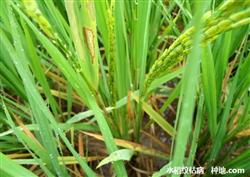
What pests and diseases affect rice in the late stage? A single article explains the control methods clearly
What pests and diseases affect rice in the late stage? How to control them? Please explain in detail. The main pests and diseases in the late stage of rice are: 1. Sheath blight: the disease has recently risen faster, with an average diseased-hill rate of 13.7% and a diseased-plant rate of 3.3%. The rise in disease severity is noticeably faster than in the previous period, especially for the Wuyunjing series varieties, where sheath blight is generally quite severe...
-
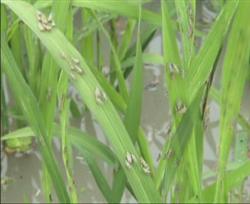
What should be noted for pest and disease control in the late stage of rice?
What should be noted for pest and disease control in the late stage of rice? Please advise. The following points should be noted for pest and disease control in the late stage of rice: The control target must be clear. According to the different types of pests and diseases in the field, corresponding pesticide control should be adopted. When pesticides are mixed, their content must be clearly understood, especially for the control of panicle neck blast. Tricyclazole has...
-
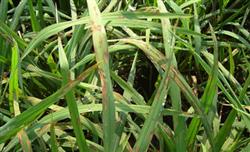
Rice Cultivation: How to Control Pests and Diseases in the Mid-to-Late Stages of Rice?
How to control pests and diseases in the mid-to-late stages of rice? Please explain the methods in detail. The main pests and diseases that need to be controlled in the mid-to-late stages of rice are rice blast, bacterial leaf blight, stem borers, and planthoppers. You can refer to the following methods for control: (1) Control of rice blast. During the jointing and tillering stage of rice, when central diseased plants appear in the field (early July), apply per mu...
-
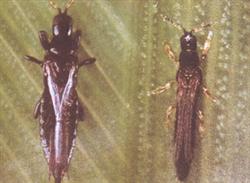
Rice pests and diseases: How do you control common rice pests and diseases?
How do you control common rice pests and diseases? Please provide an introduction and guidance on how to control the common rice pests and diseases: rice thrips, leaf roller (rice skipper), rice leaf roller, and rice planthopper. For detailed control methods, you can refer to the following methods: 1. Rice thrips. Rice thrips are very small, and the adults are dark brown, winged, and crawl...
-
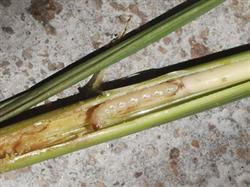
How to control rice stem borers? Rice pest and disease control methods
How to control rice stem borers? Please explain the control methods in detail. Rice stem borers can be controlled by referring to the following methods: 1. Update rice varieties: Reduce or eliminate a few especially susceptible varieties to reduce the pressure for chemical control and the base population. 2. Flooding to kill pupae: Because newly hatched Chilo suppressalis larvae damage the rice leaf sheath...
-
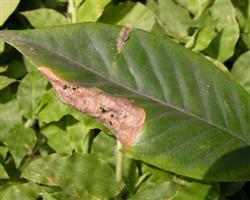
How to prevent and control pests and diseases in gardenias? A detailed guide to practical methods
How to prevent and control pests and diseases in gardenias? Please provide methods. Gardenias commonly suffer from leaf spot disease and chlorosis. For leaf spot disease, spray with 65% zineb wettable powder at 600 times dilution. To prevent chlorosis, regularly add a 0.1% ferrous sulfate solution to the watering water. Pests include slug moths, scale insects and whiteflies. Use 2.5% deltamethrin emulsifiable concentrate at 300...
条件筛选