-

How to apply formula fertilizer to garlic to save fertilizer and increase income
In 2005, 8 demonstration sites were set up in the three towns of Wangmiao, Yucheng and Lige and in Luotun Township, with 100-130kg of formula fertilizer applied per mu, averaging 121.9kg per mu (equivalent to N 17.1kg, P2O5 21.9kg, K2O 12.2kg), while a conventional fertilization control was also arranged, with an average of 129.4kg of compound fertilizer applied per mu (equivalent to N 20.7kg, P2O5 20.7kg, K2O 20.7kg,). At harvest, 5 sites were actually harvested and 3 sites were yield-measured, and the average yield per mu in the formula fertilizer demonstration area was 1485.
-
New disease-resistant, high-yield rice variety launched by Bayer CropScience
On May 14, 2008, Bayer CropScience announced the launch in India of ArizeRDhani, the world's first hybrid rice variety resistant to bacterial leaf blight. Compared with conventional varieties, this new variety can increase yields by 20%-30% and provides the crop with strong protection against the highly destructive bacterial leaf blight. "Rice is a staple food in many developing countries and emerging markets. Although global demand for this crop continues to grow, the occurrence of diseases can greatly affect harvests and threaten food supply.
-
What are the comprehensive prevention and control measures for hemorrhagic disease of farmed fish?
I. Affected species: grass carp, crucian carp, mud carp, common carp, and even silver carp. II. Symptoms: punctate or patchy hemorrhages on the head, orbit, fin base, and abdomen of the fish body, gill filaments bleeding or pale, sometimes ascites, and rotting at the ends of fin rays. III. Causes: 1. Fish diseases caused by bacteria are mostly caused by conditional pathogenic bacteria, and will not occur before the water environment has deteriorated. Only when various factors in the substrate and water body become unsuitable for the survival of fish, reducing the fish body's resistance, and at the same time water
-
Differences Between Three Soft-Shelled Turtle Diseases and Their Prevention and Treatment Methods
In the process of soft-shelled turtle farming, some farmers cannot clearly distinguish white spot disease, white spot fungus disease and saprolegniasis, and blindly and indiscriminately use drugs when treating turtle diseases, thus affecting the effectiveness of disease prevention and treatment. Therefore, based on recent years of practice at soft-shelled turtle farms, the author summarizes the differences between the above diseases and comprehensive prevention and treatment methods as follows. I. Differences between white spot disease, white spot fungus disease and saprolegniasis in soft-shelled turtles 1. Different pathogens: the pathogen of white spot disease is Aeromonas hydrophila, Aeromonas sobria, etc.; the pathogen of white spot fungus disease is Mucor, which belongs to
-
Prevention and Control Methods and Technical Key Points for Common Diseases of Large Yellow Croaker
I. Cryptocaryon irritans disease (white spot disease) Symptoms: A large number of small white spots appear on the body surface. In severe cases, the fish body is covered with a layer of white film. Due to the destruction caused by the parasites, secondary bacterial infection is triggered, resulting in inflammation and necrosis of the fish epidermis, scales easily falling off, fin rays rotting and splitting. When parasitizing the gills, it destroys the gill filaments, and after bacterial infection, it causes gill rot. When the parasites invade the fish's cornea, it causes inflammation and blindness. Diseased fish have reduced appetite, become thin, and swim erratically. The parasites can be identified by microscopic examination. Prevention
-
Occurrence and Prevention Methods of Rice Field Eel Diseases
Rice field eels live year-round in water bodies with complex environmental factors and are frequently attacked by pathogens such as viruses, bacteria and parasites. During the rearing process, sudden changes in water temperature, insufficient dissolved oxygen, excessively high water acidity, and poor feeding management, such as insufficient feed, malnutrition, or feeding rotten and spoiled feed, and deterioration of water quality, disrupt their physiological state, weaken the eel body and lower their resistance, and in severe cases often cause mass death. Even if they do not die, it directly affects the growth and development of the rice field eels. In some cases, it is also due to excessive stocking density, or
-
What to do when the golden coin turtle (Cuora trifasciata) contracts bacterial intestinal hemorrhagic disease
Bacterial intestinal hemorrhagic disease in the golden coin turtle is an intestinal disease caused by opportunistic pathogenic bacteria. It is usually triggered by unclean or contaminated water, or by eating spoiled and rotten leftover bait. In March 1997, golden coin turtles at an aquaculture farm in Mule Town developed cases characterized by reduced feeding, refusal to eat, listlessness, bleeding from the mouth and nose, and not even fleeing when grasped by hand; clinical and necropsy examination led to a diagnosis of bacterial intestinal hemorrhagic disease. The details are as follows: 1. Incidence situation The aquaculture farm kept 57 golden coin turtles, each with a body
-
What are some pig-herding techniques? A few tricks to teach you how to herd pigs with ease
1. Design a path for the pigs: whether entering the pig house or loading onto a truck when selling pigs, there should be a human-designed path, and the walls of this path are best made of fixed, sturdy walls; if there are none, temporary walls can be used, such as replacing them with iron railings, replacing them with long strips of colorful cloth (feed packaging bags can also be sewn together into long strips of cloth), or using other opaque boards, so that the pigs can see that only moving forward is the right way, and in this way the pigs will generally follow the path designed for them; this method is quite practical when moving sows between groups. 2. Temporary wall
-
How is vasectomy surgery performed on a teaser ram?
The most commonly used methods for estrus detection in sheep are the external observation method and the ram teaser cloth method. However, their accuracy is poor and operation is inconvenient. This article introduces the method of using a ram with ligated vas deferens as a teaser. 1 Instruments, drugs and supplies 2% procaine hydrochloride, benzalkonium bromide, size 6 suture thread, suture needles, routine surgical instruments, razor holder (blade), towel, soap, gauze, 5% iodine tincture, 75% alcohol and normal saline. 2 Disinfection and restraint Use right lateral recumbency restraint, bring the left hind limb
-
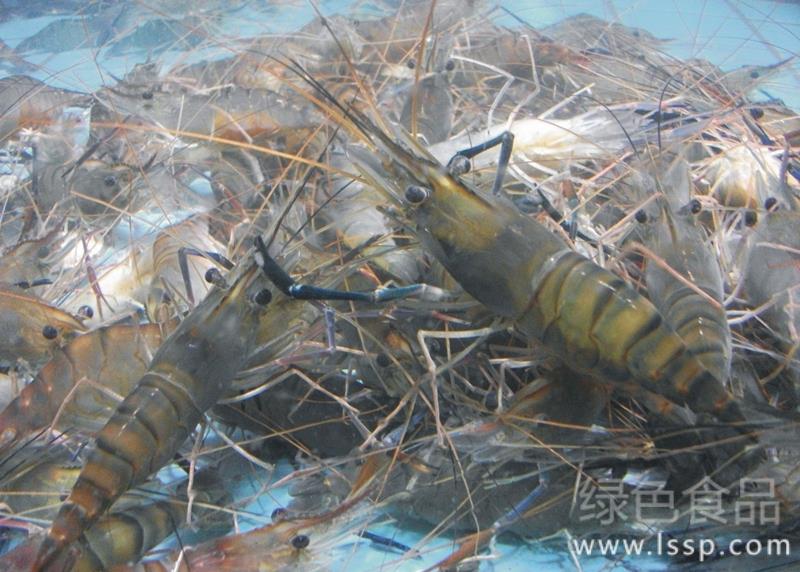
Red body disease in freshwater shrimp (Macrobrachium nipponense) causes explosive mortality - how can it be scientifically prevented and treated?
Red body disease causes explosive mortality in freshwater shrimp - how to prevent and treat red body disease in freshwater shrimp
条件筛选