-
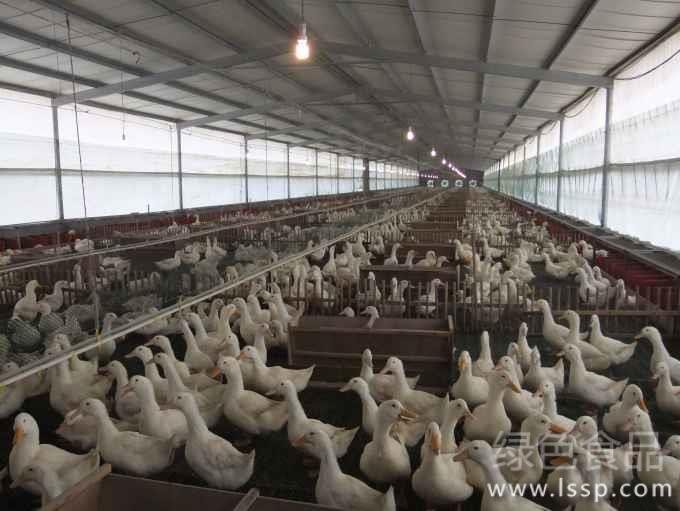
Raising Ducks on Greenhouse Frames: Fewer Diseases, Higher Profits, and a Detailed Guide to the Farming Method
Raising Ducks on Frames in Greenhouses: Fewer Diseases, Higher Profits - How to Raise Ducks on Greenhouse Frames
-

What are the control methods for several tea plant diseases?
I. Tea leaf blight (tea gray blight) Tea gray blight is a common and serious leaf disease of tea plants. The disease is widely distributed throughout tea-growing areas. Affected plants often grow poorly, with weak new growth, thin and weak buds, and premature aging, seriously affecting yield. Control methods for this disease: 1. Strengthen management and cultivate healthy tea plants. Use pesticides rationally to avoid phytotoxicity; carry out timely intertillage and weeding to loosen the soil; do a good job of tea garden drainage or drought and cold resistance work, create an environment favorable to tea plant growth, promote tea plant vigor, and improve resistance.
-
Control Methods for Major Diseases of Tea Plant Young Shoots and Stems
To effectively control tea plant pests and diseases, reduce pesticide residues in tea, and improve tea quality, the major diseases of tea plants and their control are described below. I. Damage Symptoms 1. Tea bud blight: After the tea plant is infected, the growth of buds and shoots is obviously inhibited, affecting the yield and quality of spring tea. It mainly damages the first 1 to 3 leaves of the spring tea flush, first producing pale yellow or yellow-brown lesions at the leaf tip or leaf margin, which after expansion become irregular in shape, with the boundary between diseased and healthy tissue distinct or indistinct; the bud tip is damaged and becomes dark brown and scorched, shriveled and unable to extend; later
-
Symptoms and Control Methods of Oyster Mushroom Brown Blotch Disease
Mushroom brown blotch disease is also known as dry blister disease, Verticillium mold, and so on. In some areas the disease occurs rather severely, and yields suffer great losses. Damage symptoms: when mushroom buds are affected, their growth and development are poor, so that the stipes and buds cannot form and become shriveled white small mushroom masses. When fruiting bodies are affected, many pinhead-sized brown spots appear on the caps, and later the spots enlarge and become sunken, grayish-white in the center; when moist, white moldy growth, namely conidiophores and conidia, forms on the lesions. When the stipe is affected, the stipe base becomes thicker and brown, the outer tissue peels and splits, and after growing up the stipe base becomes crooked and deformed.
-
What are the symptoms of yellow blotch disease in oyster mushrooms?
Yellow blotch disease of oyster mushrooms is a disease caused by Pseudomonas bacteria, which shows a negative reaction to Gram staining. This disease is a bacterial disease, it is widely present in nature, and it attacks both oyster mushrooms and button mushrooms. Symptoms: In the early stage of infection, small speckled yellow diseased areas appear on the caps; as the fruiting bodies grow, they expand and infect other fruiting bodies; subsequently the color deepens and spreads to the entire cap, and the whole mushroom turns yellow. The affected fruiting bodies become water-soaked but are not sticky and do not rot, and especially in black oyster mushrooms the color difference after yellow blotches appear is extremely obvious.
-
Causes and Control Methods of Yellow Mushroom Disease in Oyster Mushrooms
In recent years, the cultivated area of oyster mushrooms has continued to increase, but due to poor management by growers, weak awareness of disease prevention, and other reasons, the incidence of yellow mushroom disease in oyster mushrooms has shown an upward trend year by year. In some mushroom sheds, after one flush of mushrooms, no more mushrooms appear for a long time; in others, the small mushrooms that do appear turn yellow before growing up, then shrivel and die, leading to a decline in oyster mushroom quality and making it difficult to increase yield. For this reason, the author studied the causes of the disease and integrated control techniques, and reports as follows: 1. Disease symptoms. Yellow mushroom disease mostly starts from the caps of young mushrooms or the junction between the stipe and cap of small mushrooms. After onset, pale yellow spots appear on the caps of young mushrooms or in the depressions of the caps of small mushrooms. The young mushroom bodies become sticky, stop growing, and die; small mushroom bodies grow slowly and lose elasticity, breaking apart at the slightest touch, after which the mushroom bodies become sticky and shrivel, giving off a foul rotting odor. The disease spreads rapidly, causing the cultivation substrate surface to become sticky and cease producing mushrooms.
-
Control Methods and Technical Key Points for Yellow Blotch Disease of Oyster Mushrooms
Control methods: [1]The mushroom house facilities must be thoroughly disinfected; removable support materials should be taken down, brushed or soaked in bleaching powder solution and then sun-dried, with bleaching powder used at 1:150 parts water; the floor and space should be sprayed with 1:50 Jinxing disinfectant solution. [2]The compost and fermented material must be thoroughly processed, and the casing soil material should be fumigated with formaldehyde (for specific operation methods, see the control methods for mushroom Mycogone perniciosa written by our factory). [3]Ventilation must be maintained inside the mushroom house, and the relative air humidity inside the mushroom house should be appropriately reduced so that the carbon dioxide concentration in the shed drops
-
Symptom Identification of Several Major Diseases of Oyster Mushrooms
(1) White rot: The pathogen is Mycogone perniciosa, which harms the fruiting bodies. After the mushroom bodies are contaminated, it causes rot and produces a putrid odor. (2) Brown spot disease: The pathogen is Verticillium fungicola. After its spores infect the fruiting bodies of oyster mushrooms, brown spots first form on the caps, gradually expand, and produce grayish-white depressions. After the mushroom bodies are damaged, they become deformed, and the stipes become swollen or curved, but they do not rot, and finally dry up and die. (3) Mucor soft rot: The pathogen is Mucor. It generally occurs when the fruiting bodies are fully mature
-
How to prevent diseases in oyster mushroom wall cultivation? Remember these five points
Disinfection treatment of the fill soil When cultivating oyster mushrooms in walls, the fill soil must be clean soil and must be disinfected before use. Two kinds of fill soil should be prepared: one for sealing the edges, for which soil with greater stickiness should be chosen to prevent the mushroom wall from leaking water; the other for internal filling, for which fertile garden soil should be chosen. Whichever kind of soil is used, it must be dug from more than 10 cm below the ground surface and sun-dried for 3-4 days, then mixed evenly with 1% lime and 0.1% carbendazim for disinfection; for the nutrient soil used as internal filling, add an additional 0.5% phosphate fertilizer
-
How is pollution-free prevention and control of pests and diseases in oyster mushrooms carried out?
During oyster mushroom cultivation, infections by various contaminant fungi such as green mold, blue mold, Mucor and Neurospora can occur, as well as damage by various pests such as mushroom mites, mushroom flies and mushroom gnats, sometimes even causing total loss of yield. Oyster mushrooms are a fast-growing, fresh and tender food, so pesticides with long residual effects and highly toxic pesticides are not suitable for use. Adopting pollution-free prevention and control techniques to manage pests and diseases is of great significance for producing safe and healthy edible mushroom products. 1. Environmental hygiene The utensils and materials used for edible mushroom cultivation can be moved into the mushroom shed and fumigated in a sealed environment with formaldehyde to sterilize and kill insects, eliminating harmful fungal and insect sources. 2. Raw
条件筛选