-
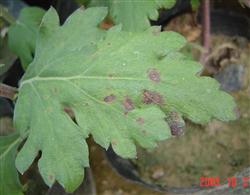
Symptoms and Pathogen Analysis of Chrysanthemum Black Spot Disease
Chrysanthemum black spot, also known as brown spot or leaf blight, occurs in all chrysanthemum-growing regions. Besides harming chrysanthemums, it can also infect wild chrysanthemum, sweet chrysanthemum, pyrethrum and other plants in the Asteraceae family. After infection, mildly affected plants develop scorched, dropping leaves, while severely affected plants may die completely. It seriously affects plant growth and ornamental value. Symptoms...
-
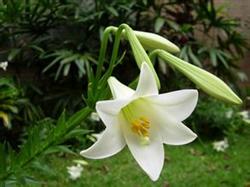
Disease Prevention and Control Methods for Fresh-Cut Lilies
I. Lily Phytophthora Blight 1. Symptoms: Stems, leaves, flowers and scales can all be affected, mainly the tender leaves of the flowers. When the leaves are affected, small water-soaked spots appear, which gradually enlarge and turn grayish-green. When the stem is affected, the water-soaked discolored part spreads upward and downward and rots, further developing into bending and drooping of the stem. In severe cases, the flower stalk and...
-
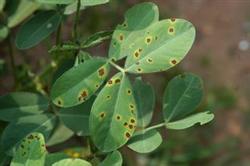
Implement three protection measures in the late growth stage of peanuts to promote increased yield
What is the difference between peanut black spot and peanut brown spot? Peanut black spot and peanut brown spot are the most common leaf diseases of peanuts. Their common feature is the formation of spots on the leaf surface, so they are collectively called leaf spot disease. The main differences are: brown spot occurs earlier, appearing at the early flowering stage, and in the later stage the lesions on the leaves are relatively large, round or irregular...
-
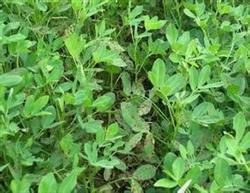
Causes and Control Methods of Peanut Witches' Broom Disease
What causes peanut witches' broom disease? How to prevent and control it? (1) Disease pattern: Peanut witches' broom disease may be caused by a mycoplasma-like organism or a complex infection of mycoplasma-like organisms and viruses. Neither seeds nor soil transmit the disease, but grafting can transmit it. Whether other insects and sap can transmit the virus is still under study. The occurrence of peanut witches' broom disease...
-
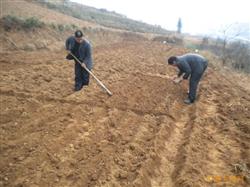
Controlling Pests and Diseases at Peanut Sowing Time Is Highly Effective
Many types of pests and diseases harm peanuts, they occur over a wide range, and the damage is severe. Because the occurrence, distribution, epidemic patterns, damage periods, and living habits of the various pests and diseases all differ, it is quite difficult to time control measures properly in production. Practice has shown that controlling pests and diseases at sowing time can save part of the major losses peanuts suffer from pests and diseases...
-
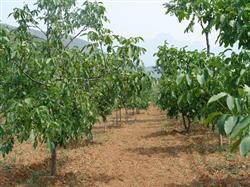
What is walnut branch blight? Get to know this walnut disease
How to grow walnuts efficiently? Please give guidance. Walnut cultivation can refer to the following planting methods: Seedling selection: high-quality seedlings should be selected for planting. High-quality seedlings refer to those with pure varieties, well-healed graft unions, more than 15 lateral roots, a basal stem diameter of more than 1.2 cm, a seedling height of more than 60 cm, straight and smooth stems, and no damage or pests and diseases...
-
How to prevent and control pests and diseases of Agapanthus (lily of the Nile)?
Also called love flower, the name Agapanthus comes from the Greek words agapé (god of love) and anthos (god of flowers), but in reality, the reason this flower is called the "flower of love" is a distant, forgotten mystery. In 1788, L'Heritier established the genus Agapanthus. It was once classified in the Liliaceae family, and was subsequently classified in...
-
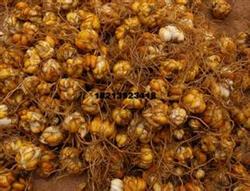
Major Pests and Diseases of Lilies and Their Control Methods
After sowing, lilies must undergo several years of cultivation and management before commercial bulbs suitable for harvest can be obtained. Generally, asexual propagation is used first to obtain seed bulbs, or seed propagation may be used first to obtain seed bulbs; the seed bulbs are then planted in the field and, through field management, grow into commercial lilies. Seed bulbs are various propagation materials first cultivated into 50-100 g small...
-
Common pest and disease control methods in lily cultivation
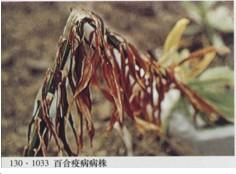
Lily blight, also known as lily foot rot, is distributed in Hebei, Gansu, Shaanxi, Shandong, Zhejiang, Jiangxi, Henan, Hubei, Hunan, Sichuan, Guizhou, Yunnan, Tibet and other provinces and regions. 1. Damage symptoms: It mainly attacks stems, leaves, flowers, scales and bulbs. When the stem is infected, water-soaked brown rot appears at first, gradually...
-
How to prevent and control button mushroom diseases? These measures must be mastered
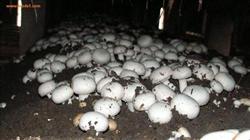
Disease prevention and control principles: prevention first, with equal emphasis on prevention and control. 1. Rot disease: a fungal disease, mainly characterized by white mycelium as fine as spider silk appearing on the casing soil layer of the mushroom bed, growing irregularly and arranged in a spider-web pattern; infected mushroom bodies basically stop growing and gradually turn brown, soften and rot. Prevention and control measures: treat the casing soil material to prevent disease before it appears. For chemical treatment of the mushroom shed, generally use Baibingsha to spray the mushroom shed in a carpet-like manner to thoroughly kill pathogenic bacteria; after sealing for 2 days, it can be put into use. Keep the shed temperature above 12°C and shed humidity below 90%. If disease is found, immediately take measures to dig out and clean up.
条件筛选