-

Analysis of Off-Season Shiitake Mushroom Production and Market Conditions
1. Off-season shiitake mushrooms are produced during the high-temperature season from May to October using natural conditions such as mountain caves and civil air defense structures, or facilities such as constant-temperature cold storage. Nowadays, off-season cultivation is mostly carried out in existing cold storage (constant-temperature warehouses) or ordinary greenhouses using cooling equipment. The technical key points are: 1. Facility preparation: For an ordinary edible mushroom greenhouse, after completing spring production, immediately clean up, remove the original mushroom bags, clean the interior of the greenhouse, check and repair the greenhouse film, spray an appropriate amount of medication for sterilization, then build
-
Detailed Explanation of Key Techniques for Off-Season Shiitake Mushroom Cultivation
1. Preparatory work. The raw materials are corn cobs, sawdust and cottonseed hulls; the auxiliary materials are fine rice bran or wheat bran. Before using the greenhouse, use 15 grams of sulfur per cubic meter; when ignited it produces sulfur dioxide, which has strong sterilizing power and is used to disinfect the greenhouse. When fumigating the greenhouse with sulfur, the doors and windows must be tightly closed and people must leave to avoid poisoning. A 3% Lysol solution and Bordeaux mixture can also be used to disinfect the greenhouse. Before fruiting, the greenhouse interior must be dry, with relative air humidity kept at around 70%; dampness easily causes contamination by foreign fungi. To make full use of the space, racks can be set up inside the greenhouse, with each layer 30 cm,
-
B ag-cultivated shiitake mushroom off-season soil-covering cultivation technique
B ag-cultivated shiitake mushroom cultivation has always adopted the spring-planting, autumn-and-winter-mushroom model, with the fruiting period mainly concentrated from October to March of the following year, while April to September is a blank period for mushroom production. The total amount of fresh mushrooms cannot meet the growing consumer demand at home and abroad. In recent years, Zhukou Town, Qingyuan County, has explored a set of new techniques for off-season soil-covering cultivation of bag-cultivated shiitake mushrooms, achieving very good economic benefits and being very suitable for mushroom farmers' large-scale production. The technique is introduced below for reference by colleagues only: 1 Advantages The advantages of off-season soil-covering cultivation of shiitake mushrooms can be summarized in the following 5 aspects: 1.1 Year-round nature
-
Key Technical Points and Precautions for Establishing a Jujube Orchard
The jujube tree belongs to the Rhamnaceae family. It is resistant to drought and waterlogging, tolerant of saline-alkaline soils, and highly adaptable to the soil in which it is planted. However, if it is planted on plots with better soil conditions, it can grow even better. At the same time, the yield and quality of the fruit will improve accordingly, so the selection of the orchard site should also be given attention when planting jujube trees. When selecting the plot for establishment, the following important factors should be considered. First, soil texture: where conditions permit, sandy soil is best, especially "sand over gold" (about 20cm of sandy soil on the surface with red soil below
-
How to feed finishing pigs so they grow faster
--Environmental conditions cannot be ignored. The role and influence of environmental factors on pigs are increasingly valued by people. Only by creating good living and production conditions for pigs can the effect of obtaining more and better-quality products with the minimum amount of feed input be achieved. Environmental factors include temperature, humidity, density, ventilation, harmful gases in the barn, lighting and noise, etc. 1. Temperature: Pigs have a poor ability to regulate their own body temperature; only very few sweat glands can regulate it in hot weather, and only very few bristles resist the cold of winter
-
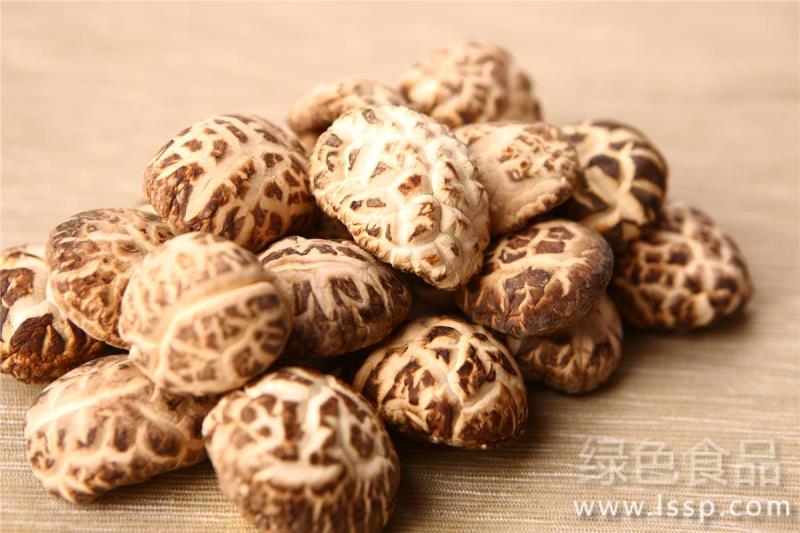
How to artificially create and rationally utilize the cultivation conditions for flower shiitake
Artificial creation and rational utilization - the cultivation conditions for flower shiitake
-
Large flat apricot is an excellent tree species for village and township greening
Large flat apricot is a plant of the genus Prunus in the Rosaceae family and is an economic tree species unique to our country, originating from the Zhangjiakou area of Hebei Province and the suburbs of Beijing. In 2002, Liaozhong County of Shenyang City introduced nearly ten thousand large flat apricot seedlings for trial planting, and since 2006 has carried out large-scale promotion and cultivation; at present, the whole county has planted nearly 2000 mu of large flat apricot, and the growth is good. The excellent characteristics of large flat apricot: strong adaptability: cold-resistant and drought-resistant, tolerant of barren soil. It can grow normally whether in plains, mountains, hills, or sandy, barren, saline-alkali land. Early fruiting and high yield. Long fruiting period: two to three years after planting
-
Detailed Explanation of the Fishing Techniques and Methods for Protosalanx hyalocranius
1. Introduction In 1995, after the Ministry of Agriculture and the Ministry of Water Resources jointly issued the "Notice on Accelerating the Promotion of Icefish Transplantation and Proliferation Technology," a nationwide upsurge in large icefish transplantation was set off. Over the past decade, the transplantation and proliferation of large icefish has been widely developed in northern regions, especially in Inner Mongolia, and good transplantation results have been achieved in both lakes and reservoirs. When the large icefish in the transplanted waters have reached fishery effectiveness, that is, when the large icefish have formed a high-quantity and relatively stable population, become naturalized
-
What is the relationship between yellow fat pork and feed? An analysis of the causes
Yellow fat pork, also known as yellow rind pork, refers to pork carcass fat that is brown or yellow, with the internal organs normal and unchanged and no off-odor, and it is generally believed to be caused by feed. Yellow fat pork is different from jaundiced pork; jaundiced pork is caused by disease, resulting from blocked bile excretion. In jaundiced pork, not only does the fat turn yellow, but the skin, mucous membranes, joint capsule fluid, tissue fluid, vascular intima, serosa, tendons, etc. all appear yellow, and the internal organs also show pathological changes. Yellow fat pork fades or loses its yellow color after hanging for 24 hours, whereas the yellow color of jaundiced pork does not fade. Yellow fat pork is mostly caused by feeding pigs fishmeal, fish oil
-
Comprehensive Analysis of Key Technical Points for Establishing an Apricot Orchard for Kernel Production
Apricot trees are fruit trees that love sunlight, tolerate drought, and fear waterlogging and frost. Therefore, the orchard should be established in a sunny and high, dry location, and must not be established on shady slopes, waterlogged lowlands, or valley bottoms where cold air easily settles. Apricot trees are long-lived fruit trees; generally, even 100- to 200-year-old trees still bear abundantly, so the planned spacing between plants and rows should be relatively large. However, considering the need for early high yields, temporary trees can be set up at the time of orchard establishment, and gradually thinned out or transplanted as the trees age. The spacing for permanent rows can be designed at 4 m x 6 m, and for temporarily densified orchards at 2 m x 3 m, with temporary trees dealt with promptly by around 10 years of age. When planning, soil and fertilizer-water conditions must also be considered.
条件筛选