-

How can dryland farming solve the water shortage problem?
Right now, the drought in China's Huang-Huai region has been effectively alleviated, but the drought in the Northeast region is still ongoing. In recent years, coping with large-scale, prolonged droughts has become the norm in grain production development. The 2007 summer-to-dog-days drought in the Northeast region, the 2009 winter-spring consecutive drought in the northern winter wheat region
-
Dryland farming breaks the water dilemma; nationally, the share of effectively irrigated area is limited
Right now, the drought in China's Huang-Huai region has been effectively alleviated, but the drought in the Northeast region is still ongoing. In recent years, responding to large-scale, prolonged droughts has become the norm in grain production development. In 2007, the Northeast region suffered a summer-to-dog-days drought; in 2009, the northern winter wheat region suffered a winter-spring continuous drought
-
Water dropwort seed planting method and timing, with dryland cultivation techniques
Summary Seedbed: Water dropwort prefers cool shade and needs relatively loose, thick, fertile soil that drains and irrigates easily. Soil preparation: generally about 1 m wide, apply 2 kg of manure fertilizer per mu. Germination: soak the seeds for about 2 days. Sowing: sow in early August to early September for autumn, and in
-
When Is the Best Time to Sow Early Rice in the South?
Upland rice, also known as dryland rice, is drought-tolerant and suited to dryland cultivation; it is also called upland rice, a general term for cultivated rice varieties able to grow in vast drylands, slopes and arid ecological environments, and it is a variant type of rice. So when is the best time to sow early rice in southern China? In our country's south
-
How to Grow Upland Rice? A Comprehensive Analysis of Planting Techniques and Management Methods
Upland rice, also called dryland rice, is an ecotype formed by rice through long-term domestication and evolution under dryland conditions without a water layer. It is adapted to dryland cultivation and can also be planted in paddy fields or low-lying land. So, how do you grow upland rice? 1. Varieties In production, you should choose varieties that have passed national or provincial approval and are managed through an integrated system of breeding, propagation and promotion. For example, nationally approved varieties include Zhonghan 297 and Lvhan No. 1, and Anhui Province-approved varieties include upland rice 906 and Xinliangyou 212.
-
A Detailed Guide to Dryland Pinellia Planting Techniques and Field Management Methods
For seed-piece selection, choose a sunny sandy loam whose previous crop was a legume or grass-family crop, then deep-plow it to make field beds and apply plenty of base fertilizer. In late February to early March, open a furrow 7cm deep and 15cm wide at a row-to-plant spacing of 25*5cm, then sow the seeds into it and finally cover with soil
-
What are the technical essentials of fertilizing dryland crops?
Fertilizer needs to be applied in production, and the application methods differ between paddy fields and dryland, because the soil environments of paddy fields and dryland are different, and the soil properties are also different. In order to give full play to the fertilizer efficiency when applying fertilizer in dryland, the following technical essentials should be followed. 1. Deep application
-
Introduction to Upland Rice Varieties Suitable for Planting in the North
Upland rice is also called dryland rice. It is an ecotype crop formed through long-term domestication and evolution of rice under dryland conditions without a water layer. Planting upland rice is divided into spring sowing and summer sowing. Spring sowing can be carried out from mid-April to mid-May, with mid-May being preferable. For summer sowing, sowing before June 15 is preferable.
-
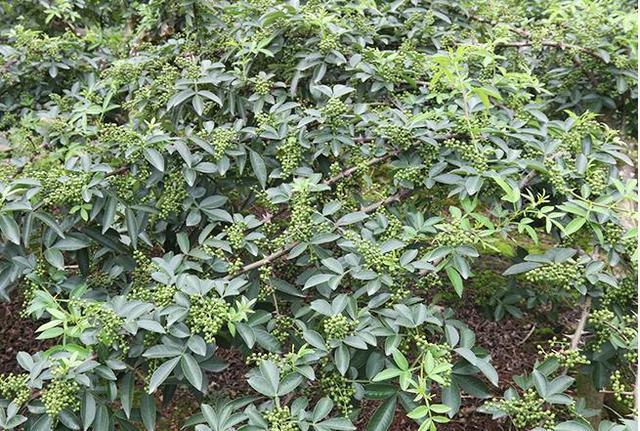
How to Grow Dryland Sichuan Pepper? Detailed Explanation of Cultivation Techniques in Gangu County
Dryland Sichuan Pepper Cultivation Techniques in Gangu County. Sichuan pepper (Zanthoxylum bungeanum) is a widely planted spice and oil tree species in China. Because both its fruit peel and seeds can be used as medicine, it has dual value for food and medicinal use, so its market prospects are very promising. In recent years, Gangu County...
-
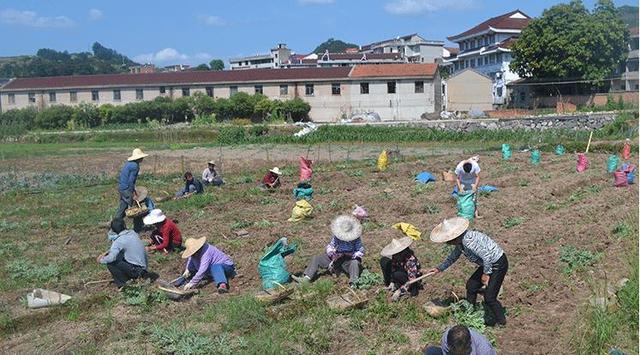
New three-crop dryland planting model of Zhejiang fritillary, spring corn and autumn soybean in Dongyang City
New three-crop dryland planting model of Zhejiang fritillary/spring corn/autumn soybean in Dongyang City. The Sanlian area of Qianxiang Town, Dongyang City mainly grows the Chinese medicinal herb Zhejiang fritillary, and previously followed dryland two-crop farming models such as medicinal herb-soybean and medicinal herb-vegetable. To further...
条件筛选