New three-crop dryland planting model of Zhejiang fritillary, spring corn and autumn soybean in Dongyang City
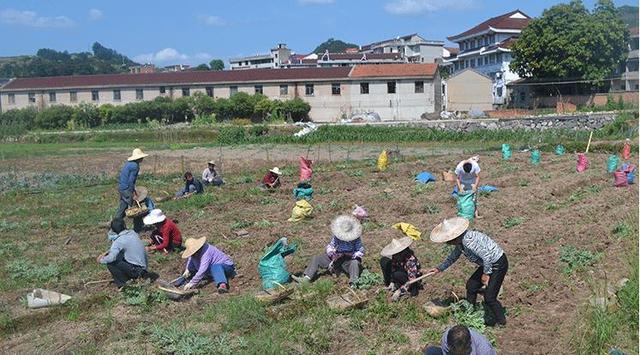
New three-crop dryland planting model of Zhejiang fritillary/spring corn/autumn soybean in Dongyang City
The Sanlian area of Qianxiang Town, Dongyang City mainly grows the Chinese medicinal herb Zhejiang fritillary, and previously followed dryland two-crop farming models such as medicinal herb-soybean and medicinal herb-vegetable. To further improve the comprehensive benefits of agricultural production and increase farmers' income, in recent years Dongyang City has carried out a new three-crop dryland planting model, opening up a new path for efficient crop farming suited to the region. The new three-crop dryland planting technique of Zhejiang fritillary/spring corn/autumn soybean is based on the temporal and spatial differences in the growing seasons of Zhejiang fritillary and its cultivation requirements; proceeding from local realities, it innovates the planting model and, through scientific crop rotation linkage, the introduction of improved varieties, timely sowing and rational arrangement, achieves three crops a year on dryland and raises the land utilization rate. This planting model is mainly distributed in Zhejiang fritillary growing areas such as Dongyang, Pan'an and Jinyun, with an annual extension area of about 100 hm2, an output value of more than 25,000 yuan per 667 m2 and a net income of more than 10,000 yuan per 667 m2. Zhejiang fritillary is a genuine regional medicinal herb of our province and one of the "Zhejiang Eight Flavors". It is a perennial herb of the Liliaceae family, with the effects of relieving cough and reducing phlegm, and clearing heat and dispersing nodules. Zhejiang fritillary is widely used clinically; traditional Chinese patent medicines such as Qingfei Zhike Wan and Tongxuan Liqi Wan all use Zhejiang fritillary as the main raw material, and the market prospects are promising.
Zhejiang fritillary is harvested by collecting the fresh underground bulbs. Fresh fritillary yields 800-900 kg per 667 m2, with an average dry commercial yield of 250 kg, an output value of 26,250 yuan; the seed requirement is 200-300 kg per 667 m2, the production cost is 16,000 yuan, and the net profit is 10,250 yuan. Spring corn yields 320 kg per 667 m2, with an output value of 890 yuan, a production cost of 340 yuan and a net profit of 550 yuan. Soybean yields 150 kg per 667 m2, with an output value of 540 yuan, a production cost of 200 yuan and a net profit of 340 yuan. Under the new three-crop dryland planting model of Zhejiang fritillary/spring corn/autumn soybean, the output value reaches 27,680 yuan per 667 m2, with a net profit of 11,140 yuan.
1 Yield and benefits
2 Crop rotation schedule
Sow Zhejiang fritillary from mid-to-late September to late October and harvest in early May of the following year; interplant spring corn in early-to-mid April and harvest in mid-to-late July; interplant autumn soybean before the corn harvest from late June to early July and harvest at the end of September. The land is in use all year round without rest.
3 Key techniques
3.1 Zhejiang fritillary
3.1.1 Land selection and preparation
For cultivating Zhejiang fritillary, mountain land at a slightly higher altitude is mostly chosen, with loose, fertile sandy loam rich in humus, requiring good drainage and sufficient sunlight. Zhejiang fritillary is best not grown continuously on the same land, so as to benefit its growth and prevent diseases. For land preparation and bed making, generally plow to 0.25-0.3 m; the bed width is 1-1.2 m, the height is 0.15 m, and the ditch width is 0.25 m. The bed surface is mostly turtle-back shaped, and the distance between beds is 0.25-0.3 m.
3.1.2 Field planting
The planting time for Zhejiang fritillary is from mid-to-late September to late October. Rational close planting is an important part of increasing the yield and ensuring the quality of Zhejiang fritillary. Plant 6 rows per bed, with a row spacing of 15-20 cm and a plant spacing of 10-15 cm; the density is 30,000-35,000 clusters per 667 m2, and the seed requirement is 200-300 kg per 667 m2. Large bulbs should be planted sparsely, and small bulbs densely. When planting, place the bulbs (buds facing upward) according to the required plant spacing, then cover with soil; the planting depth is 5-7 cm. After sowing, cover the bed surface with 500 kg per 667 m2 of soybean straw or similar.
3.1.3 Rational fertilization
For base fertilizer, apply 300-400 kg per 667 m2 of commercial fertilizer, 20-25 kg of ammonium sulfate or lime nitrogen, 30-40 kg of phosphate fertilizer, 8-10 kg of potassium sulfate, and 1 kg each of zinc and boron fertilizer. In late December, apply 40-50 kg per 667 m2 of 45% potassium sulfate three-element compound fertilizer as a top dressing. At the end of February to early March, fertilize according to seedling condition, applying 20-30 kg per 667 m2 of compound fertilizer.
3.1.4 Field management
Before emergence, use 200 mL of 20% paraquat + 100 mL of 50% acetochlor (or 60 mL of 90% Harness) per 667 m2, diluted in 50 kg of water, and spray evenly over the whole field for weed control. Generally, intertillage and weeding are combined with fertilization; weed before fertilizing so that the soil is loose, easily absorbs fertilizer, and has increased water- and fertilizer-holding capacity. To cultivate large bulbs and reduce nutrient consumption from flowering and seed setting of fritillary, flower bud removal is generally carried out in late March, that is, when 1-2 flower buds appear on the plant. Flower bud removal means removing the flower together with the top 7-10 cm of the shoot, so it is also called topping. Flower bud removal should be done on sunny days to avoid rain seeping into the wounds and causing rot.
3.1.5 Pest and disease control
The main diseases of Zhejiang fritillary are gray mold, black spot and soft rot, and the main insect pest is white grub. From mid-March to mid-April, use 50% carbendazim, 70% thiophanate-methyl or 50% procymidone at 1000-1500 times dilution for spraying, rotating the chemicals, applying continuously 2-3 times with an interval of 7-10 d, to control gray mold and black spot, etc. To control white grub, from mid-March to April use 50% phoxim or 48% chlorpyrifos at 1000-1500 times dilution for drenching.
3.1.6 Harvest
In early May, after the aboveground part of Zhejiang fritillary withers, dig it up on a sunny day, standardize production and processing, and promote sulfur-free processing technology for Zhejiang fritillary.
3.2 Spring corn
3.2.1 Variety selection
For spring corn, it is advisable to choose high-yield improved varieties such as 'Denghai 605' and 'Zhengdan 958', or sweet corn varieties such as 'Zhenhua' and 'Cuizhen', which is conducive to field planting arrangements and to increasing yield and benefits.
3.2.2 Sowing and seedling raising
Choose a field that is sheltered from the wind and faces the sun, with loose soil and good fertility, and prepare a seedbed of 15 m2 per 667 m2 of field for sowing. Apply 10 kg of decomposed organic fertilizer plus 0.6 kg of compound fertilizer per 15 m2 of seedbed. Sow and raise seedlings in early April.
3.2.3 Timely transplanting
In mid-to-late April, interplant on both sides of the bed, with a row spacing of 0.6 m and a plant spacing of 0.25-0.3 cm, and a density of about 4000 plants per 667 m2.
3.2.4 Rational fertilization
About one week after transplanting, apply 10-15 kg per 667 m2 of compound fertilizer and 500 kg per 667 m2 of organic fertilizer. After the fritillary harvest, carry out timely intertillage, weeding and hilling. Corn is a crop with a relatively large potassium requirement, so potassium fertilizer should be increased among the fertilizer types applied. At the large trumpet stage, topdress with 30 kg of high-nitrogen high-potassium compound fertilizer or 15 kg of urea plus 10 kg of potassium fertilizer; after full heading, apply 10-15 kg of urea as a supplementary dressing according to seedling condition.
3.2.5 Pest and disease control
The main diseases and pests of corn are mainly sheath blight, rust and corn borer, etc. At the initial stage of sheath blight, use 100-150 mL per 667 m2 of 5% validamycin, or 25 g of 20% powder, add 50-60 kg of water and spray on stems and leaves. For rust control, spray with 15% triadimefon wettable powder at 1500 times dilution. For corn borer control, pay attention to the degree of egg hatching in the field and the damage by larvae, seize the key period, and use 10 mL per 667 m2 of 20% chlorantraniliprole suspension concentrate, diluted in 30 kg of water, for spraying.
3.3 Autumn soybean
3.3.1 Variety selection
Choose varieties suitable for local planting, with relatively high yield, strong resistance and a relatively short growth period, such as 'Liqiu 3'.
3.3.2 Sowing and planting
From late June to early July, before the corn harvest, interplant autumn soybean between the two rows of corn, with a row spacing of 60 cm and a plant spacing of 20-25 cm, and a density of 4500-5500 plants per 667 m2.
3.3.3 Rational fertilization
After emergence, apply about 10 kg per 667 m2 of compound fertilizer; at the flowering stage, use foliar topdressing by spraying potassium dihydrogen phosphate to promote more and heavier grains.
3.3.4 Harvest
Harvest at the end of September; after harvest, cover the straw directly on the bed surface of the already sown Zhejiang fritillary as organic base fertilizer for Zhejiang fritillary.