How to Grow Dryland Sichuan Pepper? Detailed Explanation of Cultivation Techniques in Gangu County
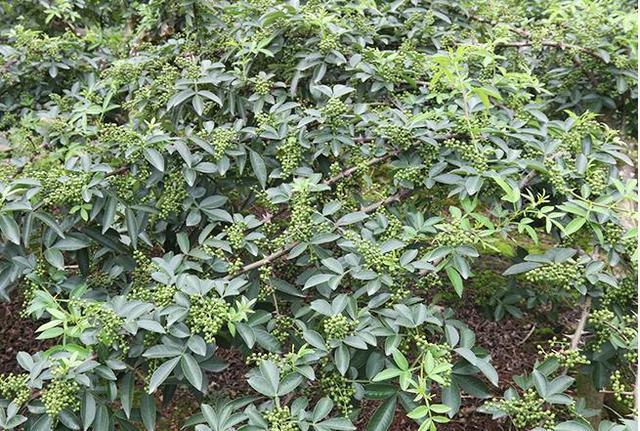
Gangu CountyDryland Sichuan Pepper Cultivation Techniques
Sichuan pepper (Zanthoxylum bungeanum) is a widely planted spice and oil tree species in China. Because both its fruit peel and seeds can be used as medicine, it has dual value for food and medicinal use, so its market prospects are very promising. In recent years, Gangu County has taken advantage of its geographical strengths to combine Sichuan pepper production with returning farmland to forest, greening barren hills, and developing the rural economy, causing the county's Sichuan pepper planting area to increase rapidly. However, because some farmers are relatively extensive in cultivation management, their income has been limited. The dryland Sichuan pepper cultivation techniques are summarized below for reference.
1 Seedling Raising of Sichuan Pepper
1.1 Selection of Seedling Land
The seedling land for Sichuan pepper should be selected in a place with fertile soil, good drainage, and convenient transportation. To improve the quality of seedlings for afforestation, it is best to choose a site near the planned plantation area. This not only reduces seedling transportation costs but also ensures seedling quality and reduces the time from lifting seedlings to planting, thereby increasing the planting survival rate.
1.2 Seed Collection
When collecting seeds, select Sichuan pepper trees that are in full fruit-bearing stage with good varieties, vigorous tree growth, and high yield.
1.3 Seed Treatment
Sichuan pepper seeds have a waxy layer on the outer shell, making it difficult for them to germinate in the same year. During seedling raising, the wax must be removed before the seeds can absorb water and germinate. Seeds can be soaked in a 3%-5% edible sodium carbonate solution for 3-4 h, then rubbed and washed with fine sand of 2-3 mm particle size to directly remove the wax. The wax can also be removed by mixing with fresh cattle or sheep manure and piling for fermentation, or by soaking in laundry detergent solution.
1.4 Sowing
The conventional sowing time is from the end of September to early October, and either broadcast sowing or drill sowing can be used. After sowing, cover with fine river sand of 1-2 mm particle size or wheat straw so that the soil is just not visible, which helps preserve moisture, prevents crusting, and increases the emergence rate. In addition, growers have also explored a method in production in which the fruit is harvested, shade-dried, and sown immediately on the same day. This method no longer requires seed treatment, and the emergence rate is also relatively high.
1.5 Thinning and Final Thinning of Seedlings
When the seedlings grow to 4-5 cm, thin them; when the seedlings are about 10 cm tall, final thinning is done. Thinning and final thinning should strictly follow the principle of "keep the strong and remove the weak, keep the tall and remove the short, keep the healthy and remove the diseased," and can be carried out together with loosening the soil and weeding.
2 Planting of Sichuan Pepper
2.1 Planting Time
Sichuan pepper trees can be planted in both spring and autumn, but planting around "Spring Equinox" in spring is better. Spring planting should be carried out before the seedlings sprout. For autumn planting of pepper seedlings, part of the tender shoots and tender leaves should be removed to reduce water evaporation and improve the survival rate.
2.2 Seedling Selection
When establishing a mountain Sichuan pepper plantation, 2-year-old seedlings should be selected, preferably dryland seedlings, with a ground diameter of about 1 cm. The root system must be complete. There is no strict requirement for plant height, but there must be no rotten branches or leaves and no pests or diseases. Local excellent varieties such as Dahongpao, Dahongjiao, Xiaohongjiao, Baishajiao, Doujiao, and Qin'an No. 1 can be selected.
2.3 Planting Density
Sichuan pepper planting should by no means be too dense. Generally, 4 m x 6 m or 6 m x 6 m is suitable. To improve land utilization and increase income, crops such as peanuts, Codonopsis pilosula, vegetables, and potatoes can be intercropped in the early years of plantation establishment.
2.4 Planting Method
When planting Sichuan pepper, seedlings should be planted as soon as possible after lifting. Spring planting must be carried out before the seedlings sprout. If transportation is needed, the seedling roots should be placed in plastic bags (the whole plant must not be placed in the plastic bag). When planting, dig large holes and apply sufficient base fertilizer. Generally, the planting hole is 50-60 cm3, and each hole is given 3-5 kg of farmyard manure and 50 g of superphosphate. The fertilizer should be mixed evenly with the soil, and 100 g of fresh lime powder should be added to prevent root rot. When planting, use the method of "first bury, second tread, third lift the seedling." After planting, water to settle the roots. After the water has completely infiltrated, cover with dry soil to preserve moisture.
3 Field Management
3.1 Fertilization
When planting young trees, a small amount of phosphate fertilizer can be applied to promote root growth. Afterward, a small amount of urea can be applied each year together with loosening the soil. When controlling pests and diseases, potassium dihydrogen phosphate can be used for foliar topdressing. After entering the full fruit-bearing stage, each year after the fruit is harvested, open a ring-shaped ditch below the outer edge of the canopy and apply organic fertilizer and compound fertilizer mixed together. Apply about 0.25 kg of compound fertilizer and about 15 kg of organic fertilizer per tree, which can ensure the tree's nutrient consumption.
3.2 Winter Management
Sichuan pepper trees have weak cold resistance, so attention must be paid to winter climate changes, overwintering management of pepper trees must be done well, and normal growth of pepper trees must be ensured.
For young Sichuan pepper seedlings, methods such as wrapping with straw and pressing and burying can be used. That is, before winter begins, wrap the trunk with wheat straw or straw bags, then wrap and tie the outside with plastic film to avoid freeze damage. Alternatively, pile soil beside the roots, then slowly press the whole tree down and cover with about 20 cm of soil. Before the seedlings sprout in spring, remove the warming measures in time. For larger pepper trees, methods such as whitewashing, watering, and spraying plant ash liquid can be used to prevent freeze damage.
In recent years, late frost has been common in Gangu County, causing huge losses to the growth and fruiting of Sichuan pepper trees. In response to this natural phenomenon, weather forecasts should be listened to in time, and the method of lighting piles and smoking should be adopted to recover losses. Generally, 75-90 piles of semi-wet firewood and grass per hm2 are sufficient. Light them after 12 o'clock at night, and someone should keep watch and pay attention to fire prevention.
3.3 Flower Preservation and Fruiting
During the flowering period of Sichuan pepper trees, spraying with dimethoate emulsifiable concentrate must be avoided, otherwise fruit drop will be very serious. Potassium dihydrogen phosphate plus urea aqueous solution can be sprayed during the flowering period to prevent flower and fruit drop. At full bloom, spray gibberellin 10 mg/kg on the leaves; at full bloom and mid-bloom, spray 0.3% potassium dihydrogen phosphate plus 0.5% urea aqueous solution; after flower drop, spray 0.3% potassium dihydrogen phosphate plus 0.7% urea aqueous solution every 10 days.
3.4 Pest and Disease Control
3.4.1 Aphids. They damage tender shoots, young buds, leaves, flowers, and so on. Spray with 1:1000-2000 phoxim emulsifiable concentrate, or spray with acetamiprid or abamectin for control. Generally spray once every two to three weeks, and it can also be combined with foliar fertilization [Jishan Huayao].
3.4.2 Black scarab beetles. Pour 200 times 40% dimethoate emulsifiable concentrate at the roots or apply it to the trunk.
3.4.3 Damping-off and leaf spot of Sichuan pepper seedlings. Spray with 50% carbendazim or 70% thiophanate-methyl for control, or spray diseased plants with 600 times thiram solution or 1000 times dexon solution.
3.4.4 Leaf rust. It mainly damages leaves and is prone to occur in hot summer and autumn. From June to August, spray once or twice with 0.3-0.5 degrees Baume lime-sulfur mixture or 1000 times thiophanate-methyl solution. In winter, together with pruning, remove fallen leaves and weeds under the canopy and burn them, and at the same time spray 2-3 degrees Baume lime-sulfur mixture.
4 Training and Pruning
4.1 Pruning Time
Pruning can be carried out together with fruit harvesting, or from late autumn until the dormant period.
4.2 Tree Shape
The most common natural open-center form used in production can be used.
4.3 Pruning Method
In the year young trees are planted, cut the trunk at about 30 cm above the ground above a plump bud. Afterward, among the branches sent out from the base, keep three or four branches with evenly staggered angles according to orientation and train them as main branches, removing the remaining branches. On the main branches, cultivate side branches year by year. On each main branch, 5-8 side branches can be cultivated according to tree growth, and on the side branches cultivate three or four groups of fruiting branches. Generally, do not keep upward-growing branches or downward-growing branches on the main branches.
In daily management and care, remove diseased and pest-damaged branches, overlapping branches, and root-sucker branches in time. For water sprouts, they can be left unpruned; those that can be used by bending branches should be fully utilized, and those that cannot be used should be removed in time to reduce consumption of water and nutrients.