-

Post-election review: COA Minister Lin Tsung-hsien steps down, Chen Chi-chung takes over as acting minister: strengthen production and marketing adjustment, review administrative attitude, and make farmers feel it more
Post-election review: COA Minister Lin Tsung-hsien steps down, Chen Chi-chung takes over as acting minister: strengthen production and marketing adjustment, review administrative attitude, and make farmers feel it more
-

What are the symptoms of downy mildew in stock (Matthiola incana)?
Downy mildew is a major disease of stock. This disease affects the host's leaves, tender shoots and flowers. In the early stage, pale green spots appear on the leaf surface, which later turn into yellow spots. On the corresponding underside of the leaves, a white downy mildew layer grows. After the tender shoots and flowers are infected, they often become stunted or deformed. When the damage is severe, the leaves wilt and droop, and the whole plant dies.
-
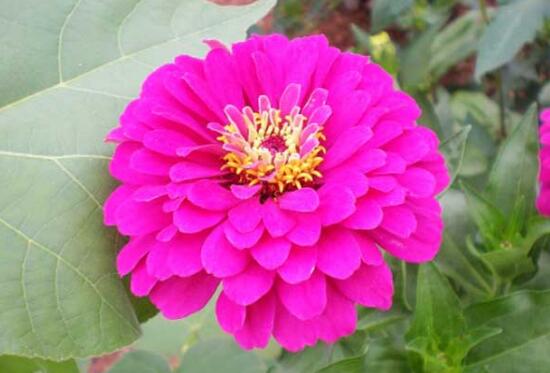
How do you care for zinnias through the four seasons? Sow in spring, cool down in summer, increase light in autumn, and they die back in winter
Zinnia (Zinnia elegans), a common ornamental plant, blooms one flower after another, symbolizing step-by-step advancement, and is deeply loved by flower enthusiasts, with many people growing it in pots at home. However, growing zinnias well is not such an easy task, because their care differs through all four seasons. So how do you care for zinnias through the four seasons?
-
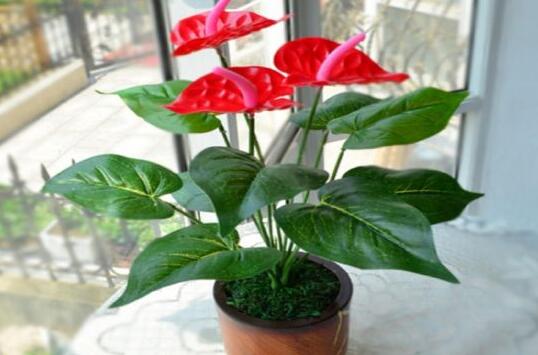
How to water anthurium? How often to water it comes down to one principle
From the cultivation methods and precautions for anthurium, we know that it likes a high-humidity environment, so watering becomes especially important. Poor water quality, or watering too much or too little, is all wrong, so how exactly should anthurium be watered? This is the question we need to consider
-

Narcissus growing tips: a full breakdown of care essentials
Environmental requirements of narcissus 1. Narcissus prefers a warm, humid climate, and is especially suited to places with no severe cold in winter, no extreme heat in summer, and plenty of rain in spring. 2. It likes water and tolerates fertilizer, requiring loose, organic-rich, adequately moist neutral or slightly acidic loam, but it is also drought-tolerant and tolerant of poor soil. 3. Narcissus likes sunlight
-
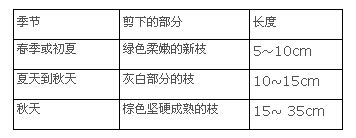
How to Propagate Rosemary from Cuttings? A Full Breakdown of the Detailed Method and Steps
Rosemary cuttings can be rooted in soil or in water, then planted in soil once roots form. Gardeners can choose whichever propagation method they prefer. I. Rosemary water-rooting method: 1. Using clean scissors, cut new slender shoots from a healthy, vigorous rosemary plant. Be careful to avoid shoots with flowers.
-

Witnessing the pollution scene! Large numbers of dragonfly nymphs and stream fish die downstream of the factory; the alliance calls on TSMC to keep its partners in line
Witnessing the pollution scene! Large numbers of dragonfly nymphs and stream fish die downstream of the factory; the alliance calls on TSMC to keep its partners in line
-

A detailed guide to kapok grafting propagation techniques, with a full breakdown of methods and steps
Kapok grafting propagation techniques
-

What are the methods for collecting goose down and feathers, and what points should be noted?
1. Plucking from the carcass means collecting all the goose down and feathers at once after slaughter, and it is further divided into three collection methods: hot-water scalding, steam plucking and dry plucking. The hot-water scalding method is also called the soaking-and-scalding method or the scalding-and-defeathering method. After the goose is slaughtered, collect the goose blood and drain it as completely as possible to ensure the quality of the goose carcass and internal organs, so that the carcass has no residual blood, the body surface is clean and attractive, and the meat quality is good. It is best to pull out the large quills on both wings (tip quills, blade quills, nest quills) before scalding and store and sell them separately. Otherwise, once mixed into the feathers, they not only affect down quality but are also treated as waste and wasted. After slaughter, use
-
How to Safely Transport Live Fish? A Full Breakdown of Practical Methods
1. Sealed transport: Sealed transport places the fish and water in a sealed, oxygen-filled container for transport. Its characteristics are small volume and easy portability; for general adult fish transport, within 8 hours there is no need to change the water midway, the seal is tight, and the survival rate is high. A single oxygen fill can keep fry alive in the container for more than 20 hours, and it is even more convenient for long-distance transport of large quantities of fry and fingerlings. Methods such as oxygen-filled sealed transport in plastic bags and oxygen-filled sealed transport in plastic buckets can be used. 1. Oxygen-filled sealed transport in plastic bags: Fill the plastic bag with clean clear water, with the water volume accounting for 1/3 of the bag's total capacity
条件筛选