How to water anthurium? How often to water it comes down to one principle
From the cultivation methods and precautions for anthurium, we know that it likes a high-humidity environment, so watering becomes especially important. Poor water quality, or watering too much or too little, is all wrong, so how exactly should anthurium be watered? This is the question we need to consider.
How to water anthurium
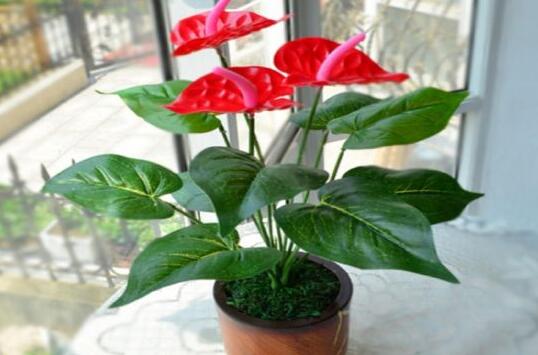
Anthurium is a plant that is relatively sensitive to salt, so it has fairly high requirements for water quality. So how should anthurium be watered? Let us look in detail at several aspects, including choosing the water quality, how often to water, and when to water.
1. What kind of water to use for watering anthurium
1. River water or well water
If conditions allow, you can choose river water or well water, which should be used to water anthurium; it is best to choose water with a pH between 5.2-6.1. If the water is acidic, the flower stems will become shorter, and the anthurium will look unattractive. River water and tap water do not have this problem.
2. Tap water
For most people, the only option is tap water. However, tap water is usually on the acidic side, so how should anthurium be watered then? There is actually a solution. You can let the tap water sit for about 4 days, so the chlorine in it gets filtered out and its pH will not be too low. Then it can be used to water the anthurium.
2. How often to water anthurium
The number of times you water needs to be decided according to the growth stage of the anthurium and the climate conditions. How to water anthurium in each season is described in detail in the four-season care methods for anthurium. Here we will look at how often to water during the seedling stage, the large seedling stage, and the flowering stage.
1. Seedling stage
At this time the root system of the anthurium is not well developed, and it itself is not drought tolerant, so watering should not be too frequent. You can water once every 2-3 days. In principle, just keep the soil moist, in order to promote the growth of new roots, and do not let water accumulate in the pot.
2. Large seedling stage
The large seedling stage is the stage of fastest plant growth, and the water requirements are also relatively high, so the number of waterings is relatively greater. Generally, you should water once every 1-2 days, and the principle is still to water until it is thoroughly soaked.
3. Flowering stage
When the flowering period arrives, how should anthurium be watered? The answer is to reduce the number of waterings, which can become once every 4-5 days, because at this time its water requirements are not high and it absorbs less water than in other stages, so as long as the soil does not become compacted, that is enough.
3. What time is best for watering anthurium
The best time to water anthurium is when the temperature is 15-20 degrees, that is, in the morning or in the evening. You should try to avoid watering at midday when the temperature is higher, and also avoid watering in severely cold times.
How long after repotting anthurium should you water
Repotting anthurium is something that should be done every year, so how long after repotting should you water? Generally, when repotting you should water thoroughly, and then water according to the principle of keeping the soil moist without water accumulating.
How to water anthurium and what to do when anthurium leaves turn yellow
Because the anthurium's flower shape is unique and its flower colors are gorgeous, more and more flower lovers are starting to grow anthurium. But during the growing process, you will definitely encounter the phenomenon of anthurium leaves turning yellow. What should you do? Below, we will explain the causes of anthurium leaves turning yellow and the solutions, as well as the method for watering anthurium.
How to water anthurium
To grow anthurium well, watering is something you must pay attention to. Improper watering can easily cause the anthurium to wither or its roots to rot, affecting the normal growth of the anthurium, and in severe cases it can even cause the death of the plant.
Water quality selection:
Anthurium is a flower variety that is relatively sensitive to salt. Therefore, you should try to keep the pH of the substrate between 5.2-6.1, as this water quality is most suitable for anthurium growth. If the pH is too low, the flower stems become shorter, which reduces its ornamental value. Tap water is suitable for planting anthurium, but it is expensive; natural rainwater is the best water source for anthurium cultivation.
Watering requirements:
Potted anthurium has different water requirements at different growth and development stages. During the seedling stage, because the plant's root system is weak and its distribution in the substrate is relatively shallow, it is not drought tolerant. After planting, you should spray water 2-3 times a day to keep the substrate moist at all times, prompting it to send out new roots early and in greater numbers, and pay attention to the dryness and moisture of the substrate on the pot surface. During the medium and large seedling stages, the plant grows quickly and needs more water, so the water supply must be sufficient; during the flowering stage, watering should be appropriately reduced and phosphorus and potassium fertilizers should be increased to promote flowering.
Water temperature control:
The water temperature for watering anthurium should be kept at around 15°C (including the nutrient solution used for watering), which is especially important in severe cold and extreme heat. The moisture in the medium should not be too wet, because the roots of anthurium are semi-succulent and store a large amount of water themselves. Too much water in the medium causes a lack of oxygen in the medium, hindering root respiration, and being in an overly wet state for a long time will cause root rot.
What to do when anthurium leaves turn yellow
1. Light
Anthurium is a tropical flower that likes high temperatures and fears the cold, likes shade and avoids sun exposure, and likes moisture and avoids drought. Usually, be careful not to expose it to the sun, and do not place it in an environment with strong direct sunlight, but it also must not be placed indoors in dim light for a long time. It should be placed in a bright spot with scattered light. When the light is relatively strong or too weak, leaf yellowing and withering can also occur.
2. Watering
Anthurium likes a moist environment, but it is not tolerant of waterlogging. If you water too frequently, the anthurium's roots will have difficulty breathing and nutrients will be insufficient, causing the leaves to turn yellow. Water and fertilizer management should be appropriate. Anthurium is a flower variety that is relatively sensitive to salt, and the less salt the water contains the better. Natural rainwater is the best water source for anthurium cultivation. Water again only after it has dried out, and water thoroughly. I do not know how long you have had your anthurium; the yellowing of the leaves may be because you watered too frequently and watered again before it had dried out.
3. Fertilizing
Fertilizing must not be too concentrated either. You should use fully water-soluble fertilizer to water the potting soil, and you cannot apply ordinary chemical fertilizers, because anthurium cannot absorb them and fertilizer damage will occur. If you fertilize anthurium too much, it will cause the soil pH to change, and anthurium is relatively sensitive to this and is prone to showing symptoms of discomfort. This causes the leaves to turn yellow.
Anthurium is a flower variety that is relatively sensitive to salt. Therefore, you should try to keep the pH of the substrate between 5.2-6.1, which is most suitable for anthurium growth. If the pH is too low, the flower stems become shorter, which reduces its ornamental value. In addition, anthurium needs fertilizing about every two months, and a lack of fertilizer can also cause the leaves to turn yellow. When fertilizing, it is best to use fertilizer specially for anthurium; when you buy anthurium, reputable manufacturers will include fertilizer. The growing temperature for anthurium must not be lower than 15°C, otherwise the leaves and flower stems easily turn black.
4. Pests and diseases
For diseases such as yellow spot disease and leaf blight, you can use carbendazim wettable powder at 800 times dilution for a whole-plant spray; among pests there are red spider mites and scale insects, which can be controlled with specific insecticides, or you can wipe them off with a cloth and rinse clean with water.
Leaf blight nematode disease is caused by infection by nematodes of the genus Aphelenchoides, mainly infecting the roots and leaves. The symptoms are necrotic spots or brown spots forming along the leaf veins, the roots swelling, and finally the entire leaf drying up. The main measures are strengthening seedling quarantine, selecting robust seedlings, and doing a good job of disinfecting the growing substrate.
The above are some answers on how to water anthurium and what to do when anthurium leaves turn yellow. I hope they can help everyone. For more home knowledge, please stay tuned.
How often to water anthurium and precautions for repotting anthurium
For plants grown at home such as anthurium, water is a very crucial part, because plants grown at home can rarely absorb the water and nutrients they need through natural phenomena in the natural environment, so watering at the right time to create a simulated natural environment is very meaningful.
How often to water anthurium
Anthurium cannot be watered too much; too much easily causes root rot, and once the roots rot it dies. Water once every 3-4 days, and each time you water, it is enough to see water droplets dripping from the bottom of the flower pot.
Precautions for repotting anthurium
1. Preparing pots and choosing soil for anthurium
First prepare the pots to be used for repotting. The editor wanted to plant the two separately, so two small pots were prepared. Fill the flower pots with soil, choosing soil rich in humus. Soak the soil in water and use a sieve to scoop out the finer part. This kind of soil has better drainage.
2. Removing anthurium from the pot
Take the plant out of the pot, remove excess soil from the roots, and prune the roots, clearing away the old roots and rotten parts of the plant. Place the plant in a cool place to dry, and if conditions allow, use a disinfectant to disinfect it.
3. Potting the anthurium
The editor has an exclusive trick to let the repotted anthurium grow robustly. Prepare two transparent plastic bottles and punch several holes in the bottle bodies. Then invert the bottles into the potting soil, placing them in the middle or to the left, as long as they do not obstruct the plant. This is a very good drainage cover that can drain away accumulated water in the pot. Once the drainage cover is ready, you can put the plant into the pot and add soil. Done.
After repotting, first place the plant in a cool place to recover, and once the plant has adapted to the new pot, return to normal care. Be careful not to water too much.
Propagation methods for anthurium
1. Division propagation of anthurium
Anthurium has a strong tillering ability. When dividing, separate the small and medium side shoots on the plant from the mother plant, and plant the side shoots and slowly cultivate them into new plants. The specific method is as follows:
1. Determine the time
The division period is mainly in the cool, high-humidity spring, and division can also be done in cool autumn weather. By all means do not divide in the hot summer or in the dry, cold season.
2. Select side shoots
When selecting side shoots, you must follow the principle of not harming the mother plant. Do not separate side shoots that are too large, do not separate side shoots that are too close together, and do not separate side shoots that are too weak and small. Mainly separate side shoots that are relatively easy to separate from the mother plant and are relatively robust, with at least 2 or more main roots.
3. Disinfecting divisions
There are two ways to divide: you can break them apart by hand or cut them off with a blade. After dividing, disinfect the small plants.
4. Temporary planting to root
After cutting off the side shoots, wait until the wounds are slightly dry, then temporarily plant them in a cool place to promote rooting and restore growth. After rooting, they can be planted. When planting, the root system must be spread flat and the plant upright, with support if necessary. After planting, do not water immediately; you can spray water on the leaves to maintain humidity, and after 2 days you can water or apply a dilute fertilizer solution as conditions require.
2. Seed propagation of anthurium
Sowing is the main way to obtain new varieties. The fruit of anthurium is a berry type, and it must be sown as soon as it is harvested.
1. Seed treatment
For freshly picked fruit, remove the peel and wash off the flesh, to avoid the flesh rotting and affecting seed germination. Of course, if the seeds are bought from a flower shop, this step can be omitted.
2. Germination
Use the germination method for planting: sow the seeds individually in clean river sand at a depth of 0.5~0.8 cm, ensure a certain soil humidity, and they will germinate in about 15 days, with new leaves also growing quickly.
3. Transplanting
When the seedlings have grown 5~6 leaves, they can be transplanted into pots, using perlite and peat soil mixed at a 1:2 ratio.
Pruning methods for anthurium
1. During the plant's growth process, if you find that its leaf stalks begin to degenerate step by step, or the leaves show signs of drying out, you can cut them off in time.
2. After it has finished flowering, if you find that the flower stalk has turned yellow, then it should also be pruned as soon as possible. Specifically, just cut starting from about two centimeters from the base.
3. In addition, before winter, you need to cut off aging branches, branches with pests or diseases, and yellowed, weak branches. This kind of appropriate pruning will make next year's growth better.
4. Also, in order to make its overall shape cleaner and neater, we can also do this according to the specific situation. For example, cut off branches that are too crooked as well as creeping branches.
In addition to supplying appropriate water, growing anthurium also requires mastering some important growth steps such as repotting, propagation, and pruning, so that the anthurium in our homes can become more vigorous and full of life. So, friends who grow anthurium should learn more!