Witnessing the pollution scene! Large numbers of dragonfly nymphs and stream fish die downstream of the factory; the alliance calls on TSMC to keep its partners in line
Hsinchu industry drinks good water, but the people of Hsinchu drink wastewater? Hsinchu is a major county for the tech industry, but behind the glamorous technology hides a crisis of polluted rivers. Many tech factories set up operations in drinking water protection zones outside the science park, discharging wastewater directly into streams that flows into residential drinking water and even causes the death of aquatic life. In response, the "We Want to Drink Clean Water Action Alliance" (hereinafter referred to as the alliance) held a press conference today (the 9th) in front of the Hsinchu County Government, demanding that the government and Hsinchu's tech industry face this problem together and give citizens back their most basic right.
The alliance further demanded that the Hsinchu County Government respond to issues such as factories being set up at river sources, control of industrial water and wastewater treatment, and the reasonable allocation of groundwater resources. It also named major tech companies such as TSMC and United Microelectronics Corporation, urging them to face the fact that partner manufacturers discharge wastewater at river sources and to fulfill their corporate responsibilities.
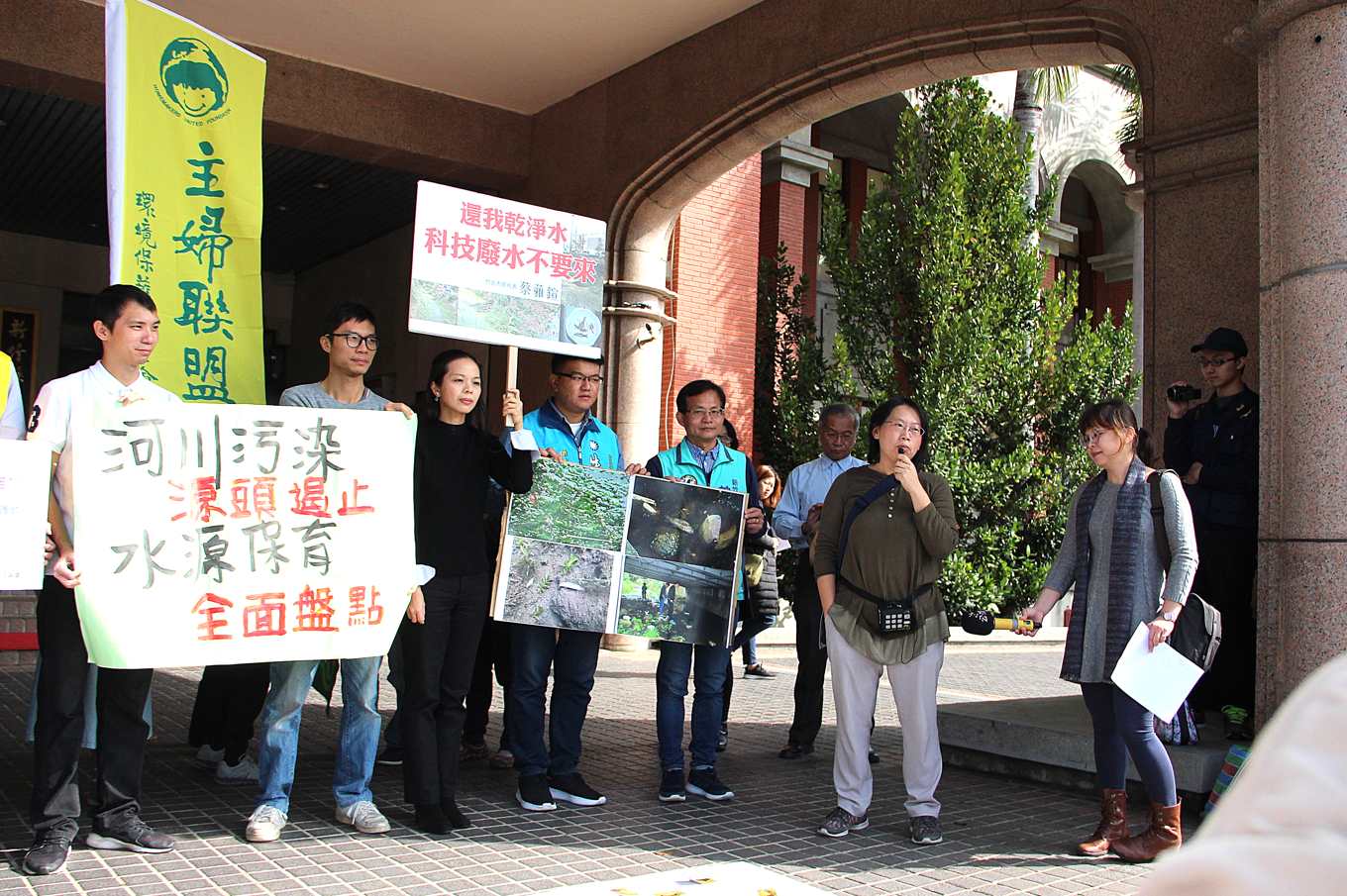
Factories extract large amounts of groundwater; one factory uses as much water as 5,816 Hsinchu residents
In addition, the situation of factories extracting large amounts of groundwater for use is also quite serious. Peng stated that industrial zones such as the Qionglin Wuhua Industrial Zone, the Yanhe Street area in Zhudong Township, and the Erchongpu area lack industrial wastewater treatment equipment and even extract large amounts of groundwater for industrial use. Citing TSMC affiliate VisEra Technologies, which is suspected of discharging industrial wastewater on January 2, Peng said the factory does not use tap water but instead extracts groundwater for use. Working backward from the volume of discharged wastewater, the estimated monthly discharge is 42,750 tons, equivalent to the monthly water use of 5,816 Hsinchu County residents, with water fees reaching at least 540,000. This not only causes local pollution, but its impact on Hsinchu's overall water resources should not be underestimated.
Calls on major companies such as TSMC to urge partner manufacturers to obey the law; VisEra Technologies: We act in accordance with the law
Peng stated that Hsinchu is the base of the science industry, but many factories are located in tap water quality and quantity protection zones, raising not only soil and water conservation concerns but also discharging large amounts of wastewater into streams, endangering residents' drinking water and agricultural irrigation water. She also called on major tech companies such as TSMC and United Microelectronics Corporation, hoping that companies inside the park must also fulfill their corporate responsibilities and urge upstream and downstream partner manufacturers outside the park to implement responsible technology, so that a few bad apples do not ruin the efforts and reputation jointly built by the industry.
Regarding the suspected wastewater discharge incident, VisEra Technologies spokesperson Liu Kuei-chu responded, "The company does everything in accordance with the law." Lin Hsing-chih, section chief of the Hsinchu County Government's River Pollution Prevention Section, said that samples have been collected and sent for testing, and everything awaits the results. Peng smiled bitterly and said, "I guess the results will probably not be obvious." Because the incident occurred around 2 p.m. and the Environmental Protection Bureau arrived around 3 p.m., during which time the factory had probably already diluted it with clean water, "the water sampled was already this diluted portion." She also suggested that future sampling should not judge solely on a single water quality item, and that the degree of impact on the ecosystem should also be included in the standards.