-

What kind of ecological environment does Codonopsis pilosula need to grow?
One-year-old Codonopsis pilosula seedlings are trailing and rarely flower. Plants more than two years old are twining and generally flower. During the growing period, it has strong adaptability to the environment. Wild Codonopsis pilosula is distributed vertically at altitudes of 1400-2100 m, growing in zones with half shade and half sun or on shady slopes, with a slope of about 15°-20°. Codonopsis pilosula is a deep-rooted plant, suitable for growing in deep, loose, well-drained sandy loam rich in humus. The soil pH should preferably be neutral or slightly acidic, generally with a pH value between 5.5 and 7.5. Codon
-
What kind of environmental conditions does Codonopsis pilosula cultivation require?
Codonopsis pilosula is also known as three-leaf vegetable, single leaf, and stinking codonopsis. It is a perennial climbing herbaceous plant of the Campanulaceae family. Codonopsis pilosula is a commonly used traditional Chinese medicine, originally from Shangdang, Shanxi; its root resembles ginseng, hence the name codonopsis. The root is used medicinally and has the functions of tonifying qi and nourishing blood, harmonizing the spleen and stomach, promoting fluid production and clearing the lungs. There are many varieties of codonopsis medicinal material, such as Western codonopsis, mainly produced in Gansu, Shanxi, Sichuan and other provinces; Eastern codonopsis, mainly produced in the northeastern provinces; Lu codonopsis, mainly produced in Shanxi, Henan and other provinces. The Tai codonopsis among the Western codonopsis is especially the best in quality. Codonopsis is a deep-rooted plant that prefers a cool and moist climate.
-
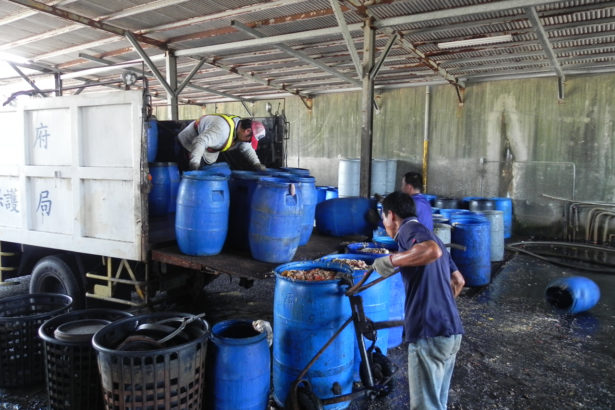
Rushed Food Waste Ban: EPA Protests as Swine Fever Chaos Hits Home Before the Disease Does
The Battle Over Epidemic Prevention and Food Waste 04"Rushed Food Waste Ban: EPA Up in Arms, Saying "Swine Fever Hasn't Even Arrived, and the Country Is Already in Chaos"
-
Why does jasmine only grow leaves and not bloom?
The main reasons for jasmine producing few flowers are as follows: 1. Insufficient light. Jasmine is a sun-loving, light-demanding plant, and its growth and development require ample light. If light is insufficient, photosynthesis is inadequate, organic matter accumulates little, branches and leaves grow leggy, leaves are thin and large, few flowers form, the fragrance is faint, and it may even fail to bloom or drop buds
-

What environmental conditions does gardenia need to grow
Environmental requirements for gardenia growth
-

What propagation methods does licorice have? A detailed explanation of common methods
What propagation methods does licorice have
-
What to do if a sow does not come into heat? Massage can promote estrus in sows
To make sows breed on schedule, manual massage can be used to promote estrus. After scratching makes the sow calm and lying down, the massage can be carried out. 1. First, gently press the sow's neck with the left hand, pinch the base of a teat with the middle and index fingers of the right hand, and press and knead the teat with the thumb 20 times in each direction, clockwise and counterclockwise, until the entire udder of the sow has been massaged once. 2. In the armpits on both sides of the front and hind legs, press and knead with the right thumb 30 times in each direction, clockwise and counterclockwise. After 5 minutes, hold the sow's body with the left hand, applying force lightly at first and then more heavily, for 3 minutes.
-
What pharmacological effects does goji berry have? A detailed explanation in one article
Goji berry is a deciduous shrub, with a tree height of 1.5 m-2 m and a growth period of 35-50 years. It bears small eggplant-red or pale red flowers and produces bright red fruits the size of jujube pits. It is a rare and precious traditional Chinese medicinal herb and a fine tonic, with effects of tonifying, treating deficiency, anti-aging, protecting the liver, and promoting and regulating immune function. As a medicinal material, goji berry has a long history in China. In addition to the records in the Book of Songs, Su Dongpo of the Song Dynasty wrote in the poem "Xiaopu Goji": "Roots, stems, flowers, and fruits, nothing is discarded when gathered,"
-
What Does Green Fisheries Mean? Understanding the Concept and Connotations in One Article
Green fisheries encompasses three aspects of meaning. First, the coordination and consistency between fisheries production and the aquaculture environment, which is conducive to both fisheries development and a virtuous cycle of the ecological environment; second, fisheries inputs are safe and effective, with high input-output efficiency of materials and energy and little waste, and toxic and harmful substances below the standards legally stipulated by the state; third, fisheries outputs can meet the standards and requirements of human food consumption in terms of quantity and quality. Green fisheries is an extension of modern fisheries. In the overall development plan and structural adjustment of fisheries production, it highlights the concept of ecology, endowing
-
What jujube resources does Beijing have? A detailed guide
Fresh-eating jujubes The jujubes planted in Beijing's urban districts are mainly early- and mid-maturing fresh-eating varieties, such as Langjiayuan jujube, Jidan jujube, Gaga jujube, Mayabai jujube, Hongcunbai jujube, Changxindianbai jujube and others. They ripen around the Mid-Autumn Festival on the 15th day of the 8th lunar month (mid-September on the solar calendar). Old Beijingers call this "beating big jujubes on August 15." Langjiayuan jujube is a native and famous product of Beijing and one of the most suitable famous jujube varieties for fresh eating. Its fruit shape is well-proportioned and attractive, its juice is sweet, its flesh is crisp, and its stone is small. When fully ripe it turns entirely red. In the Qing Dynasty it was a tribute to the imperial palace. Its economic value
条件筛选