-
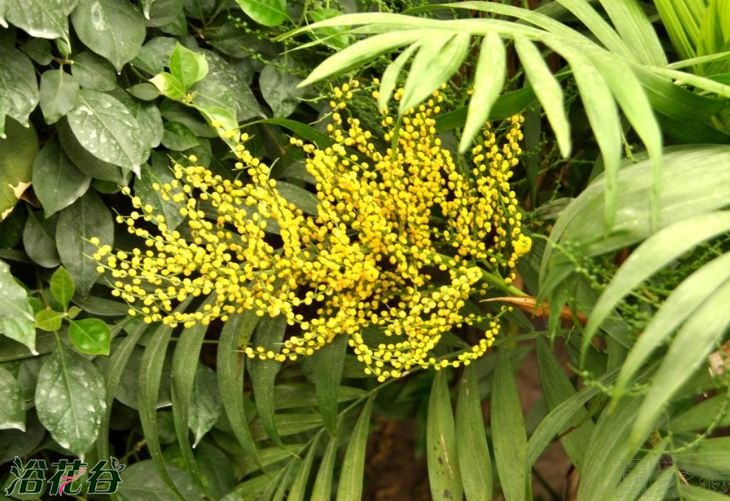
Does the parlor palm bloom? Flowering conditions and care methods
The parlor palm (Chamaedorea elegans) is an evergreen small shrub, and its potted height generally does not exceed 1 m. Its stems are upright, unbranched, dark green, with irregular markings on them. The leaves generally grow at the top of the stems, are pinnately divided, with lanceolate leaflets, alternate, dark green, and glossy. The parlor palm is cultivated as a foliage plant, but it does bloom
-

What kind of growing environment does pothos like?
Pothos is a shade-loving plant that dislikes direct sunlight and prefers shade. When grown indoors, it can be placed beside a window, but direct sunlight must be avoided. Too much sun will scorch the leaves of pothos, while too much shade will cause the beautiful variegation on the leaves to disappear. Generally, pothos grows and develops best when it receives four hours of diffused light.
-
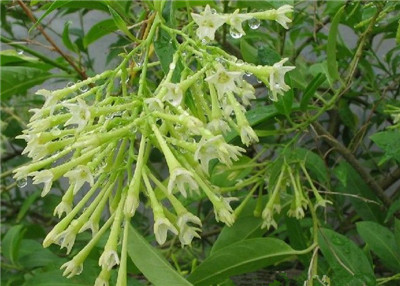
What does the night-blooming cestrum look like? A detailed introduction to its appearance and characteristics
The night-blooming cestrum (Cestrum nocturnum) has slender, weak branchlets that are hairy and contain milky sap. The leaves are opposite; the blades are broadly ovate, heart-shaped to oblong-ovate, 4-9.5 cm long and 3-8 cm wide, with a short acuminate apex and a deeply heart-shaped base, entire margins, 7-9 palmate veins arising from the base, and hairs on the margins and veins. The umbel-like cymes are axillary
-

Why does a potted kumquat only bloom but not bear fruit?
When a potted kumquat only blooms but does not bear fruit, or sets fruit that drops early, the cause, besides changes in conditions such as environment, water and light, lies mainly in insufficient fertilizer, especially insufficient phosphorus during the fruit-retention period after fruit set. For home potted kumquats, fertilizing can be done as follows: after Qingming, use nitrogen and phosphorus fertilizer combined with fermented, fully rotted concentrated organic fertilizer as a base fertilizer
-
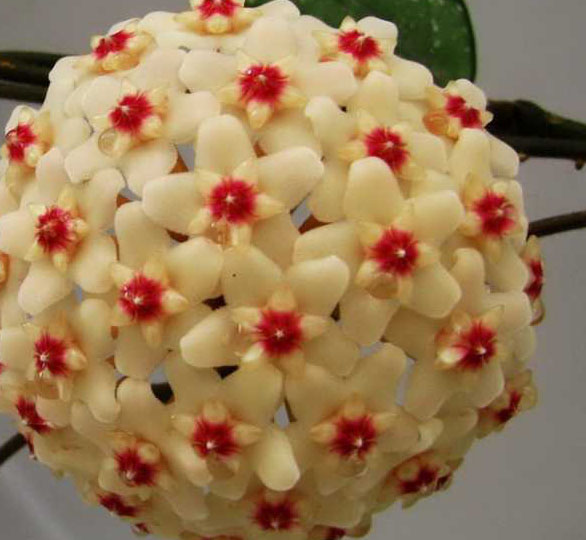
What are the reasons why a wax plant (Hoya) does not bloom?
For a potted wax plant, in spring and autumn it is best placed on an outdoor south-facing windowsill or near a south-facing window indoors, which keeps the leaves emerald green and glossy and produces good blooms. In summer it needs to be moved to a shaded spot to prevent direct strong sunlight, otherwise the leaves easily turn yellow. If it is kept in a place with insufficient light for a long time, the leaf color becomes pale and the flowers are few and not vivid.
-

What kind of growing environment does the Watermelon Peperomia prefer?
Watermelon Peperomia, also known as round-leaf peperomia, is a perennial evergreen herbaceous plant of the Piperaceae family. The leaves are clustered, ovate, with reddish-brown petioles and pale green leaf surfaces. The veins radiate from the center outward, with 8 dark green main veins, and distinct silver-gray bands between the veins, closely resembling watermelon rind.
-
How Long Does It Take for a Pregnant Dog to Give Birth to Puppies? A Detailed Explanation of the Gestation Period
There are many methods for diagnosing pregnancy in female dogs. The more commonly used ones at present include external observation, palpation examination, ultrasound detection, hematological examination, and urine examination. External examination method: about 1 week after mating, the female dog's vulva begins to contract and become soft and shrunken, a small amount of dark brown fluid discharge can be seen, and appetite is poor. At 2-3 weeks of pregnancy, the mammary glands begin to gradually enlarge, appetite increases greatly, the coat becomes glossy, the temperament becomes gentle, movement slows down, and she becomes calm and careful. A small number of female dogs around 25 days of pregnancy
-
Detailed Explanation of the Mud Carp's Diet: What Food Does It Like to Eat
The mud carp is an omnivorous fish. Four days after the fry hatch, they begin feeding on zooplankton such as rotifers, copepods and small cladocerans. Ten days after hatching, when the body length exceeds 14 cm, they begin to take phytoplankton in addition to zooplankton. Thereafter, they eat more and more phytoplankton, until about 40 days after hatching, when the body length exceeds 4 cm, phytoplankton becomes their main food. At the same time, the mud carp likes to graze on algae growing on the surface of the mud or rocks at the bottom of the water. In addition, the mud carp also swallows a small amount of zooplankton and organic debris.
-
How does the 'Dinosaur Egg' plumcot perform when introduced in Tianshui, Gansu?
We introduced the new plumcot cultivar 'Dinosaur Egg' from the Economic Forestry Research and Development Center of the Chinese Academy of Forestry, planted the seedlings in the trial orchard in March of that year, they fruited the following year, and entered full bearing in the 4th year, with high economic returns. The introduction performance and key cultivation techniques are described below. (1) Introduction performance ① Fruit economic traits The fruit is nearly round, with a longitudinal diameter of 5.5-6.3cm, a transverse diameter of 5.6-6.6cm, an average single fruit weight of 120.0g, and a maximum single fruit weight of 145.0g. The skin is yellow-red, the flesh is pink, the texture is crisp, the stone clings, coarse fiber is low, juice is abundant, the flavor is sweet and fragrant, and the quality is superior, with a soluble solids content of 17.80%. It is tolerant of storage and transport and can be stored for 20 days at room temperature.
-
What to do if the second flush of mushrooms does not appear? Causes and solutions
Normally, after the first flush of mushrooms is harvested, the second flush will begin to appear in about 10 days. In some cases, no mushrooms appear for a long time. The main reasons are, first, a high yield in the first flush and too long a growing period, causing a serious shortage of water content in the growing medium; second, temperature that is too low or too high, affecting the timing and yield of the next flush. The solution is to soak the growing medium bags in clean water for 1-2 hours, adding to the water 1% white sugar, 0.3% potassium dihydrogen phosphate, 0.5%-1% magnesium sulfate, 0.1% urea, and 0.1% zinc sulfate
条件筛选