-
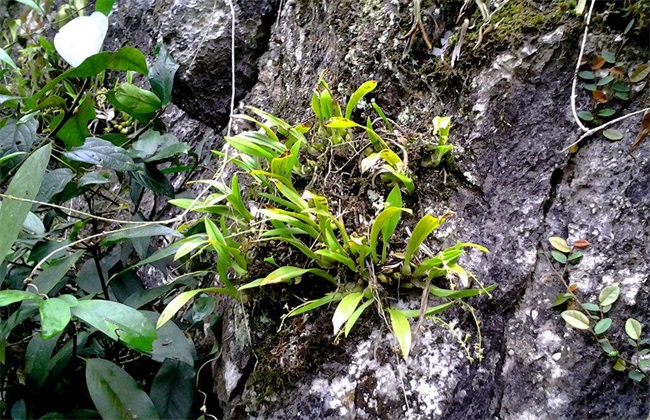
In what kind of environment does wild Dendrobium officinale grow?
The growing environment of wild Dendrobium officinale
-
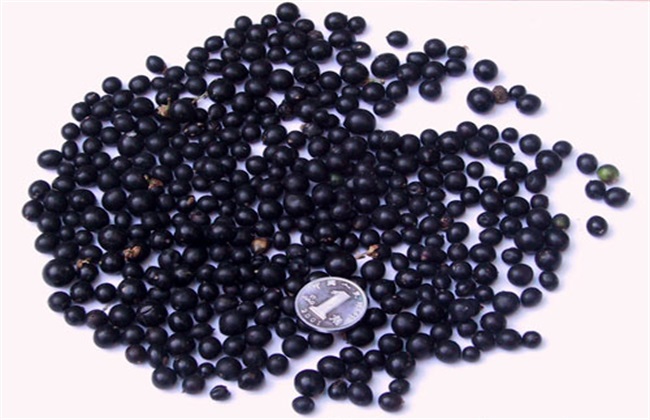
How much does Ophiopogon japonicus seed cost per jin? A detailed look at the market
How much does Ophiopogon japonicus seed cost per jin
-

How does Atractylodes lancea reproduce? A detailed explanation of common propagation methods
Propagation methods of Atractylodes lancea
-

-

What does Common Selfheal look like? Planting methods and timing, is the fresh plant toxic?
How should Common Selfheal be planted?
-
What does Polygonatum look like? A detailed introduction to the morphological characteristics of Polygonatum
Polygonatum is a perennial herb. The rhizome is horizontal, fleshy, and pale yellow, sometimes with a protruding tip resembling a chicken's head. The stem is erect, 50-90 cm tall. The leaves are whorled, 4-6 per whorl, linear-lanceolate, 8-15 cm long and 04-1.6 cm wide, with curled tips. The flowers are axillary, usually in 2-4 small flowers, drooping, with the peduncle 1-2 cm long; the perianth is tubular, white to pale yellow, 0.9-1.2 cm long, with 6 shallow lobes at the tip, 6 stamens, the filaments relatively short, 0.5-1 mm long, and the style length
-
What effect does high summer temperature have on Gastrodia elata?
In low-altitude hilly areas, under high temperatures of 32-34°C, lasting 10 days (240 hours) has little effect on Gastrodia elata and can still produce arrow tubers, while when the high temperature lasts 15 days (360 hours), the yield of Gastrodia elata will be affected. Therefore, the baseline of Gastrodia elata's tolerance to high temperature is relatively high. Summering of Gastrodia elata is not only related to the value of the absolute high temperature, but depends even more on the duration of the high temperature. Because under outdoor natural conditions there are monthly temperature differences and daily differences from day-night changes, and in addition artificial cultivation adopts shading and other regulating measures
-
What other names does the Chinese herbal medicine Banxia have? A list of common names
[Aliases] Diwen, Dixing, Shuiyu, Shoutian, Shigu, Yangyan Banxia, Hegu, Xiezi Cao, Yanzai Wei, Dizhu Banxia, Mayu Guo, Mayu Guo, Sanbu Tiao, Sanye Lao, Sanye Banxia, Fanshizi, Di Zhegu, Di Cigu, Lao Huangzui, Lao Heshang Tou, Ye Yutou, Lao Guatou, Lao Guayan, Lao Yayan, Zhuozui Douzi, Di Badou, Wuxin Cai Gen, Tianluo Xing, Mayu Zi, Mayu Gen, Dilei Gong, Lao Guasuan, Gou Yutou, Zhu Banxia, Liedao Cai, Macao Zi, Yao Gou Dan. [Trade name] Banxia. Those that are large, round in shape, white in color, clean-skinned
-
What temperature requirements does Gastrodia elata have for cultivation?
Temperature is an important factor affecting the growth and development of Gastrodia elata, and besides the influence of seasons, temperature is also affected by latitude and altitude. Generally speaking, for every 10° increase in latitude, the average temperature drops by 0.5°C, and for every 1000 m increase in altitude, the climate drops by about 6.5°C. Therefore, wild Gastrodia elata mostly grows in mountainous areas and has an ecological preference for cool, humid conditions. During artificial cultivation, we found that: when the temperature of the planting layer rises above 10°C, the terminal buds of Gastrodia elata begin to sprout and start to grow; when the temperature rises above 20°C, it grows rapid
-
What kind of environmental conditions does Gastrodia elata need to grow?
I. The effect of temperature on the growth of Gastrodia elata. Temperature is the main factor affecting the growth of Gastrodia elata. Gastrodia elata prefers to grow in an environment that is relatively cool in summer and not too severely cold in winter. The longer the period of suitable temperature for its growth, the more favorable it is for the growth of Gastrodia elata. (1) The effect of temperature on the asexual reproduction of Gastrodia elata. The underground tubers of Gastrodia elata begin to grow when the ground temperature is around 14°C, grow faster at 20-25°C, and are inhibited at 30°C. Within one year, the total accumulated temperature over the entire growing season is about 3800°C. At an altitude of 1000
条件筛选