-
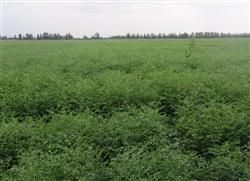
What Does Licorice Look Like? A Detailed Guide to Its Morphological Characteristics and Suitable Growing Environment
[Morphological Characteristics]Licorice (Glycyrrhiza) is a perennial herb, 30-100 cm tall. The entire plant is covered with short white pubescence and glandular hairs. The above-ground stem is upright, woody at the lower part, and the branchlets are angular and green. The leaves are alternate and odd-pinnately compound. There are 3-8 pairs of leaflets, ovate or ovate-elliptic, with entire margins, and the terminal leaflet is larger. The raceme...
-

-

How much does a Luo Han Guo seedling cost per plant? With planting methods
Luo Han Guo seedling prices and planting methods
-

Where does Anoectochilus roxburghii grow? Distribution and environment explained in detail
Where does Anoectochilus roxburghii grow?
-

How much does a star anise sapling cost? Detailed planting method
Star anise sapling prices and planting methods
-

Does millennial ginseng really exist? Uncovering the growth years of ginseng
Does millennial ginseng really exist?
-

-

-

What kind of ecological environment does Codonopsis pilosula need to grow?
One-year-old Codonopsis pilosula seedlings are trailing and rarely flower. Plants more than two years old are twining and generally flower. During the growing period, it has strong adaptability to the environment. Wild Codonopsis pilosula is distributed vertically at altitudes of 1400-2100 m, growing in zones with half shade and half sun or on shady slopes, with a slope of about 15°-20°. Codonopsis pilosula is a deep-rooted plant, suitable for growing in deep, loose, well-drained sandy loam rich in humus. The soil pH should preferably be neutral or slightly acidic, generally with a pH value between 5.5 and 7.5. Codon
-
What kind of environmental conditions does Codonopsis pilosula cultivation require?
Codonopsis pilosula is also known as three-leaf vegetable, single leaf, and stinking codonopsis. It is a perennial climbing herbaceous plant of the Campanulaceae family. Codonopsis pilosula is a commonly used traditional Chinese medicine, originally from Shangdang, Shanxi; its root resembles ginseng, hence the name codonopsis. The root is used medicinally and has the functions of tonifying qi and nourishing blood, harmonizing the spleen and stomach, promoting fluid production and clearing the lungs. There are many varieties of codonopsis medicinal material, such as Western codonopsis, mainly produced in Gansu, Shanxi, Sichuan and other provinces; Eastern codonopsis, mainly produced in the northeastern provinces; Lu codonopsis, mainly produced in Shanxi, Henan and other provinces. The Tai codonopsis among the Western codonopsis is especially the best in quality. Codonopsis is a deep-rooted plant that prefers a cool and moist climate.
条件筛选