-

Which regions are banana-growing areas mainly distributed in?
The distribution of banana-growing areas
-

In which regions are Korean pine (Pinus koraiensis) tree species mainly distributed?
The distribution area of the Korean pine (Pinus koraiensis) tree species is: Korean pine is produced in the mountainous areas of Heilongjiang, Jilin and Liaoning in China at altitudes of 300 to 1800 m. Its natural distribution roughly coincides with the range extending from the Changbai Mountains and the Greater Khingan Mountains. It has been introduced and cultivated in Beijing and in such places in Shandong as Mount Tai, Mount Lao and Mount Kunlun. Korean pine has a fairly wide tolerance for light conditions, and as the tree age increases, its light requirement gradually rises. It most prefers deep, fertile mountain dark brown forest soil with good permeability. Korean pine is a shallow-rooted tree species, its taproot is not well developed, and its lateral roots spread very widely horizontally, which helps it absorb soil nutrients.
-
What are the local aliases of the red banded snake, and where is it mainly distributed?
The red banded snake is also known as red snake, mulberry root snake, red flower snake, red long worm, fire red lotus, red four seasons eight joints, blood third watch, chain snake, red spotted snake, red flower seed, dry land fire chain, red hundred joints snake, soy sauce spot, etc. It is a rear-fanged venomous snake, and its venom contains a mixed toxin mainly composed of hemotoxic venom. Because its fangs are not well developed and not exposed, symptoms after a bite are relatively mild, and so far there have been no specific reports of human casualties. During the 9 years my snake farm has kept this snake, although several people were bitten, there has never been any case of injury. The red banded snake has a relatively wide distribution,
-
How are potato roots distributed? Understand it in one article
The roots of potatoes grown from tubers are fibrous roots, with no taproot; potatoes grown from seed have a primary root and lateral roots, and here we mainly discuss the fibrous root system. Potatoes are a shallow-rooted crop, with most of the root system distributed within 40 cm below the soil surface, generally not exceeding 70 cm, and in sandy soil the roots can reach more than 1 m deep. The root system of early-maturing varieties is generally less developed than that of late-maturing varieties, and early-maturing varieties have a shallower root distribution, while late-maturing varieties have a wide and deep distribution.
-
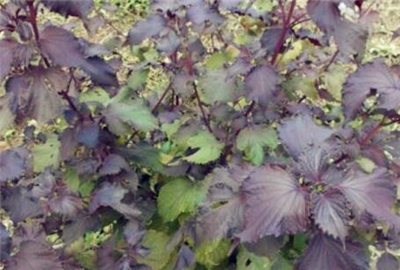
How much is wild perilla per jin, how is it grown, and where is it mainly distributed?
Wild perilla is produced in China's Shanxi, Hebei, Hunan, Hubei, Jiangxi, Zhejiang, Jiangsu, Fujian, Taiwan, Guangdong, Guangxi, Yunnan, Guizhou and Sichuan, among other places, and can be used for both medicine and food. So how much is wild perilla per jin? How is it grown? Where is it mainly distributed? Perilla price: it is understood that
-
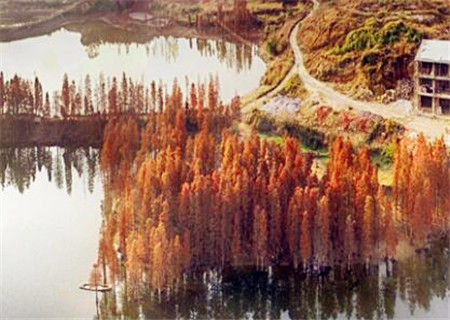
Where is the dawn redwood mainly distributed? A detailed explanation of the price for a 30-year-old tree and the planting season
The dawn redwood (Metasequoia glyptostroboides) has strong adaptability, prefers moist conditions and grows fast, and is cultivated in all areas south of Beijing. Its wood is light and soft and can be used for construction, boards, papermaking and so on; its tree form is graceful, making it a garden ornamental tree. So where is the dawn redwood mainly distributed? What is the price of a 30-year-old tree? Which season is best for planting?
-
What plant is Lantana camara? Let us introduce you to this woody plant
Lantana camara, called "cotton-nose flower" by the Hakka people. It is originally mainly distributed in South America and the West Indies, and is an evergreen shrub of the genus Lantana. The usual flowering period is roughly from mid-to-late April to around mid-February of the following year, though due to the influence of climate and temperature, it can be seen flowering almost all year round, so it can be called a constantly blooming plant.
-
What kind of woody plant is the purple-spotted peony? Let's get to know it
The purple-spotted peony (Paeonia rockii) is a plant endemic to China and a precious floral germplasm resource, with its root bark used for medicinal purposes. The purple-spotted peony is distributed on slopes under secondary summer-green broadleaf forests or in shrubland, as well as in rock crevices. It is of certain significance for studying the phylogeny of the genus Paeonia and for breeding new peony cultivars. A nature reserve has been established on Mount Taibai in Shaanxi, and it should
-
What kind of orchid plant is the spider lily?
The leaves and roots of the spider lily have excellent medicinal efficacy, and it is mostly distributed along the coastal areas or sandy lands of South China. Generally, we refer to the Asian spider lily, whose name can mislead people into thinking it is some kind of orchid plant, but this is not the case; the spider lily belongs to the Amaryllidaceae family.
-
What kind of plant is the Phalaenopsis? An introduction to the orchid family plant Phalaenopsis
The Phalaenopsis is native to tropical rainforest regions, and is now widely distributed in Southeast Asian areas such as Thailand, Malaysia and the Philippines, as well as being cultivated in Taiwan China and Central and North America.
条件筛选