-

Are Lycoris radiata and the red spider lily the same flower? Introducing its names and guardian story
When the autumn wind sweeps across the yard and Lycoris radiata sends up slender, long flower stalks, with flame-red flowers blooming at the tops, someone always whispers: is this the legendary red spider lily? In fact, plant names are a lot like our own names - we have nicknames and formal names, and there are many warm connections hidden in them. Lycoris radiata is exactly this
-
Is Lycoris radiata poisonous? When does it bloom, and what is the difference between Lycoris radiata and the red spider lily?
Today I would like to introduce you to a unique and charming flower - Lycoris radiata. First, let me talk about what makes Lycoris radiata so special. Its flower stalk pushes straight up out of the soil, and the flowers bloom all alone, with no leaves to keep them company; this aloof, solitary posture is very eye-catching. The flower shape is like a little umbrella, with slender, curled petals and a rich range of colors, including fiery red,
-
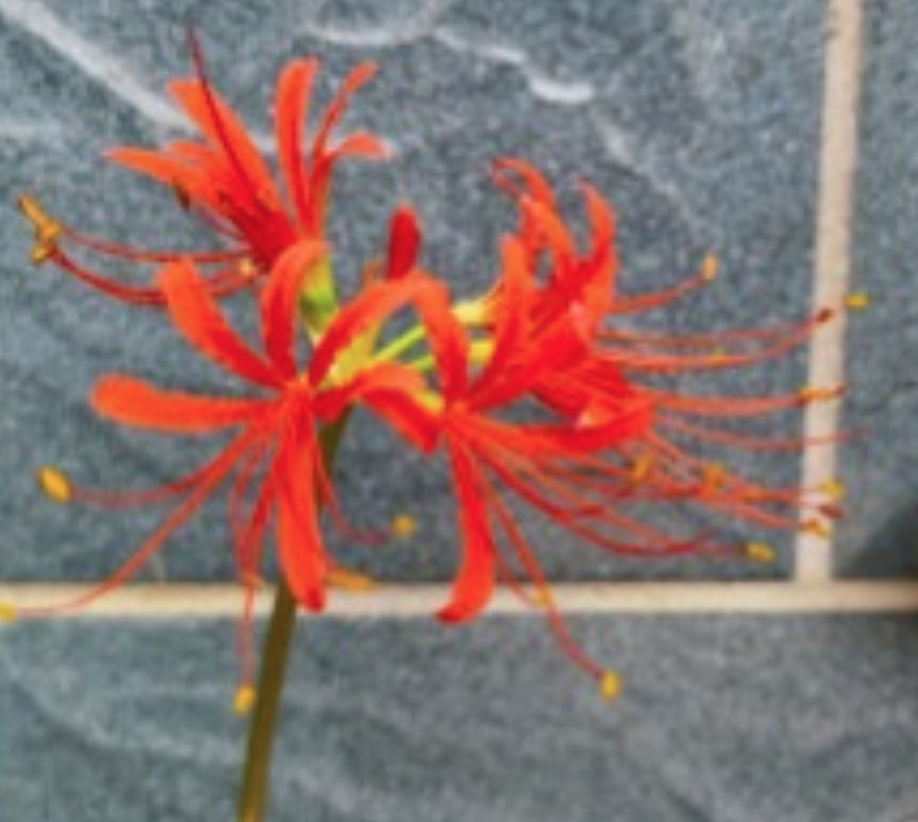
Are the red spider lily and the white spider lily the same kind of flower?
Today, a flower friend left a message asking how to quickly distinguish between the red spider lily and the datura flower. The reason why everyone is easily
-

Morphological differences between the giant spider lily and the spider lily, and a comparison of their care difficulty
It is well known that similar appearances are often due to everyone being related, and the same is true in the world of flowers. Sometimes even two flowers from different genera look astonishingly alike, and even professionals on site may not be able to tell them apart at a glance. What we are talking about here is the giant spider lily and the spider lily. Both of them are perennial
-
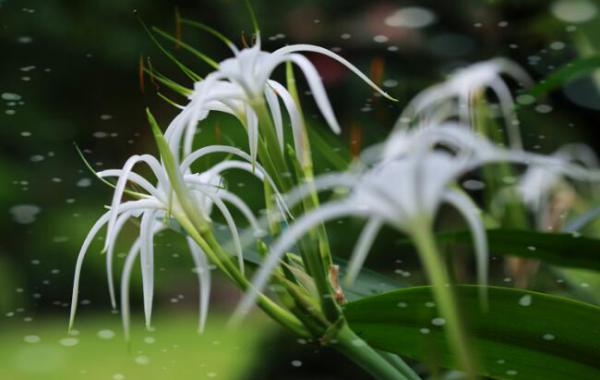
What is the flower language of the spider lily? Let us get to know the spider lily
What is the flower language of the spider lily? An introduction to the spider lily
-

Where can I buy red spider lily seeds? What are the seedling cultivation methods?
Red spider lily is also called Manjusaka and Mandarava. Legend says Mandarava blooms on the road to heaven, while Manjusaka covers the path to hell. One is death, one is rebirth, with only a fine line between hell and heaven. The mysterious legend of the red spider lily makes it popular with many people, so
-
What is the latest meaning of the flower language of the red spider lily?
What is the flower language of the red spider lily? The red spider lily is native to China, Japan and Korea, and is distributed in the middle and lower reaches of the Yangtze River basin and parts of southwest China. Historically, the red spider lily was called Jin Deng, Chi Jian or Wuyi Cao in China, and was first recorded in the Tang Dynasty. The flower language of the red spider lily
-
What are the growth habits of the red spider lily? Latest detailed explanation
The red spider lily is a perennial herbaceous plant of the genus Lycoris in the Amaryllidaceae family, native to the Yangtze River basin in China, and is currently widely distributed throughout East Asia, growing wild on shady, damp hillsides and beside streams and ditches, and is also cultivated in gardens; it has high horticultural value. Below, let us take a look at the red spider lily.
-
How to prevent and control pests and diseases of red spider lily? Latest technical methods tutorial
Red spider lily, also known as red-flowered lycoris, is a type of Lycoris. In winter its leaves are dark green, and in late summer and early autumn the leaves fall and the flowers bloom, bright and vivid, very beautiful, so many people want to grow a pot of red spider lily. Now let the editor talk to everyone about red spider lily pest and disease prevention and control techniques
-
A Detailed Introduction to the Latest Propagation Methods for Red Spider Lily
The red spider lily (Lycoris radiata) is a plant of the Amaryllidaceae family. It prefers shady and moist environments, fears direct strong light, and is best grown in loose, fertile sandy loam. It is widely cultivated around the world and is an excellent perennial herbaceous flower. It can be propagated by methods such as bulb division, sowing, scale-base cutting, and tissue culture, with
条件筛选