-
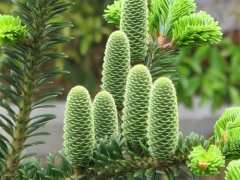
How many Baishanzu fir trees still exist, and where are they distributed? With pictures
The Baishanzu fir is a fir tree species and an endangered species. It is very precious. In its natural distribution area, only five trees remain, but one of them has weakened and one is growing poorly. It is endemic to the area above 1700 m above sea level on the south slope of Baishanzu in southern Zhejiang. Bai
-

Where are the main production areas of Yunnan iron walnuts distributed?
They are mainly distributed in Nujiang, Kunming, Xishuangbanna, Luoping and other places in Yunnan. The fruit's shell is hard and thick, and can be used to make various beautiful and durable handicrafts; in some places, special iron walnuts are also selected for use as playing walnuts. I. Appearance characteristics Yunnan iron waln
-
How Many Years Until a Pear Tree Bears Fruit? A Detailed Explanation of the Fruiting Timeline
Pear trees are widely distributed around the world. In China, the pear cultivation area and output are second only to apples. So do you know how many years it takes for a pear tree to bear fruit? 1. How many years until a pear tree bears fruit? Pear trees generally need five years to bear fruit, while some varieties may need three to four years to bear fruit.
-
How to Grow Perilla Seeds: A Detailed Guide to Planting Methods and Key Techniques
Perilla is mainly distributed in China's Jiangxi, Tieling in Liaoning, Taiwan, China, Hunan and other central-southern regions. Today, the editor wants to introduce to you how to grow perilla seeds. Let's take a look together! 1. How to Grow Perilla Seeds Perilla seeds are small, with a thousand-grain weight of only 3-4g. Sow
-
How do you propagate Peperomia leaves? You'll get it at a glance with these detailed steps
Peperomia is distributed in Taiwan, China, Fujian, Guangdong, Guangxi, Guizhou, Yunnan, Sichuan, southern Gansu and southern Tibet. It grows on damp rocks or dead trees. Today we'll introduce how to propagate Peperomia leaves. 1. Choosing leaves for cuttings Choose leaves
-
How to care for Banksia rose in winter so it survives the cold safely
Banksia rose is distributed in Sichuan and Yunnan in China, growing beside streams, along roadsides or in hillside thickets, and is cultivated throughout the country. If you grow it at home, how does Banksia rose overwinter? 1. How does Banksia rose overwinter? Banksia rose is relatively cold-hardy and can survive low temperatures of minus ten-odd degrees Celsius.
-
How to Grow Lilium speciosum? Cultivation Methods and Key Technical Points
Lilium speciosum is distributed in Anhui, Jiangxi, Zhejiang, Hunan, Guangxi and other provinces and regions. It grows in shady, damp forests and hillside grass at an altitude of 650-900 m. How is Lilium speciosum cultivated artificially? 1. Site selection and land preparation. Lilium speciosum prefers a warm and humid environment, so it is best to choose sandy loam or humus soil on high ground, facing the sun,
-
What kinds of river shrimp are there? Many species and widely distributed
Abstract River shrimp include freshwater shrimp (Macrobrachium nipponense), freshwater crayfish, grass shrimp, giant river prawn (Macrobrachium rosenbergii), Australian lobster, white shrimp, Japanese swamp shrimp, golden shrimp, crayfish, ghost shrimp, swamp shrimp and other species. River shrimp are widely distributed in rivers, lakes, reservoirs and ponds across our country, and are a high-quality
-
Detailed Explanation of Key Techniques for Efficient Rice Paddy River Shrimp Farming
The river shrimp (also known as river shrimp, scientific name Japanese swamp shrimp (Macrobranchium nipponense)) is widely distributed in China's rivers, lakes, reservoirs and ponds, and is a high-quality freshwater shrimp. Its meat is tender, delicious and nutritious; it is a high-protein, low-fat
-
Key Technical Points for High-Yield Mono-Culture of River Shrimp in Ponds
The river shrimp is widely distributed in rivers, lakes, reservoirs and ponds across our country. Also known as the river shrimp, its scientific name is the Japanese swamp shrimp (Macrobranchium nipponense), and it is a high-quality freshwater shrimp. Its flesh is tender, its flavor is delicious, and it is rich in nutrients; it is a high-protein, low-fat
条件筛选