-
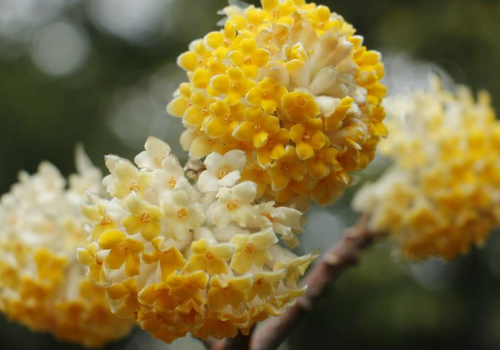
How to Grow Edgeworthia chrysantha and How It Differs from Scindapsus Flower
Many people cannot tell Edgeworthia chrysantha and Scindapsus flower apart, so let's take a look. How do you grow Edgeworthia chrysantha? What is the difference from Scindapsus flower: How to grow Edgeworthia chrysantha: Soil, Edgeworthia chrysantha likes fertile soil, requires good soil drainage, loose soil texture, sandy soil is best, and it dislikes saline-alkaline soil
-
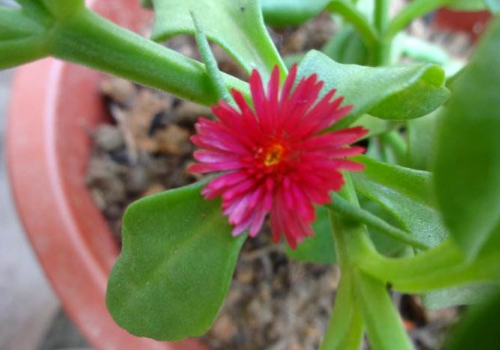
What to Do About Root Rot in Heartleaf Ice Plant? Detailed Explanation of Its Differences from Panax notoginseng
Panax notoginseng is a very precious medicinal herb in China, and it looks somewhat similar to the heartleaf ice plant. What should be done about root rot in the heartleaf ice plant? And what are the differences from Panax notoginseng: What to do about root rot in the heartleaf ice plant: pruning during the winter dormant period. Entering winter, the heartleaf ice plant enters its dormant period, and the leaves stop growing.
-
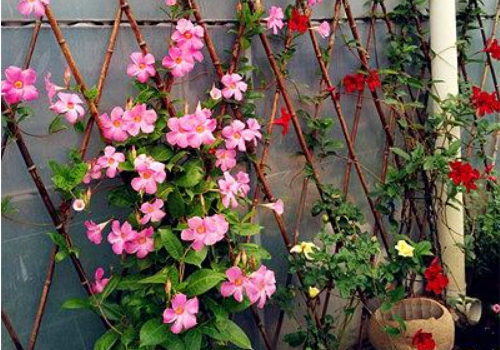
Solutions for Mandevilla Losing Leaves and How It Differs from Double Happiness Vine
There is also a plant in daily life called Double Happiness Vine, and the two look very similar in appearance. What should you do when Mandevilla loses leaves? And how does it differ from Double Happiness Vine: 1. Lack of water: when the water shortage is severe, leaf drop will occur, but before the leaves fall, their edges will gradually turn yellow
-
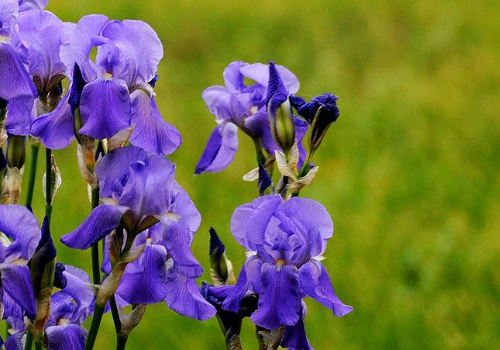
How many years does it take for German iris to bloom? A detailed explanation of the differences from iris
German iris, this is also a kind of plant, it really looks beautiful when it grows, and the flowers it produces are blue. So how many years does it take for German iris to bloom? And the differences from iris: How many years does it take for German iris to bloom: German iris generally blooms in the second year after planting. It blooms in April and May.
-

Rose cultivation should be carried out according to differentiated needs
Different people appreciate roses from different angles, and different rose varieties may have different uses. Therefore, rose producers need to be good at discovering these situations and actively explore cultivation methods for different rose varieties to respond to ever-changing market demands. Overall, roses have certain weaknesses
-

What is the difference between Solomon's seal (Yuzhu) and Siberian Solomon's seal (Huangjing)? A quick guide to tell the two apart
Yuzhu is the dried rhizome of Polygonatum odoratum, a perennial herb of the genus Polygonatum in the Liliaceae family. It was first recorded in the Shennong Bencao Jing, where it was listed as a top-grade drug under the original name Nülou. The Mingyi Bielu calls it Weirui, and in Hunan it is also called Weishen. Huangjing was first recorded in the Mingyi Bielu and listed as a top-grade drug. There are many botanical sources; broadly speaking, the commercial drug can be divided into two types: chicken-head Huangjing and ginger-shaped Huangjing. Chicken-head Huangjing is the dried rhizome of Polygonatum sibiricum, a few Polygonatum macropodum, and Polygonatum stenophyllum, all perennial herbs of the genus Polygonatum in the Liliaceae family; ginger-shaped Huangjing is the dried rhizome of Polygonatum kingianum, Polygonatum cyrtonema, and Polygonatum cirrhifolium, all perennial herbs of the genus Polygonatum in the Liliaceae family.
-
Disease Occurrence and Prevention Methods for Pigs at Different Feeding Stages
Disease occurrence in pigs at different feeding stages. The incidence of the three major infectious diseases of pigs. Swine fever, swine erysipelas and swine pasteurellosis are collectively known as the three major infectious diseases of pigs. In our country, the total mortality rate of affected pigs accounts for about 8% of the total raised population, and in areas with better prevention and control the pig mortality rate is also 5%. Therefore, the level of pig disease prevention and control should be raised. If the total pig mortality rate could be reduced by one percentage point each year, that would be equivalent to an additional 5 million pigs sent to market - what a huge fortune that would be. According to relevant statistics,
-
How do the immunization methods differ for different types of pigs?
Immunization of replacement gilts. Replacement gilts should be vaccinated with the following vaccines 1 month before mating, and sows after weaning should be vaccinated as follows: (1) Swine fever vaccine, 4 doses per head. (2) Swine erysipelas and swine pasteurellosis combined vaccine, 1 dose per head. (3) Swine Japanese encephalitis vaccine, 1 dose per head. (4) Porcine parvovirus vaccine, 1 dose per head (the inactivated vaccine can be given twice, with an interval of 15 days). (5) Swine pseudorabies vaccine, used according to the instructions. Immunization of farrowing pigs. Farrowing sows should be vaccinated with the following vaccines 15-40 days before farrowing: (1) Piglet Escherichia coli quadruple vaccine (K88, K99, 9
-
What is the difference between water pinellia and dry pinellia?
Dry pinellia and water pinellia are both pinellia, and the two are mainly distinguished by the shape of the tuber. The tuber of dry pinellia is spherical or oblate, 0.5-4 cm in diameter, with the bottom and lower half pale yellow, and the bottom or side of the tuber has a "scar" occupying one-third or one-fifth of the tuber surface. Water pinellia has a pointed bottom, shaped like an arrowhead, so water pinellia is also called "arrowhead". Dry pinellia is a "sphere" and water pinellia is a "cone", so the shapes are very easy to distinguish.
-
Detailed Explanation of Nutrient Uptake Patterns of Rice at Different Growth Stages
The nutrient uptake of rice at various growth stages differs considerably depending on the type. Double-season rice has a short growth period, especially the shortened vegetative growth period in the field, so vegetative growth and reproductive growth overlap shortly after transplanting. That is, tillering in the field begins at the same time as panicle differentiation, and the peak tillering stage occurs during panicle differentiation, thus forming a prominent nutrient uptake peak 2 to 3 weeks after transplanting; single-season rice forms two nutrient uptake peaks 2 to 3 weeks and 7 to 9 weeks after transplanting. The uptake rates of various nutrients by rice all reach
条件筛选