How many years does it take for German iris to bloom? A detailed explanation of the differences from iris
German iris, this is also a kind of plant, it really looks beautiful when it grows, and the flowers it produces are blue. So how many years does it take for German iris to bloom? And the differences from iris:
How many years does it take for German iris to bloom:
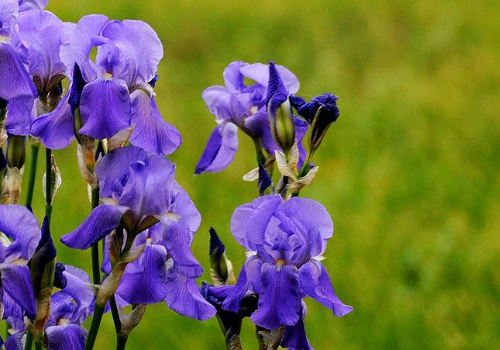
German iris generally blooms in the second year after planting. It blooms in April and May, and the flower colors include purple, blue, white, and others, with a faint fragrance when smelled.
The shape of the German iris flower is similar to a trumpet, and the top of the flower faces downward. In the middle of the flower, there is a relatively long fringe, generally white.
For German iris, from blooming to fading, it takes about four days, and the blooming period can last for one month. It was formerly commonly seen in European countries, and later was introduced and cultivated in our country. Now it is a relatively common plant. This plant has extremely vigorous growth; if you are not careful, it will grow into a large patch and become overgrown.
The differences between German iris and iris:
German iris is a variety of iris.
1. In flower shape, the German iris flower does not open wide; the flowers cluster together, and there are also some relatively long fuzzy things on the petals, which look very interesting.
Ordinary iris, by contrast, has relatively large petals that droop slightly, and the inside of the petals looks relatively small.
2. The leaves of German iris are also much wider than those of ordinary iris.
German iris generally blooms in the second year after planting, and it still has a slight difference from ordinary iris, so pay attention.
Tutorial on repotting and planting methods for German iris
German iris is a perennial plant with very long leaves and a shape as beautiful as a butterfly. The flowers of German iris are all large, with brilliant colors and rich flower colors, including white, yellow, blue-purple, and red, among other colors. Planted in flowerbeds, German iris can create a beautiful sea of flowers. Below, let us look at the repotting and planting of German iris.
Repotting and planting of German iris1. Planting of German iris——soil
German iris needs neutral or slightly alkaline soil, and a pH value between 6-8 is more favorable for the growth of German iris.
2. Planting of German iris——light
German iris can tolerate shade, but it has sufficient light requirements, so do not plant it in a dark environment, and it is also not suitable for overly dense planting.
3. Planting of German iris——watering
When German iris is planted in relatively arid areas in spring, wait until the flowers grow out or during the blooming period and often maintain the soil moisture of the German iris; this can quickly promote flowering, while after the flowers bloom, watering should be appropriately reduced. During the flowering period, if the rainy season occurs, pay attention to controlling the soil drainage capacity.
4. Planting of German iris——fertilizing
During the growth period, German iris can be given topdressing twice, and in spring and autumn choose a relatively suitable time for it. For fertilizing German iris, bone meal, potassium sulfate, and other substances can be chosen as fertilizer.
5. Planting of German iris——transplanting
German iris is suitable for being transplanted during the growth period, but the relatively ideal transplanting time is in spring or early autumn.
Repotting and planting of German iris
It seems that relatively few flower lovers grow German iris. Many flower lovers report that in pots it easily rots at the roots, while in the ground they have no space! This limits everyone's love for this beautiful plant. I had not grown it before either, but later I accidentally obtained several tuberous roots, so I explored the experience while planting.
I am located in northern Jiangsu (not Suqian, okay, some people are afraid of that), with cold winters and hot summers, and the planting location is a rooftop terrace (this was an important point when buying the house at the time), with blazing sun in summer and cold wind in winter. I have grown many kinds of flowers, with countless deaths and injuries. The final summary: cold tolerance, heat tolerance, and drought tolerance are the kingly way.
First, let me livestream the planting process of German iris for everyone. The first step is repotting, and you can see the powerful root system:
Step 2: divide the plants, cut off old roots and some leaves
Step 3: prepare a container, lay a layer of gauze at the very bottom to prevent pests from entering, then add coal cinders, the large pieces, for drainage.
Step 4: add an appropriate amount of soil, and add base fertilizer. What I used was sesame paste residue fermented for more than half a year.
Step 5: add soil, place the tuberous roots in according to spacing, and cover with a small amount of soil, leaving a certain margin, and when the weather is cold, cover with soil to keep warm. German iris is afraid of water accumulation, and we have a plum rain season every year here, so I plant it shallowly.
Finally, at the request of the many flower lovers, here are the previous blooming pictures.